
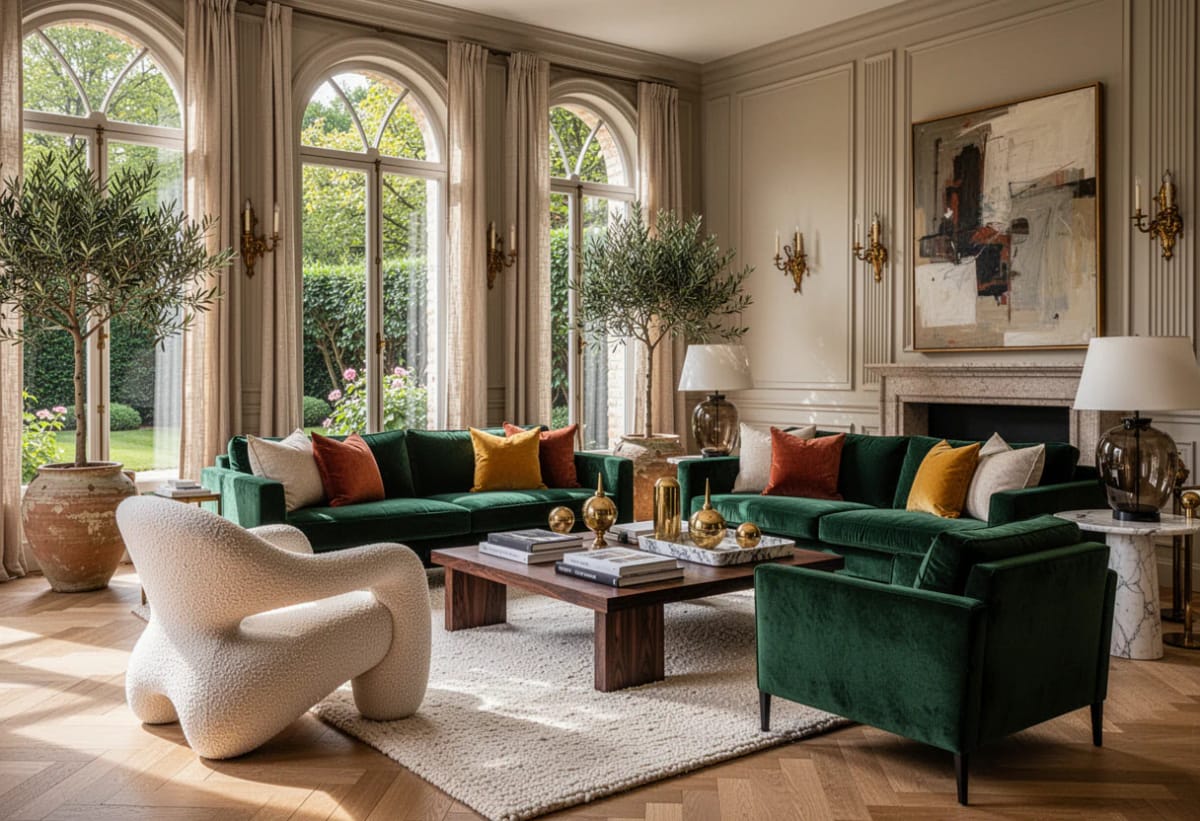
In almost every photograph that circulates as rich living room inspiration, the ceiling light is off. Not dimmed, off. The room is lit by four or five sources at hip and shoulder height, one of them washing a wall, and that single decision accounts for more of the effect than the sofa does. Most of what reads as money in a living room is like this: a small set of repeatable choices about scale, surface and light, several of which cost under two hundred dollars.

Not all ten below are cheap, and I'm not going to pretend otherwise. Two are real renovations. Three are a weekend with a brad nailer. They're ordered the way I'd actually sequence them, envelope first, then the large pieces, then fabric and light, because doing it backwards means paying for the same wall twice.
Start With the Envelope, Not the Furniture
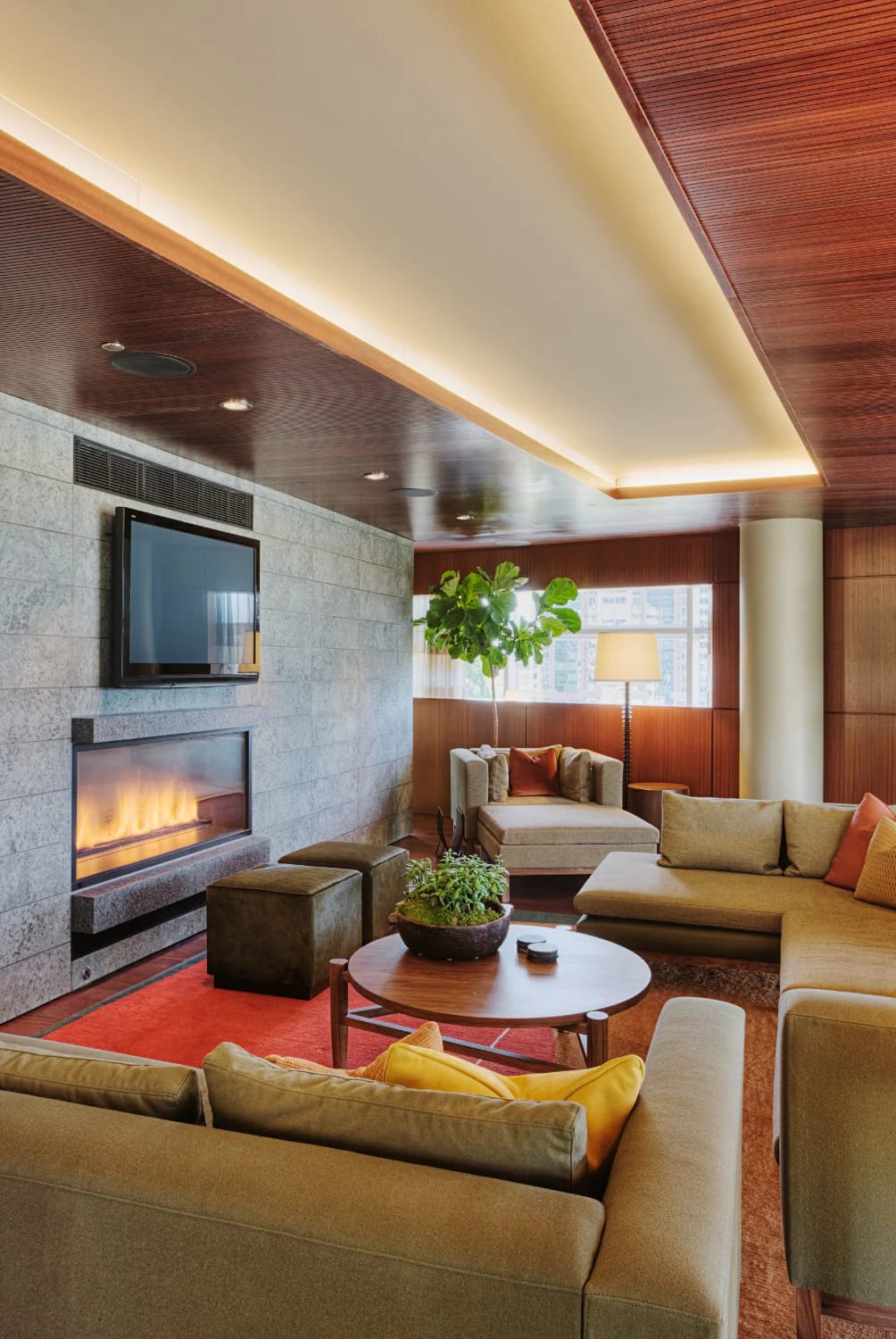
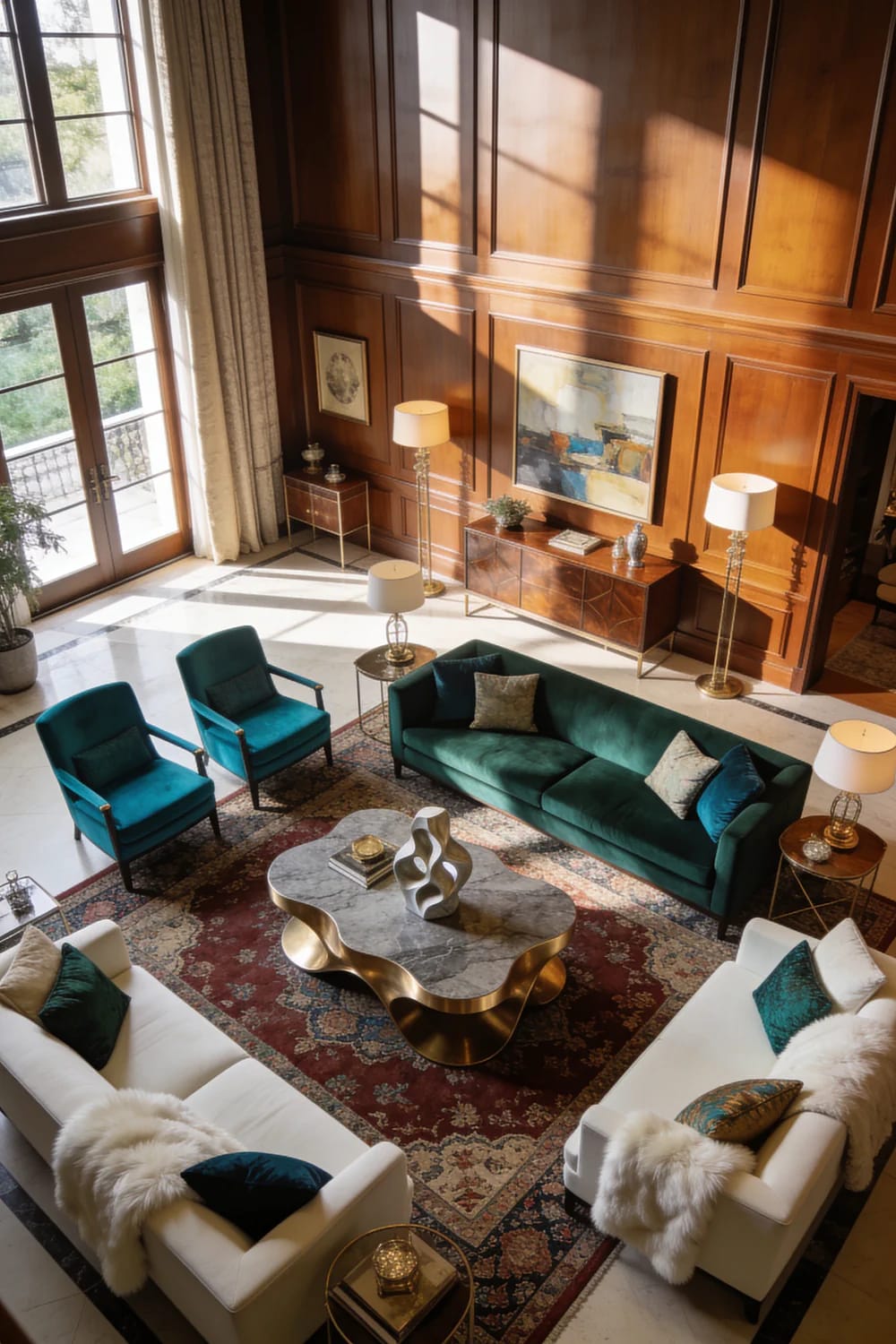
The three ideas in this group are about the box the room is in. They are the ones people skip, because a sofa arrives in a truck and a painted ceiling does not, and they are also the ones that make everything bought afterwards look better than it is.
1. Paint the walls, trim and ceiling one deep color
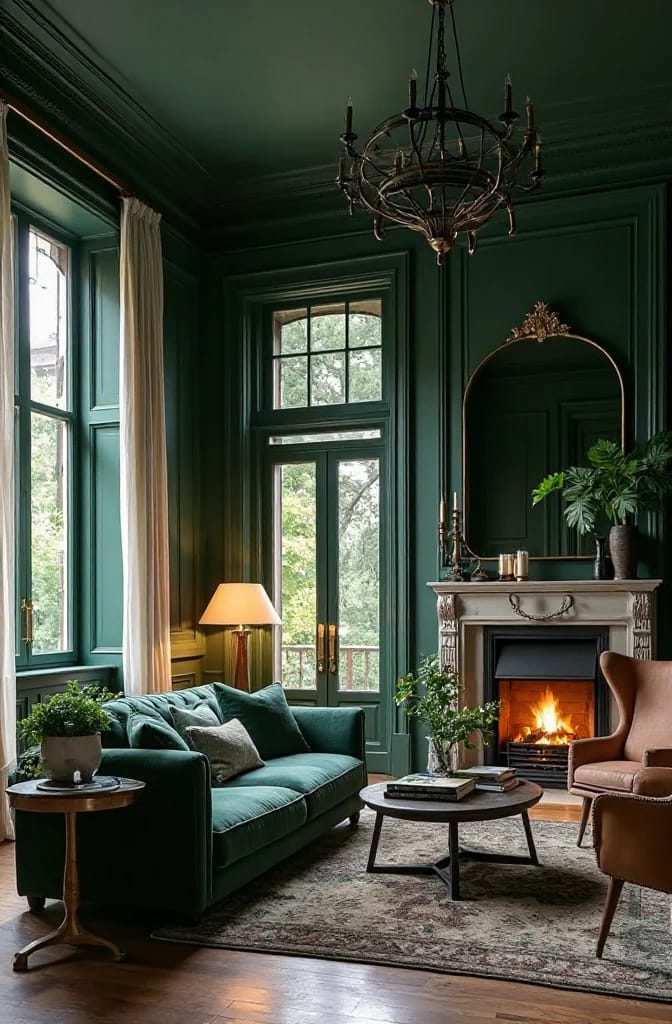
Pick one saturated color and take it everywhere: walls, baseboards, window casings, crown, and the ceiling. The technical name for it is colour drenching and the reason it works is that it deletes every contrast line in the room, so the eye stops reading the ceiling as a lid and starts reading the whole volume as one enclosed space. Rooms treated this way photograph deeper than they are.
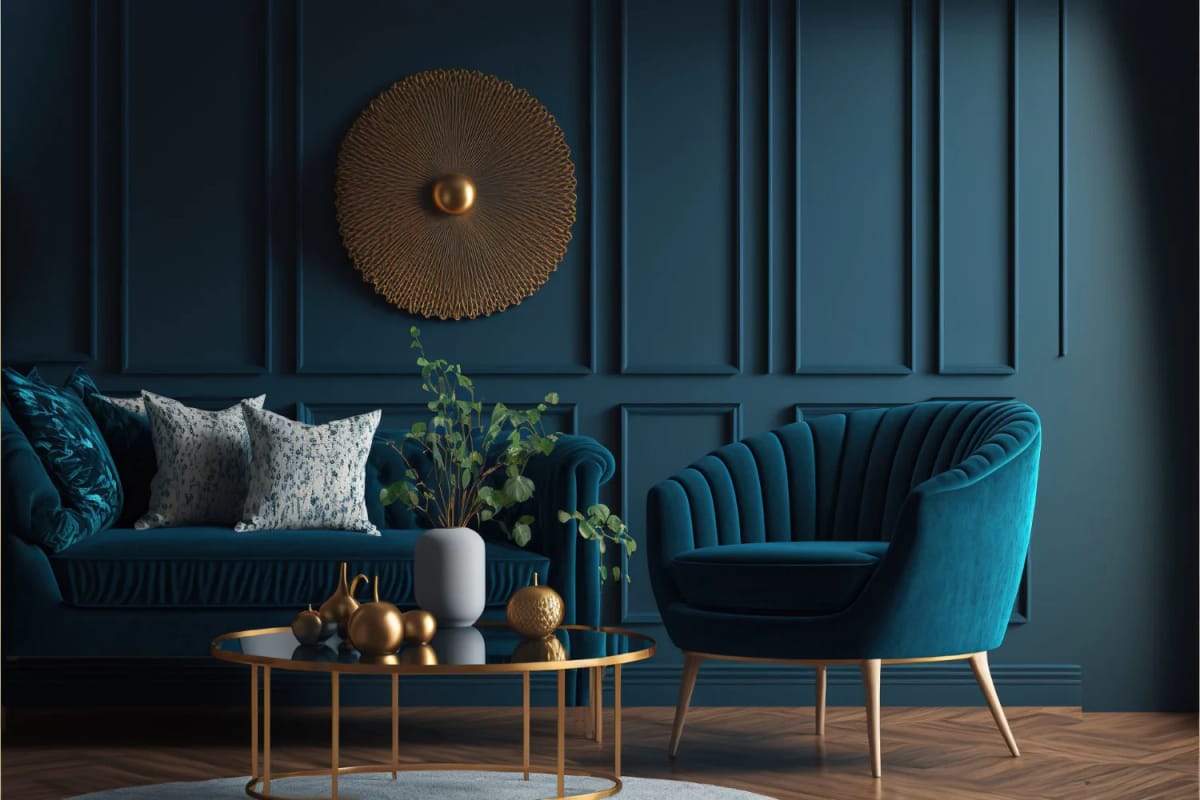
Farrow & Ball Railings is the reference point, a blue-black that goes almost grey under daylight and closes to near-black at night. Sherwin-Williams Iron Ore SW 7069 gets you most of the way there for about a third of the price per gallon, and Benjamin Moore Black Forest Green 2047-10 is the one to use if you want the drenching without the near-black. Use eggshell on the walls and satin on the trim so the millwork catches light differently from the flat expanse beside it. That sheen change is doing quiet work: it keeps the profile of a door casing visible even though the color no longer marks it out.
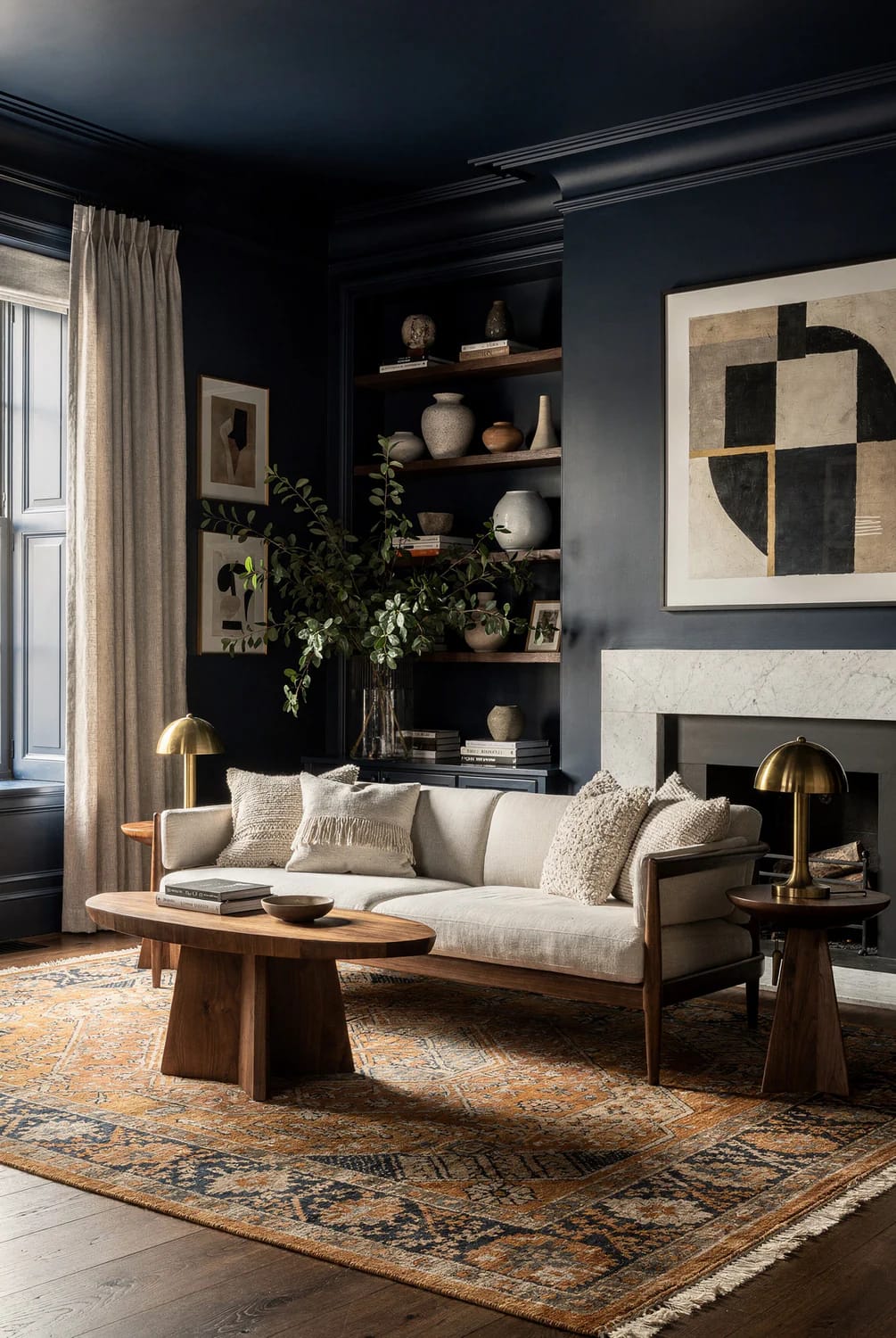
The version that fails is the single dark accent wall with three white walls around it. That reads as a 2009 feature wall, not as a considered room, and it makes the dark wall look like a mistake somebody stopped halfway through. Granted, if you rent and repainting the ceiling isn’t happening, the honest alternative is not a lighter version of this idea; it’s a different idea entirely, and a well-built layered neutral scheme with real variation in texture will get you further than a timid grey.
2. Put applied panel molding on the wall behind the sofa
Applied molding is the cheapest architecture you can buy. Primed pine or MDF panel moulding runs roughly $1 to $3 a linear foot at most lumberyards, which puts a full wall of rectangles somewhere around $80 to $150 in material; the labour is a miter saw, construction adhesive, an 18-gauge brad nailer and an evening of caulking. Paint the molding and the wall the same color and the same sheen. Contrast-painted panels look like a craft project.
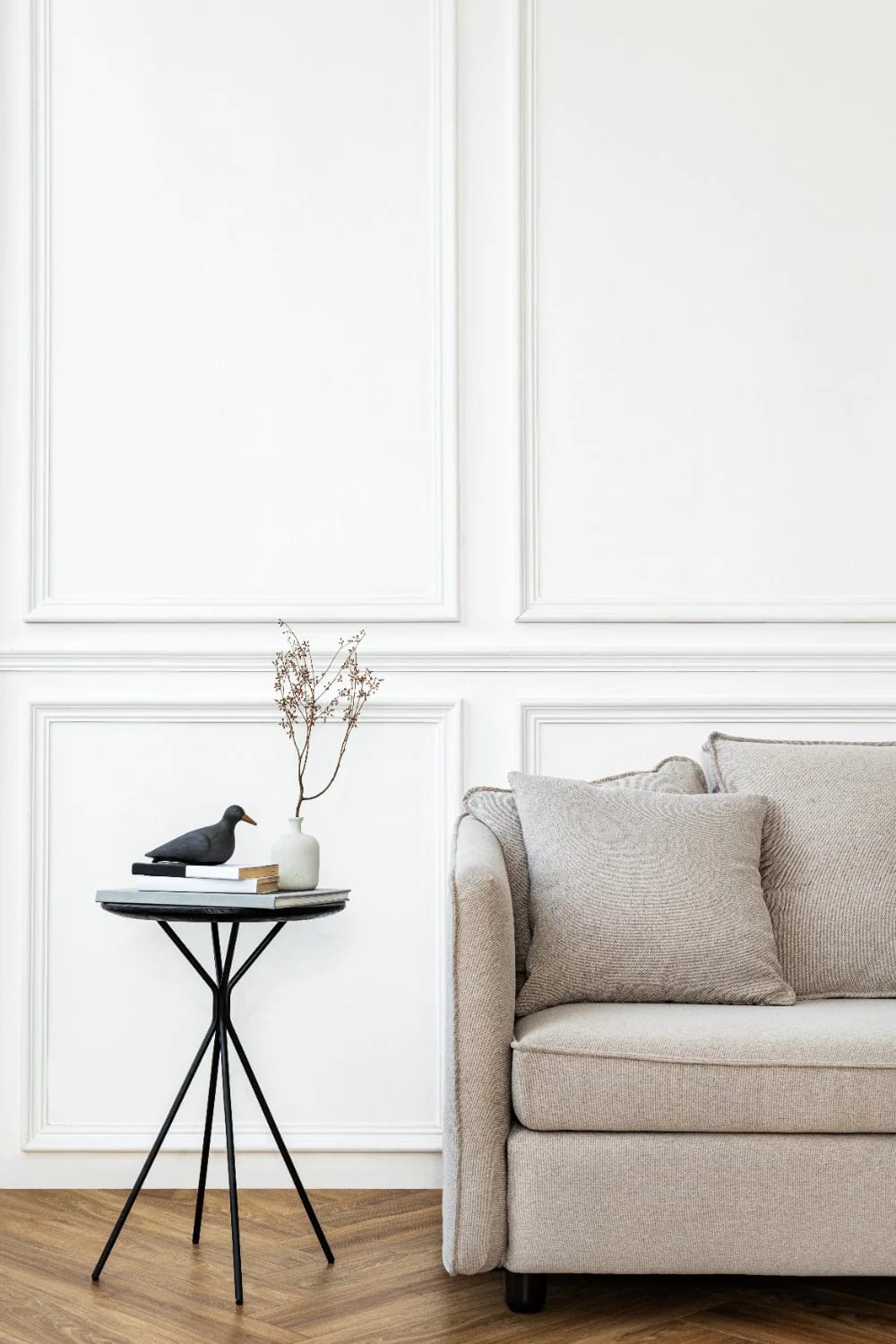
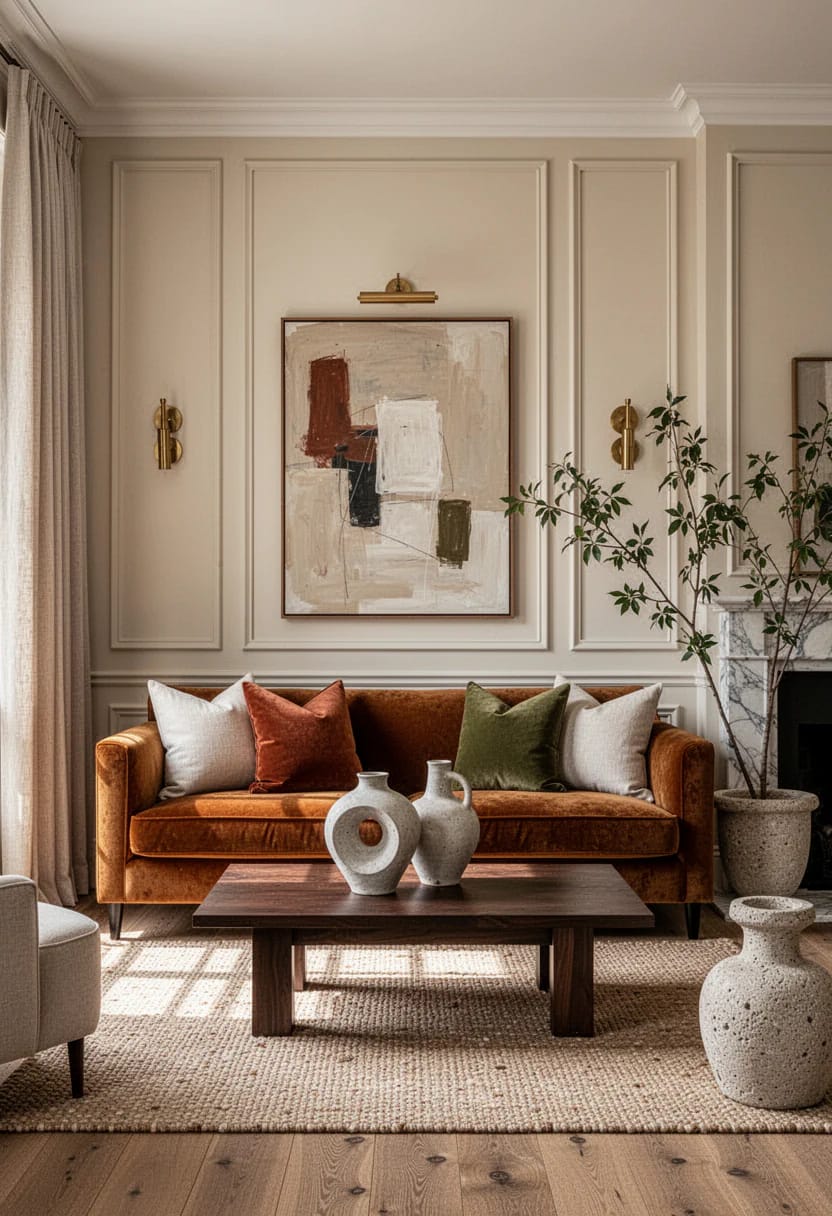
Layout is the part people get wrong, and it is arithmetic rather than taste. Keep the side margins equal to the top margin, make the bottom margin about half again as large so the run doesn't look like it's sliding down the wall, and keep the gap between panels smaller than the outer margins. Panels should be taller than they are wide on a standard eight-foot wall. The calculator below does the division for you and tells you how much trim to buy, which is the number that actually decides whether you start on Saturday.
Panel molding layout & trim estimator
Estimates, rounded. Bottom margin is set at one and a half times the outer margin, which is the proportion that stops a panel run looking like it has slipped down the wall. Cut a single panel first and stand back before you cut the rest.
For a first attempt, a pre-cut kit removes the two failure points that ruin most DIY paneling, which are inconsistent miters and panels that aren’t square. This Gaahing pre-cut accent wall molding kit ships as ready-to-assemble rectangles, and while it costs more per foot than raw stock, six clean panels beat twelve you have to re-cut. If you’d rather see how this move plays against other treatments before committing a wall to it, the range of accent wall approaches that hold up in a living room is worth a scroll first.
3. Swap the veneer-and-mantel fireplace for a slab surround
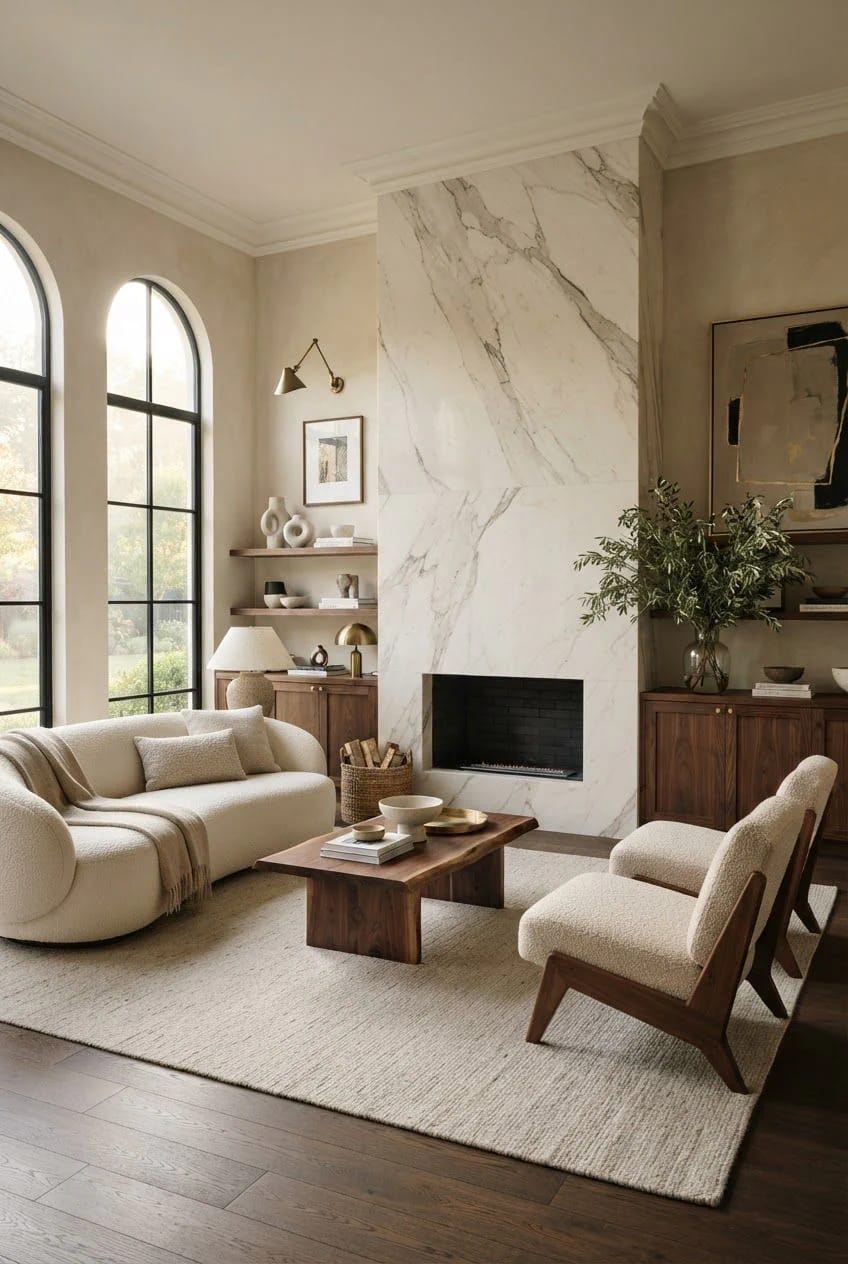
Stacked stone veneer is the single loudest downmarket signal in a living room, and the chunky reclaimed beam bolted above it is the second. Replace both with one continuous plane: honed marble, limestone, or plaster, running floor to ceiling, no mantel shelf at all.
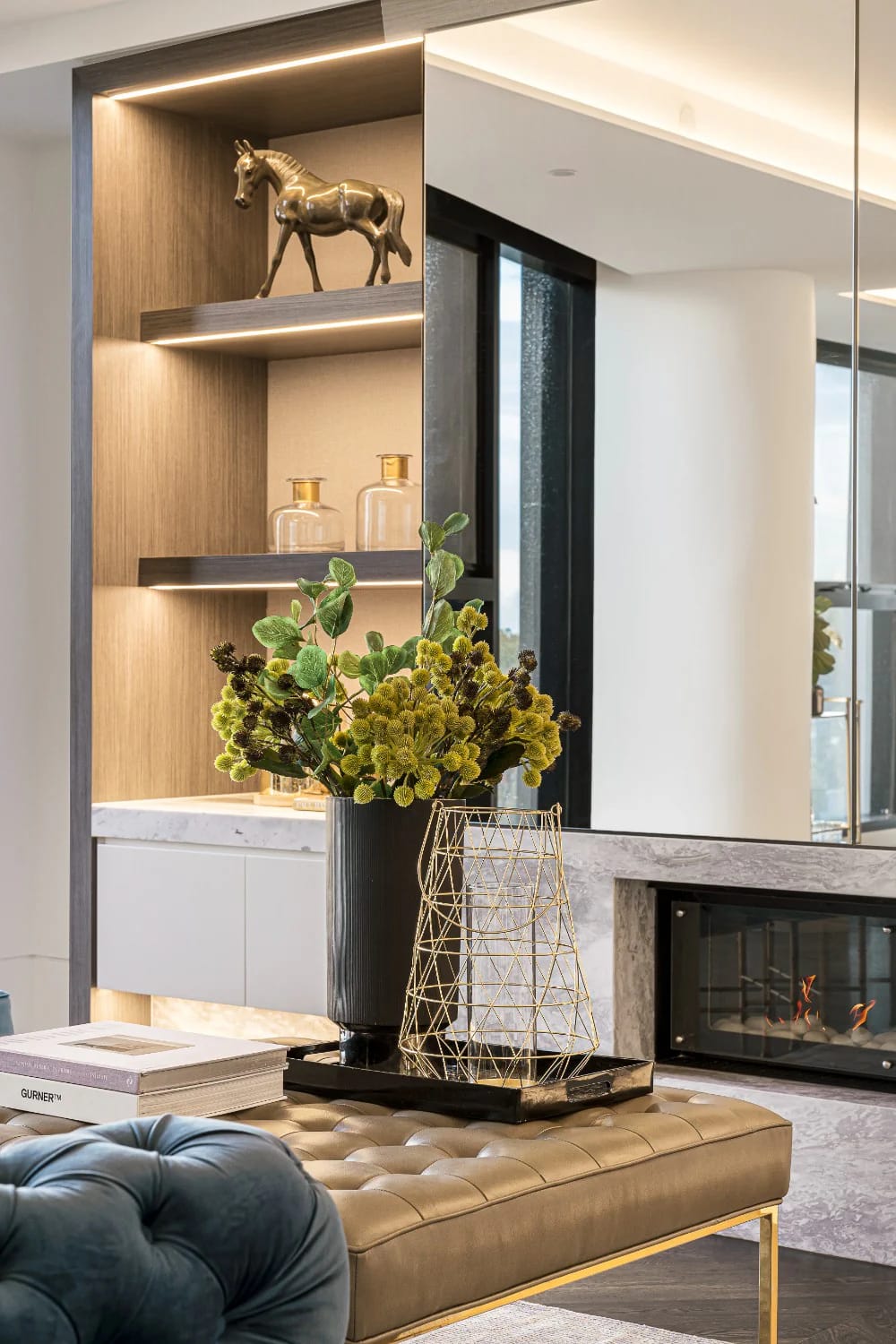
Cost guides put a marble surround somewhere between $2,500 and $8,000 installed, with the stone itself running roughly $75 to $200 a square foot fitted. A fireplace surround is small enough to come out of a remnant, though, and fabricators sell remnants at a steep discount because the alternative is storing them; call three stone yards, ask what's in the remnant rack in Calacatta or a grey-veined Carrara, and be flexible about which slab you get.
If the budget is a tenth of that, limewash the brick instead. Romabio Classico Limewash goes straight onto masonry, dries to a chalky mineral finish that looks a century old, and costs under a hundred dollars for a fireplace-sized area. It is not a slab. It is also not pretending to be one, which is why it works where a thin-set stone veneer panel doesn't.
 15 Innovative Fireplace Makeover Ideas for a Dashing Living Room Fifteen surround treatments at every budget, including the paint-only routes that need no demolition.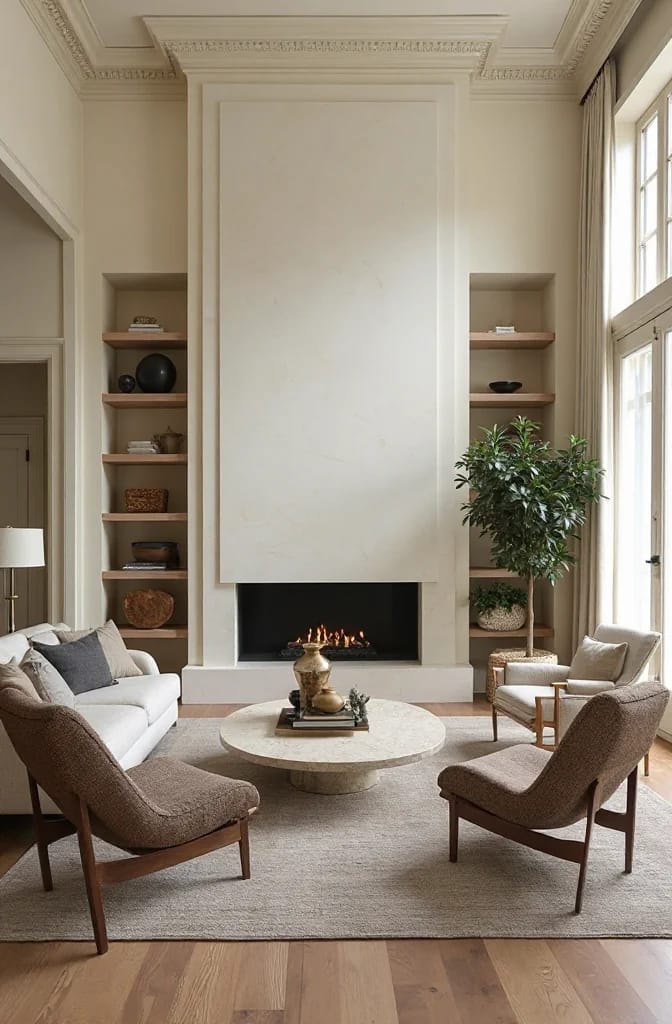
In a Rich Living Room, Scale Is What the Money Buys
Expensive rooms contain fewer objects and larger ones. That is close to the whole trick, and it is why a room furnished entirely from one showroom's coordinated collection still looks rented.
4. One oversized sofa beats a matched three-piece set
Buy one very large seating piece and let it dominate. A 96 to 108 inch sofa in a room that would ordinarily take an 84 inch one plus a loveseat reads as generous rather than crowded, because the eye counts silhouettes, not square footage. Serpentine and curved sofas do this especially well; a curve reads as bespoke even when it isn't, since almost nothing budget-priced is curved.
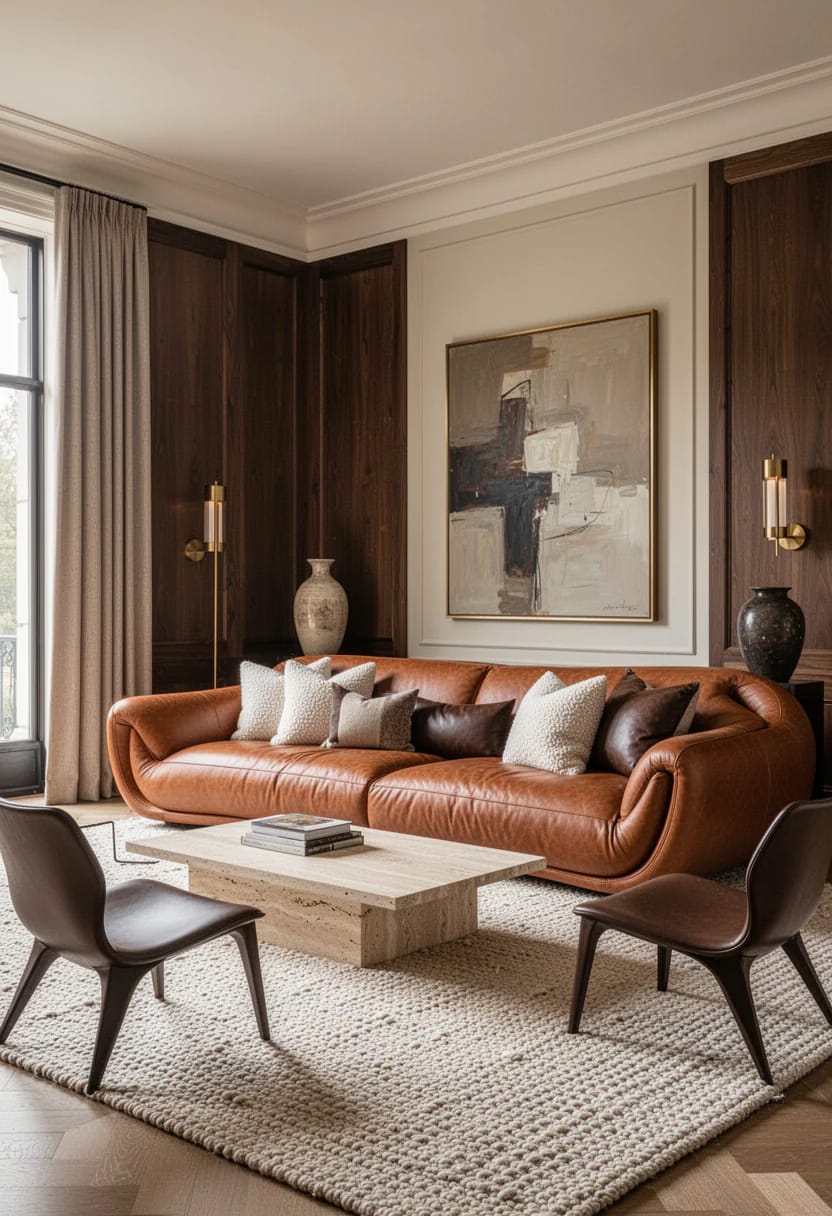
What to actually check — in order of how much it matters — is a kiln-dried hardwood frame, eight-way hand-tied springs or at minimum heavy-gauge sinuous springs, seat depth of 22 to 24 inches, and cushions with a down-wrapped foam core rather than bare foam. Bare foam cushions go flat and square in about two years and there is no fixing them. Everything else on a sofa can be re-covered later.
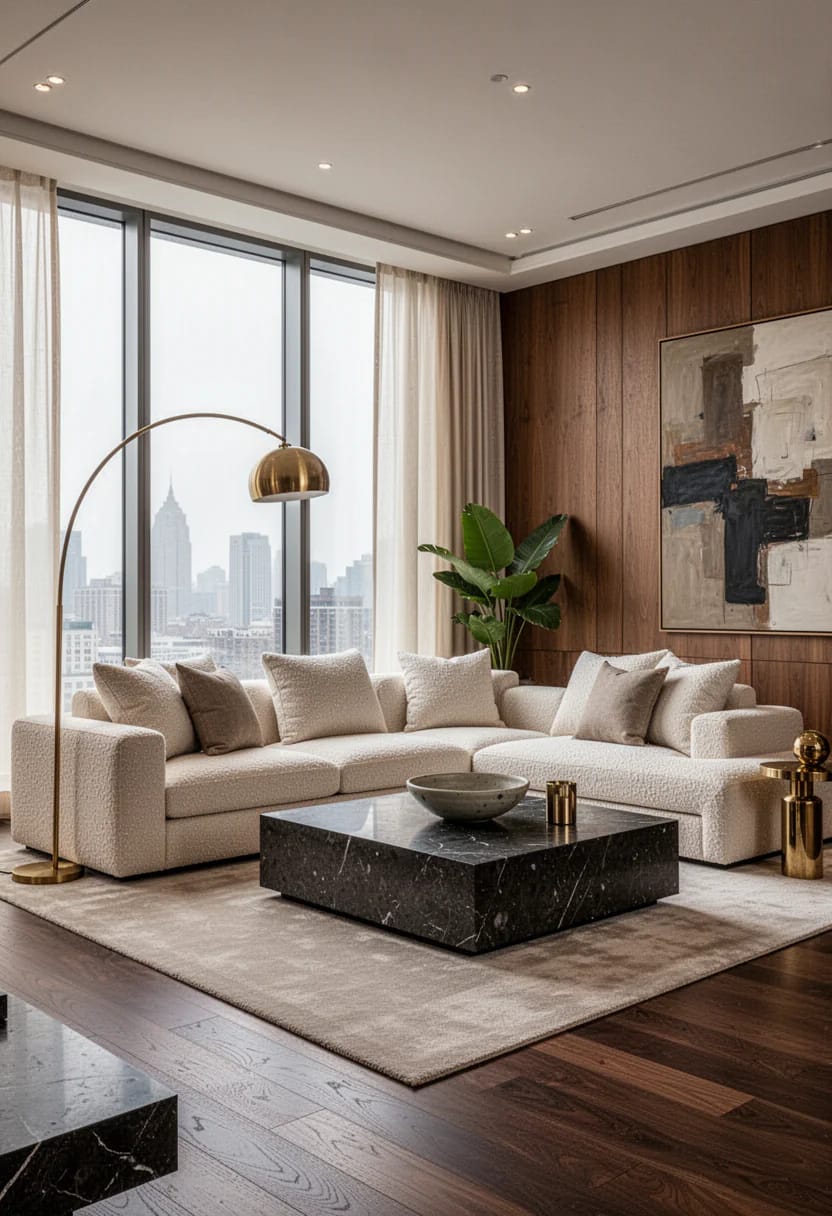
The matched set is the trap. Sofa, loveseat and chair in one fabric from one catalogue is how furniture is sold and it is not how a room accumulates; two upholstered pieces in different fabrics plus one wood-framed chair reads as collected rather than ordered, and the wood-framed chair is usually the cheapest of the three.
5. Buy the living room rug one size up from the one that fits
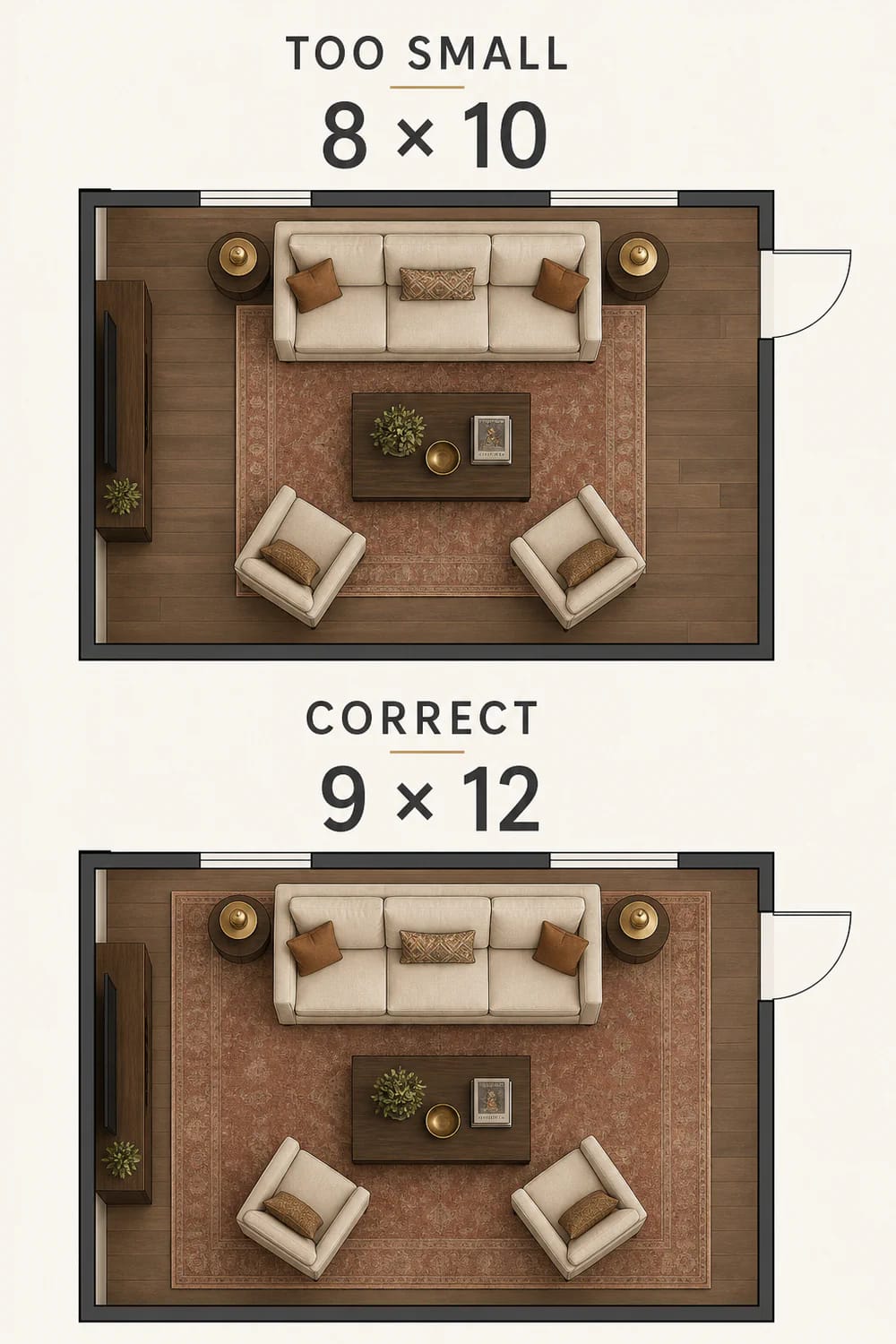
Whatever size looks correct in the store, go up one. Most living rooms are running an 8 by 10 where a 9 by 12 belongs, and a rug that ends before the furniture does makes the whole arrangement look like it's huddling.
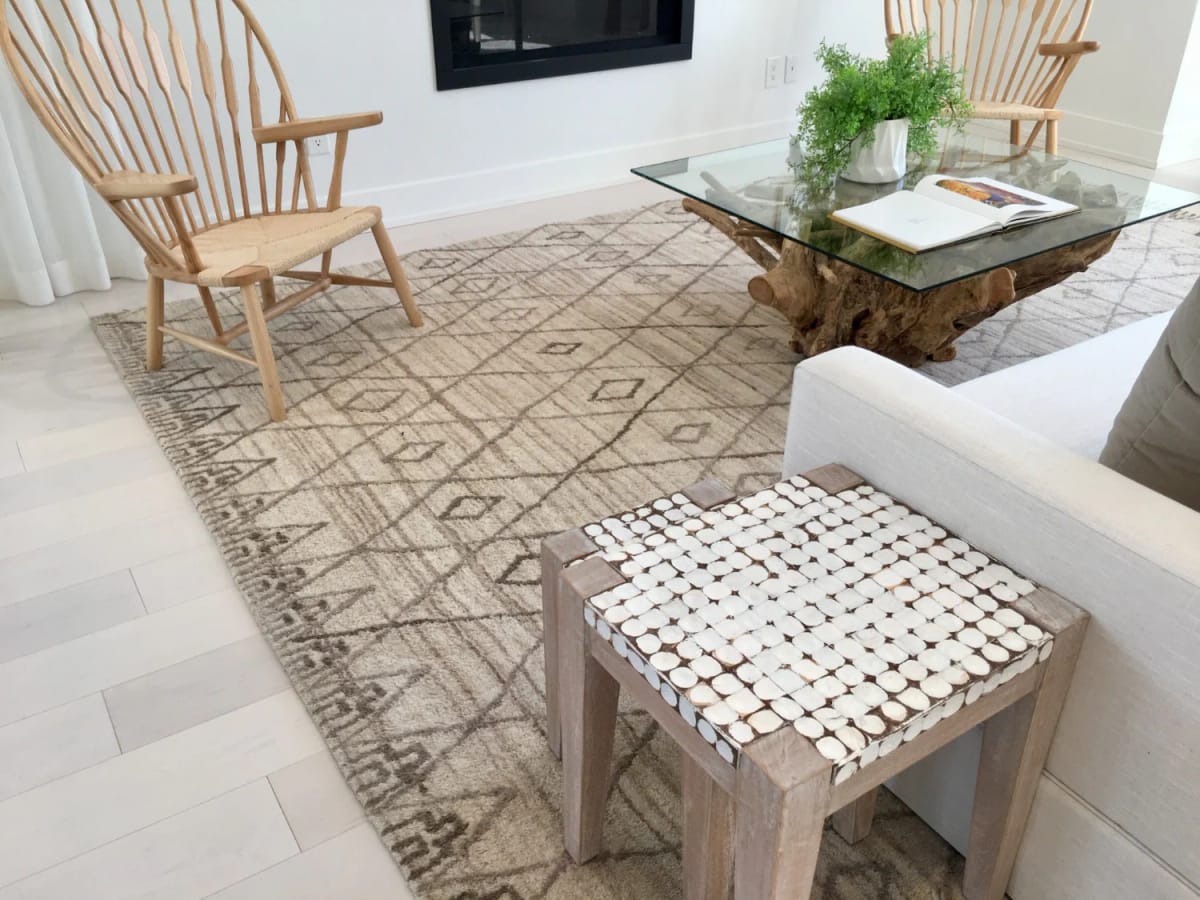
The rule is that all four legs of the sofa sit on the rug. If the room can’t take that, the fallback is front legs of every seating piece on the rug, never some on and some off. Leave 18 to 24 inches of bare floor between the rug edge and the wall so the floor still reads as a border. In a genuinely tight room the calculus changes and layering a small patterned rug over a large flatweave jute buys you coverage cheaply, which is one of several tricks worth stealing from small living rooms that punch above their footprint.
6. Hang one large artwork instead of a gallery wall
One big piece. The gallery wall was a good idea that got repeated into meaninglessness, and eleven small frames in mismatched styles reads as busy in a way no expensive room ever is.
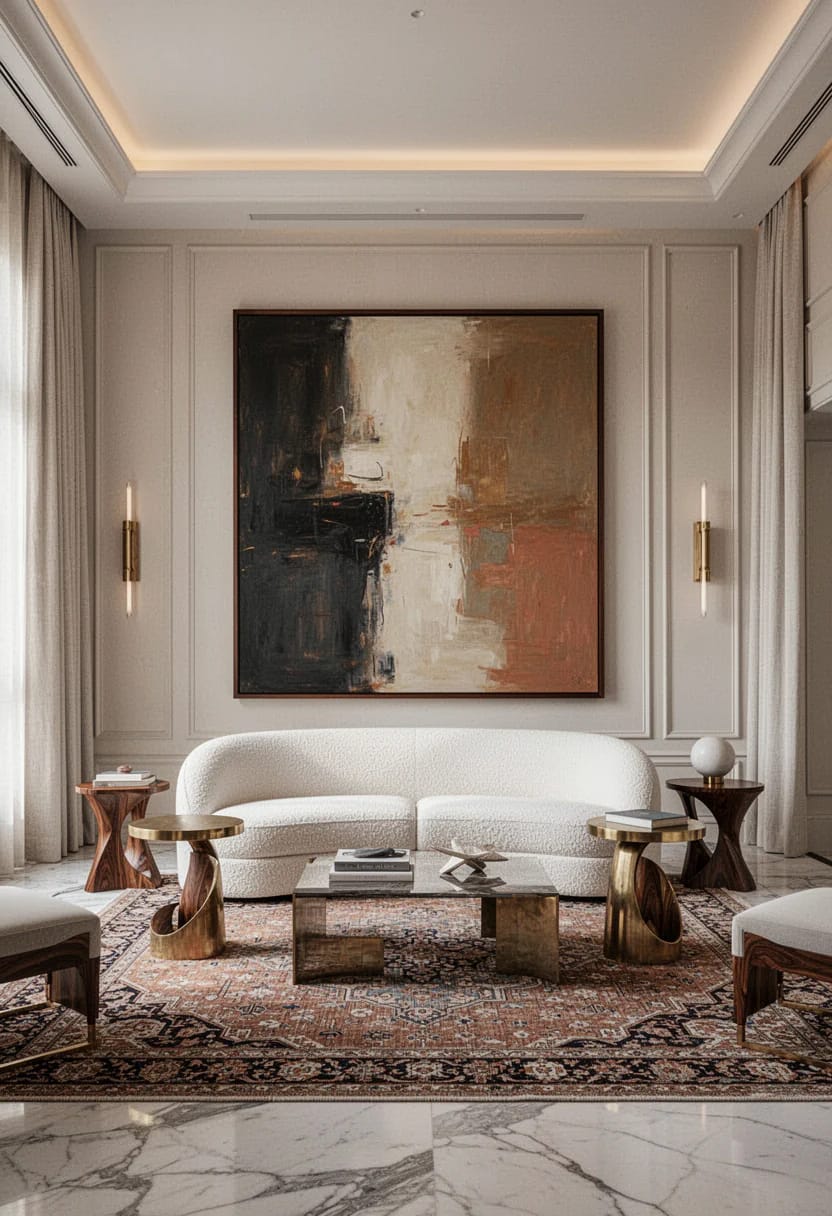
Size it at roughly two thirds the width of the sofa, hang it with its center at 57 to 60 inches from the floor, and leave 6 to 8 inches between the bottom of the frame and the sofa back. Oversized canvases from Etsy sellers, vintage textiles stretched on a frame, and a single large photographic print in a wide mat all work; a cheap print in a good frame beats an expensive print in a thin black metal one, which is not the trade most people make.
 29 Creative Above the Couch Decor Ideas to Transform Your Living Room Twenty-nine alternatives for the wall above the sofa when a single canvas isn’t the answer.
The Materials You Read From the Doorway
7. Upholstery you can see the weave in
Texture is legible from across a room and color is not, which is why the fabric decision outranks the color decision. Bouclé, mohair, cut velvet and heavy wool all catch lamp light unevenly and throw a shadow at the seam; flat woven polyester absorbs it and goes matte and dead after dark.
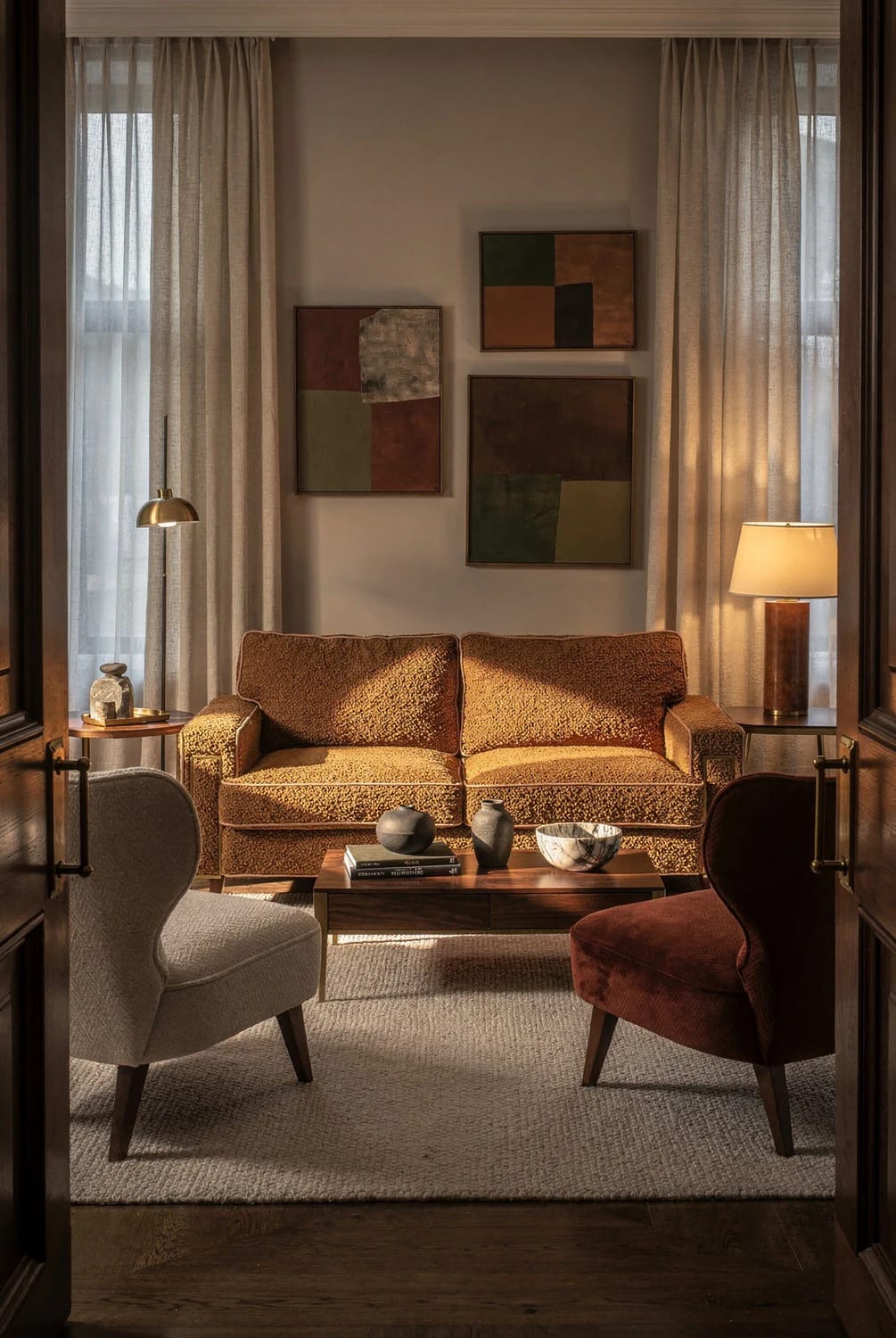
Mohair is the reference standard here and it is priced accordingly, north of $200 a yard from mills like Kravet and Maharam, which puts a full reupholstery well past most budgets. Performance fabrics are the compromise most people are sold, and I’d push back on them — they resist pilling and clean beautifully, but the tight synthetic face is exactly what makes a sofa look flat under a lamp. If the sofa is staying as it is, buy the texture separately. A pair of LZYGK bouclé pillow covers in 20 by 20 with a velvet back and one heavy wool throw with a visible fringe will do more for how the piece reads at night than a new cushion insert will.
8. Floor-length drapery, hung high and hung wide
Hang the rod within 4 to 6 inches of the ceiling, extend it 8 to 12 inches past the window frame on each side, and let the panels break at the floor. Every part of that is doing something: the height stretches the apparent wall, the width lets the stacked panels clear the glass so the window looks larger than it is, and the length is what separates drapery from curtains.
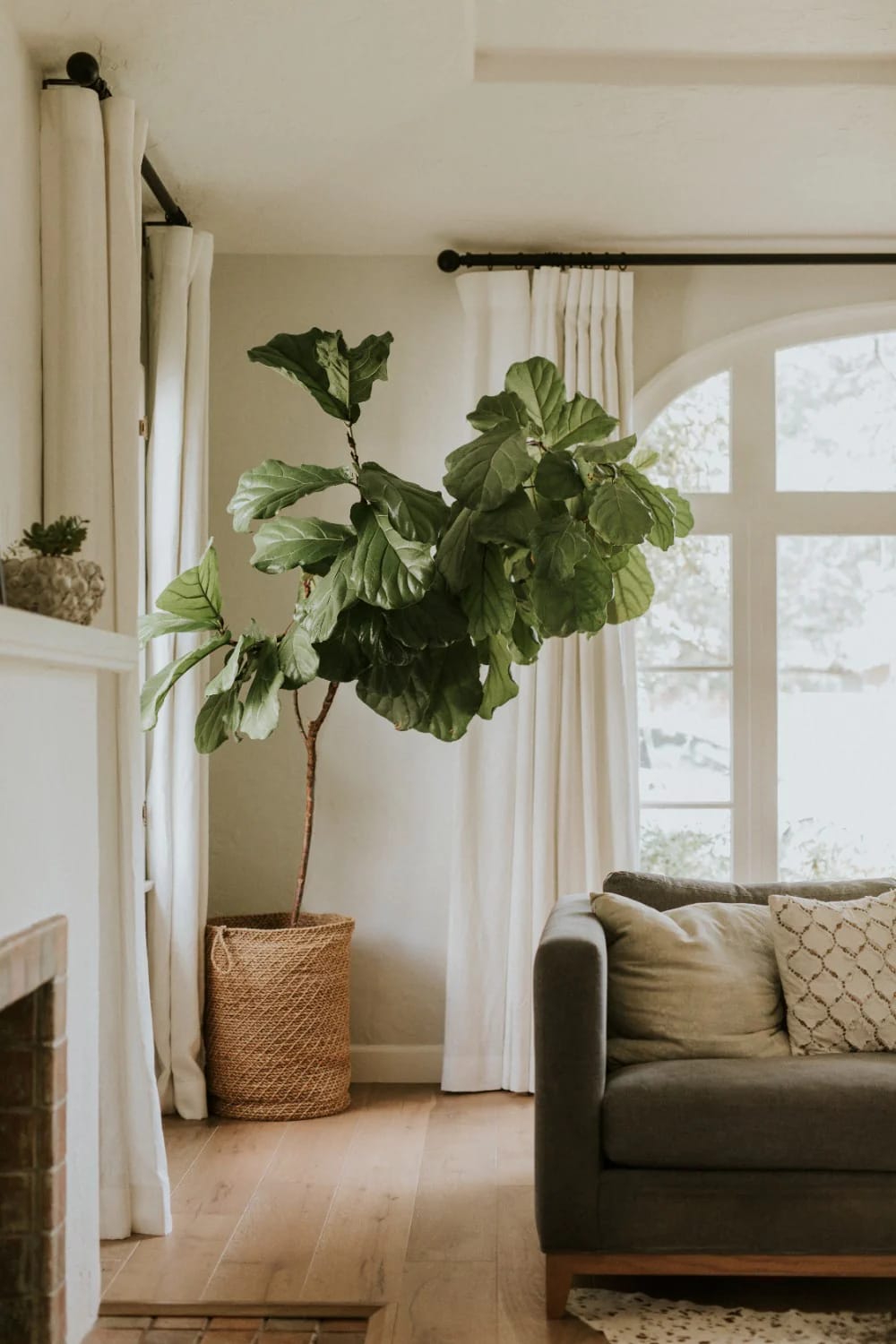
Total panel width across a window should come to two to two and a half times the width of the opening, which usually means four panels where people buy two. Weight matters more than fiber content — a lined velvet or a heavy linen hangs in deep vertical folds and stays there; an unlined polyester panel hangs in shallow ripples that read as thin from ten feet away. These Deconovo blackout velvet panels in a 108 inch drop are the cheap end of the heavy-fabric route, and the 108 is the number that matters, since standard 84 inch panels will not reach the floor from a rod hung near the ceiling.
Do this
- Measure from the rod, not from the window, and add an inch for the break.
- Steam the folds and tie the panels loosely for a few days so they learn the pleat.
- Buy four panels. Two panels on a wide window will always look skimpy no matter what they cost.
Avoid
- Rods mounted at the top of the window frame.
- Hems that stop at the sill or, worse, an inch above the floor.
- Thin decorative rods that visibly bow under lined fabric; go to a one inch diameter or heavier.
Light, and the Last Ten Percent
Both of these are cheap, both take an afternoon, and between them they change the photograph of the room more than anything above except the paint.
9. Switch the ceiling fixture off and build four low sources instead
Turn the overhead off and leave it off. A single ceiling source lights a room flatly from above, flattens every texture you just paid for, and puts shadows under people's eyes; a room lit from four or five points below eye level has depth, pooling and dark corners, which is what every interior you saved to a board actually has.
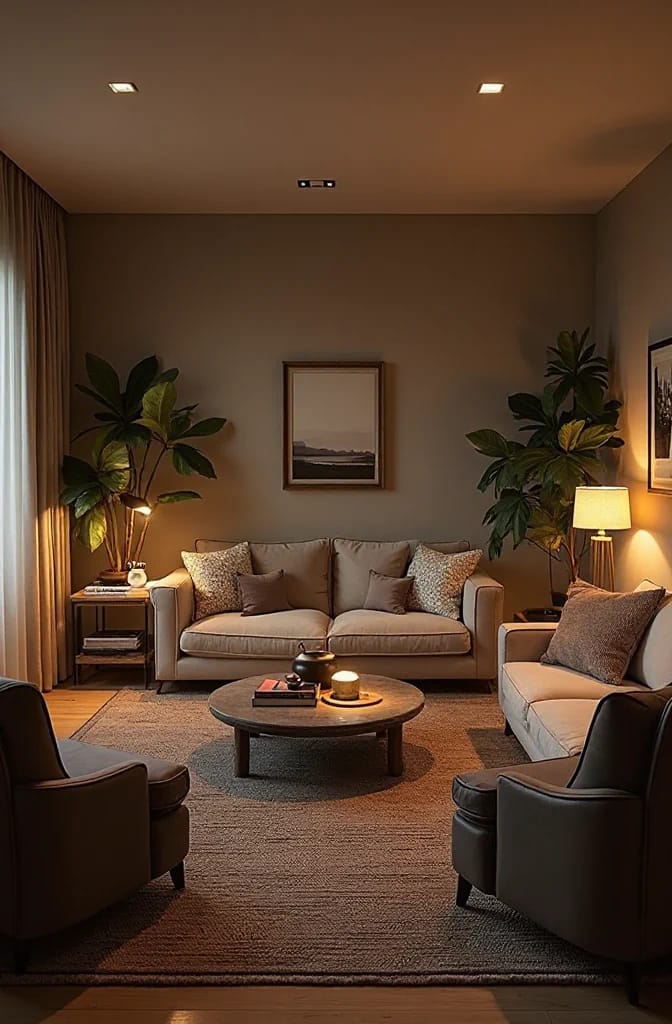
What the sources should be, roughly in order of impact:
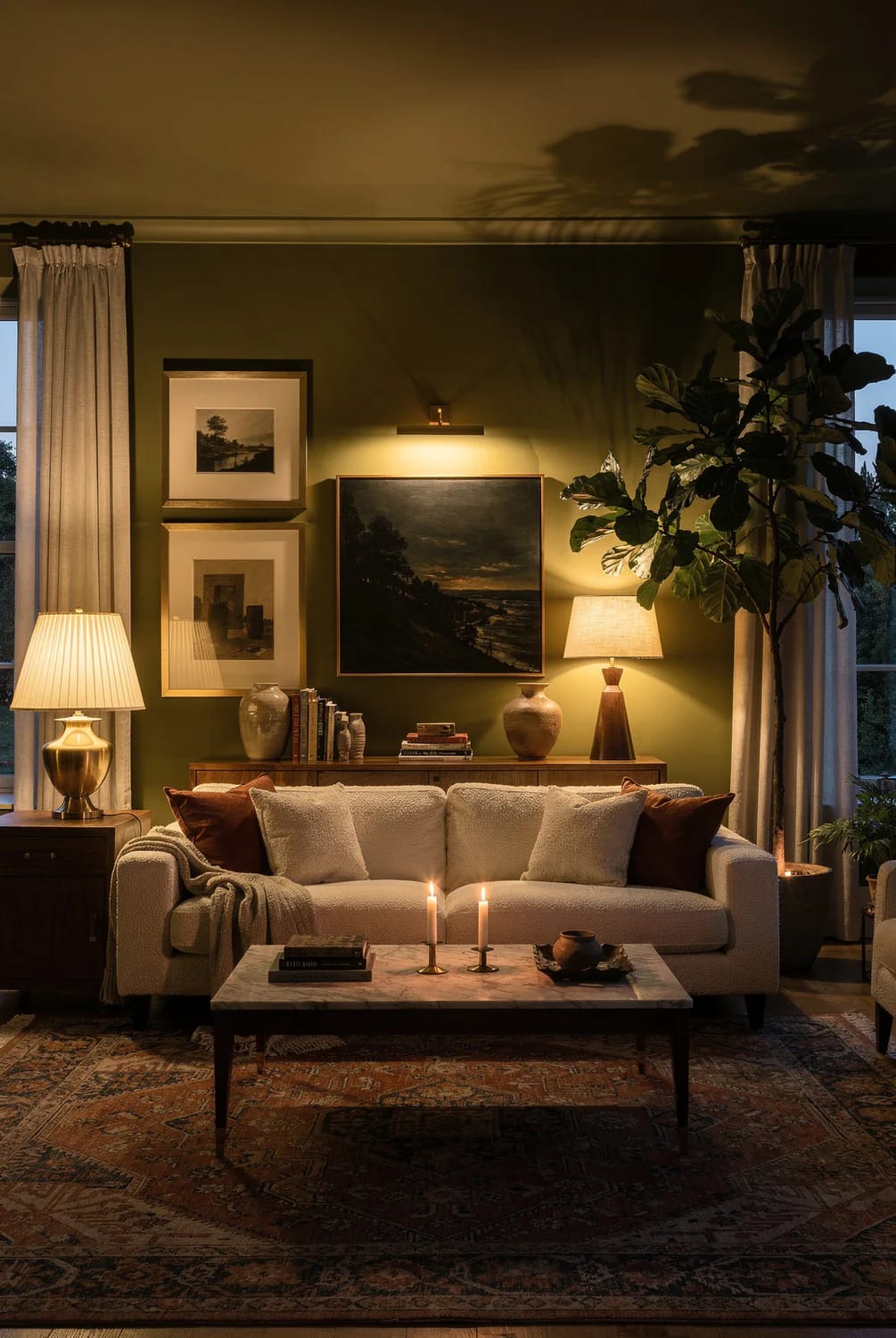
- Two table lamps at opposite corners of the seating group, shades of linen or pleated paper rather than drum shades in dark fabric. Aim for the bottom of the shade to land near eye level when you’re seated, which usually means a lamp 26 to 32 inches tall on a 24 to 26 inch table.
- One light on the art. A Tassuowell rechargeable brass picture light in 15.7 inches mounts without wiring, which matters if the wall behind the sofa has no junction box, and a lit painting is the fastest shortcut to a gallery-ish room there is.
- An uplight on the floor behind a large plant, throwing leaf shadow up the wall.
- Candles. Real ones, in a cluster of three at different heights.
- Every switched circuit in the room on a dimmer, which on a standard single-pole is a fifteen minute job.
Buy 2700K bulbs with a CRI of 90 or higher and buy them all at once, from one box. Mixed color temperatures across a room are extremely visible and read as careless even to people who couldn’t name what’s wrong; one lamp at 3000K next to two at 2700K will look faintly green. The same discipline runs through most genuinely warm and inviting living rooms, where the lighting plan is doing work the furniture gets credit for.
10. Give the dead corner some height
Every room has one corner where the eye falls off. Fill it with something six to seven feet tall and the wall behind it stops reading as leftover space.
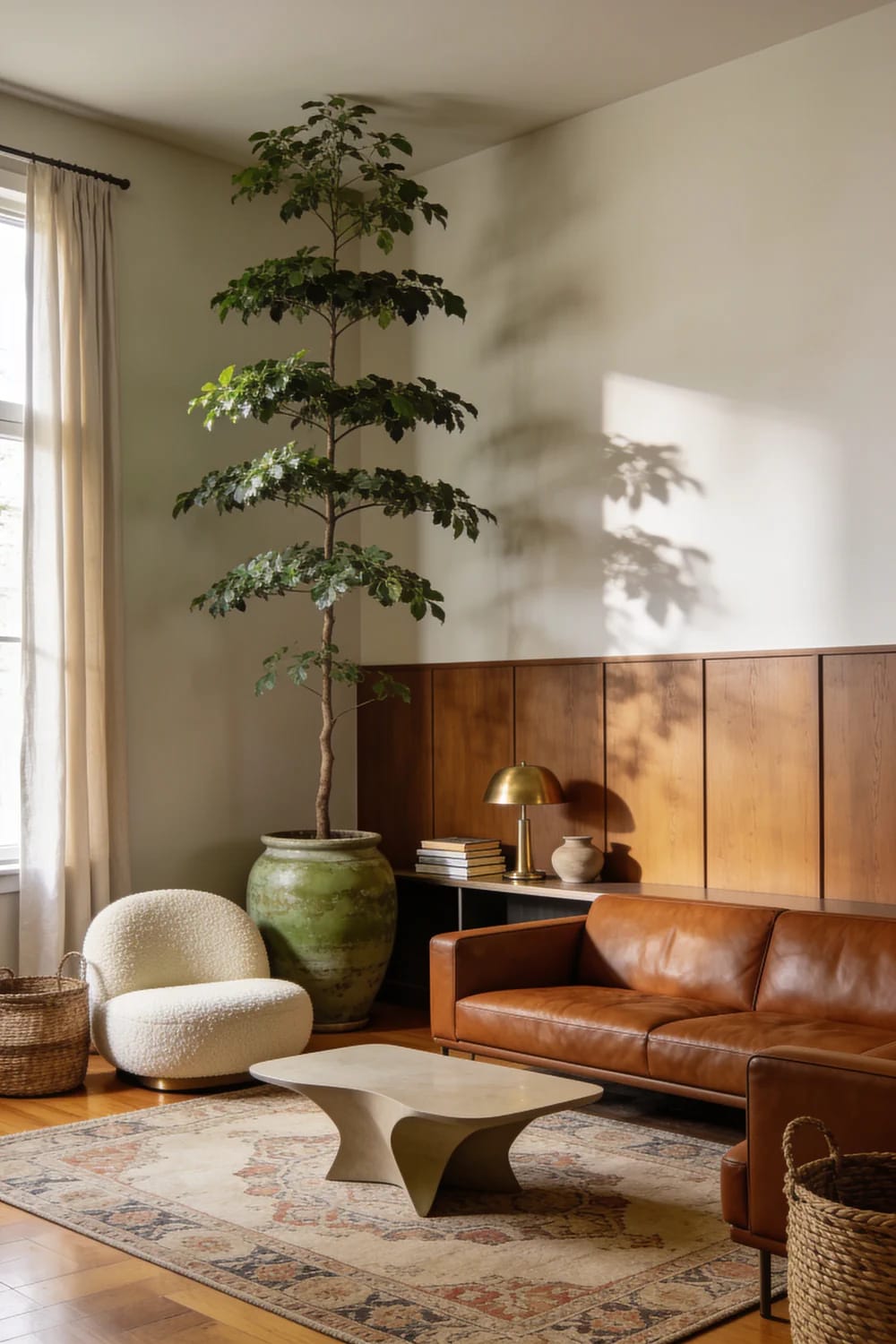
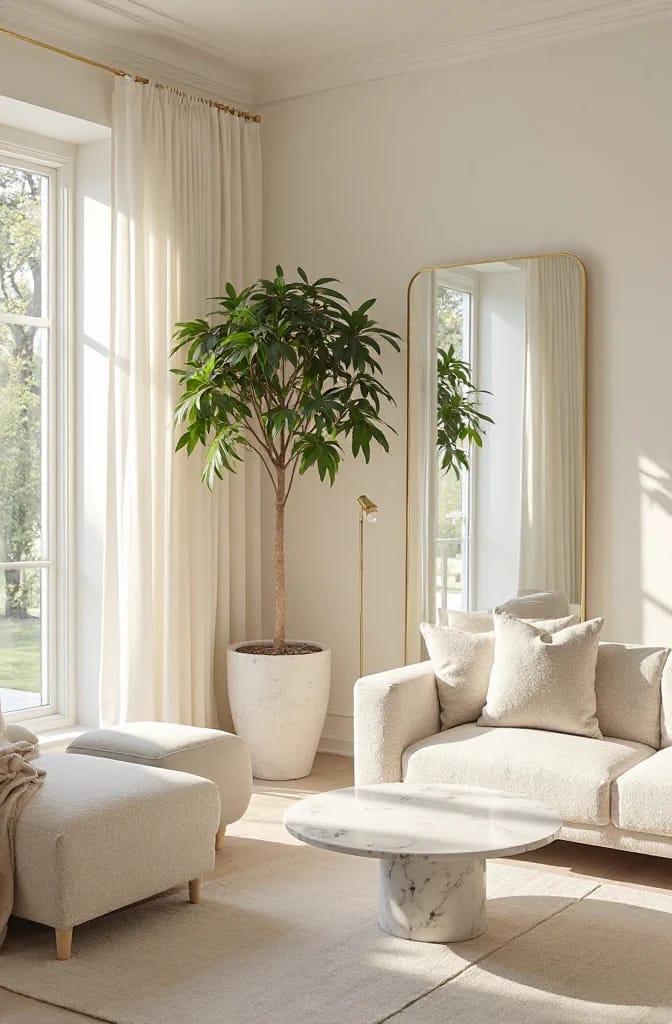
A real olive or fiddle-leaf fig needs more direct light than most living rooms have, so the honest version for a north-facing room is a good faux tree with a real wood trunk, repotted. That last word is the whole thing: the plastic nursery pot it ships in is the giveaway, so move it into a heavy ceramic or terracotta planter, wedge it, and top-dress with real potting soil and a little sheet moss. A Kazeila 6 ft faux olive tree with a natural wood trunk is the version I’d point at, because the trunk is where these fail at close range. If a tree is wrong for the corner, an arc floor lamp or a plinth carrying one large ceramic object does the same job in less floor area.
If you only do two things off this list, do the lighting and the drapery. Together they run a few hundred dollars, take one weekend, and change the room more than the sofa will. Save the panel molding for the following month and the fireplace for whenever the remnant rack turns up the right slab, which can take a while, and don't do the colour drenching last, because painting around a room full of new upholstery is how people end up living with a wall they meant to fix.
Related Posts
- 20 Small Living Room Ideas for a Cozy & Spacious Feel
- 19 Small Coastal Living Room Ideas for Effortless Style
- 15 Farmhouse Living Room DIY Decor Ideas for a Cozy Space
- 21 Cozy Organic Modern Living Room Ideas to Copy
- 43 Modern Living Room Inspirations: Chic, Spacious, and Vibrant
- 13 Christmas Living Room Ideas Renters Can Actually Do