
Red and green is not the problem. The problem is almost always undertone: a cool, candy-bright red dropped next to a warm, brown-based green, both of them fighting under 4000-kelvin LED bulbs, and the whole room reading cheap by 6pm. The nine schemes below are sorted by the mood they pull toward (heritage, quiet, or earthy), and each one names the single undertone decision that keeps it reading warm instead of seasick.

The traditional reds and greens
The classic pairings, which work far better than the internet gives them credit for, as long as you control the temperature of both colors.
1. Warm red and forest green, done with a brown-based red
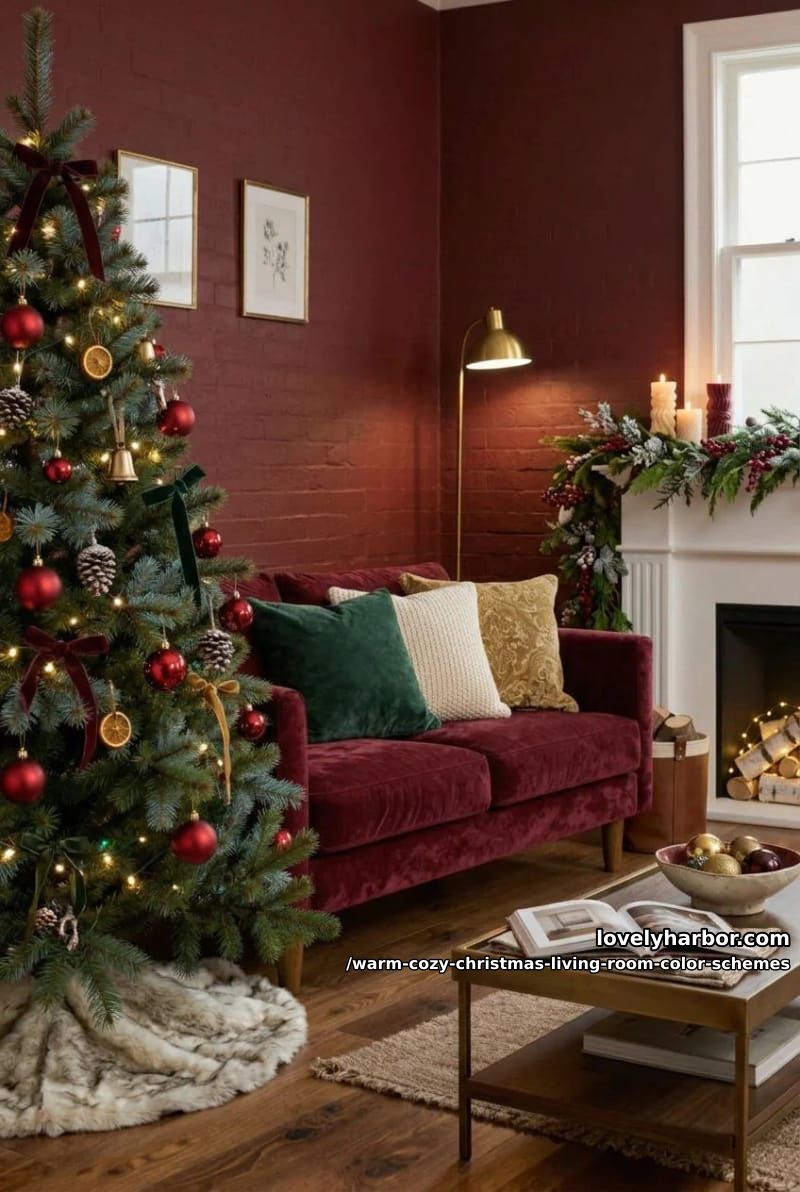
The pairing works the moment you swap the bright red for a brown-based one. A red with brown in it (Farrow & Ball’s Picture Gallery Red or Etruscan Red are the reference points, the former deepened with brown pigment) sits in the same temperature family as a true forest green, so the two stop competing and start agreeing. Candy-apple red does the opposite. It pulls cool and blue, and against a warm green it reads like wrapping paper.
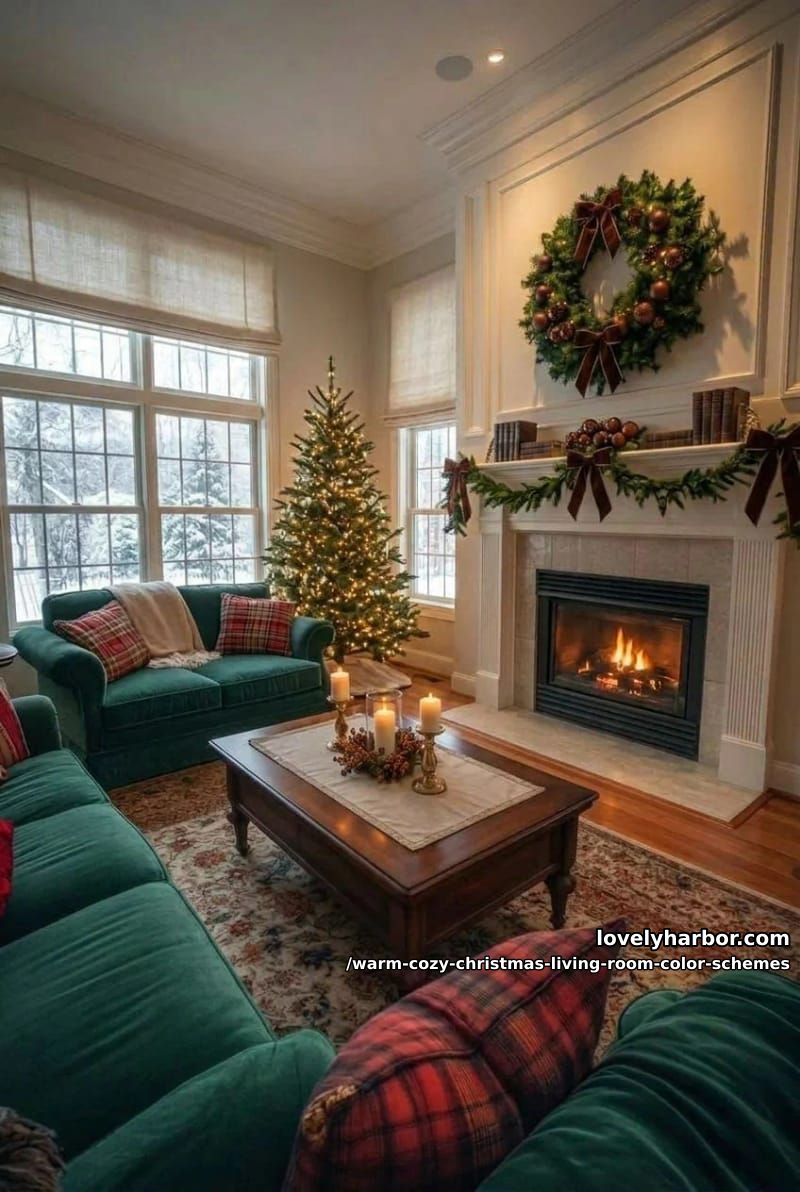
Keep the red as the recessive color and the green as the dominant one, or the room tips into mascot territory. That usually means green on the tree and maybe one painted alcove, with red living in the baubles, a few wool cushions, and the throw. Matte everywhere helps: a chalky wall finish, a short velvet pile, a flat-weave wool that absorbs the lamplight rather than bouncing it.
People sneer at red and green, and they are wrong about the pairing and right about the execution they have usually seen (the buffalo-check-and-galvanized-bucket version that looks like a hotel lobby doing a cabin impression). The colors are fine. The plastic is the problem.
The single most common failure in a red-and-green room is mixing red temperatures. A warm brown-based red on the walls next to cool blue-reds in the ornaments (think cherry, fire-engine, most cheap glass) makes both reds look wrong, and no amount of greenery fixes it. Pick one red temperature and hold it across the whole room, then do the same with the green: a warm yellow-green and a cool blue-green like Farrow & Ball’s Green Smoke will not sit together either. Match warm to warm, cool to cool, and the scheme reads expensive even when it is not.
2. Oxblood, walnut, and antique brass for a cabin without the cliché
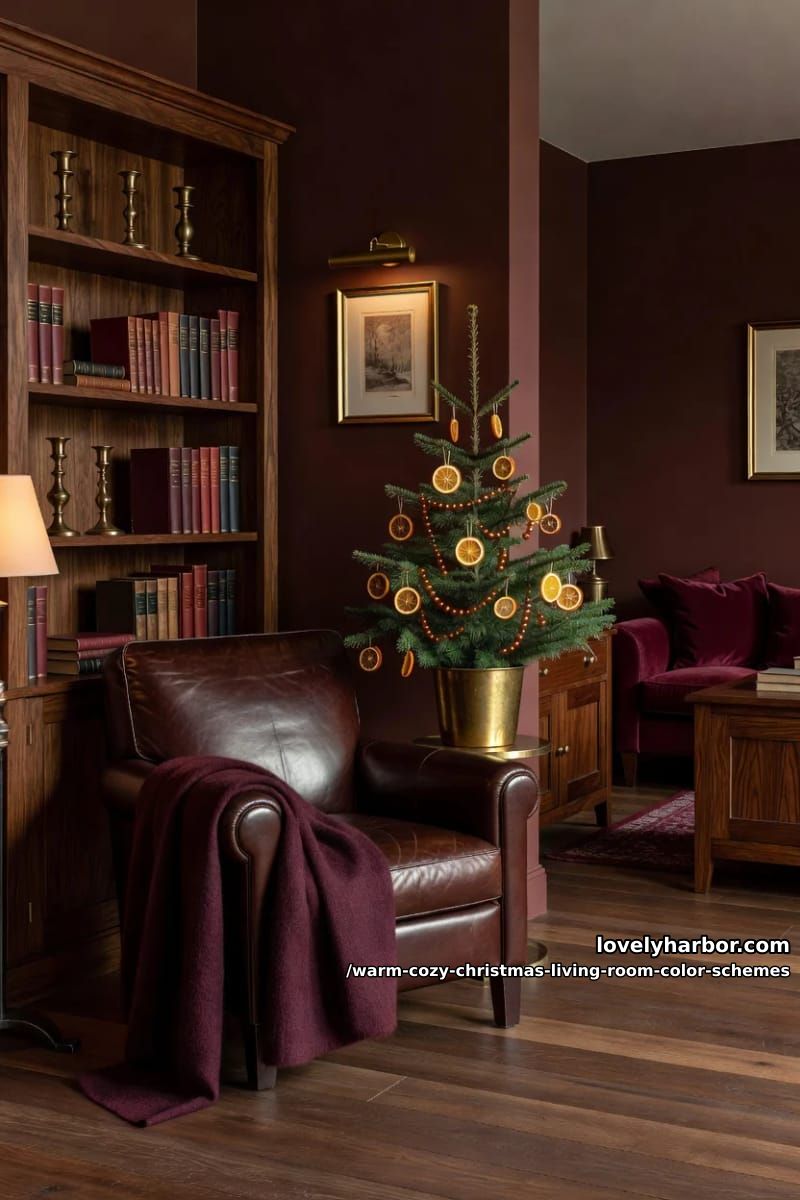
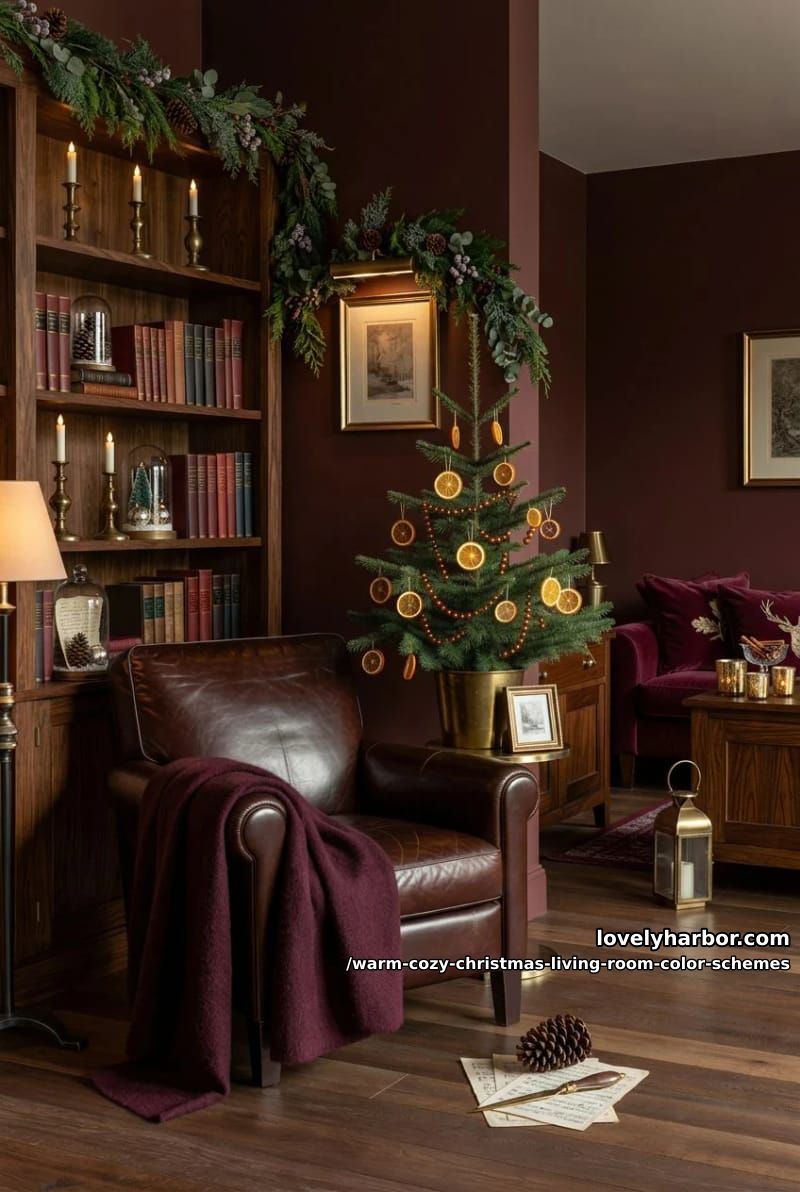
Drop the green entirely and let deep wine do the seasonal work. Oxblood or burgundy on the walls or upholstery, walnut and dark leather for the wood and seating, antique brass instead of gold: it reads Christmas through warmth and depth rather than through any literal red-and-green signal. This is the scheme for a room you want to keep looking decorated into February without the holiday feeling stranded there.
3. Cranberry and clotted cream for a cottage palette
Cramberry and clotted cream Christmas decor is extremely charming, even if you keep things simple like in the image below.
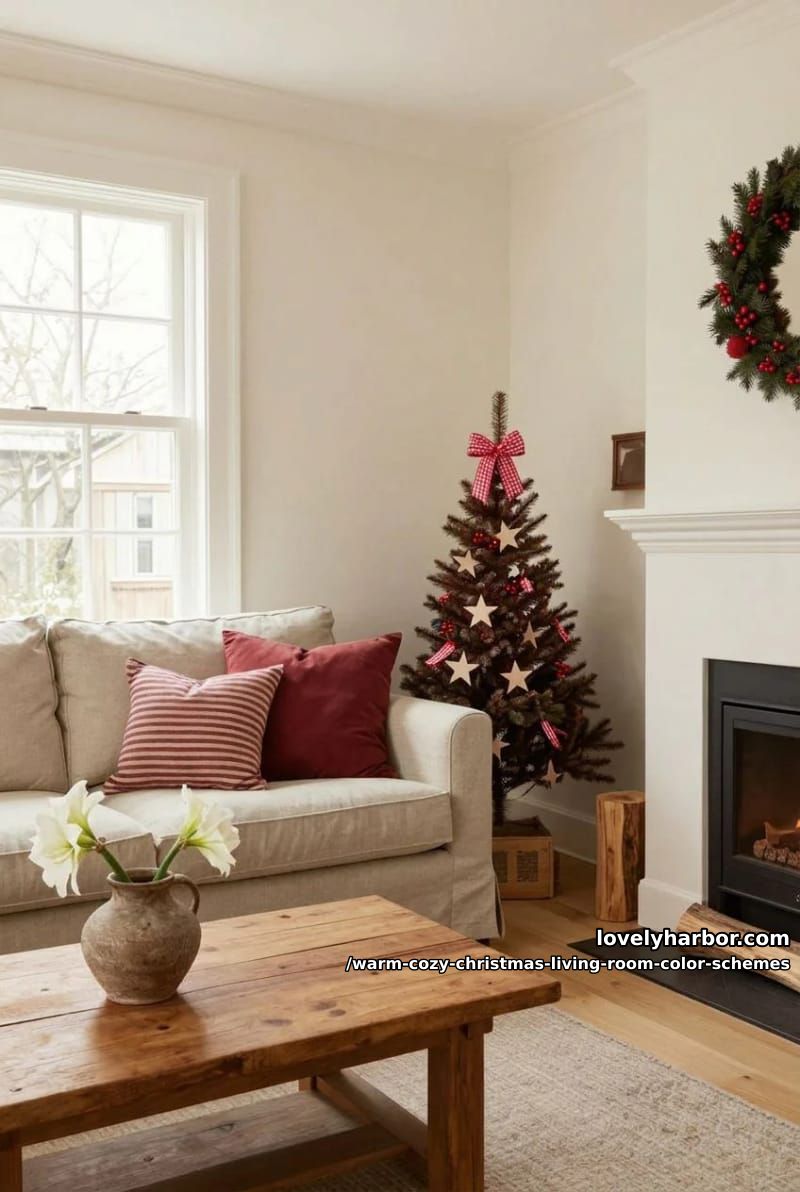
You can also add more decorations like i did here for a more cozy Christmas feel. 👇
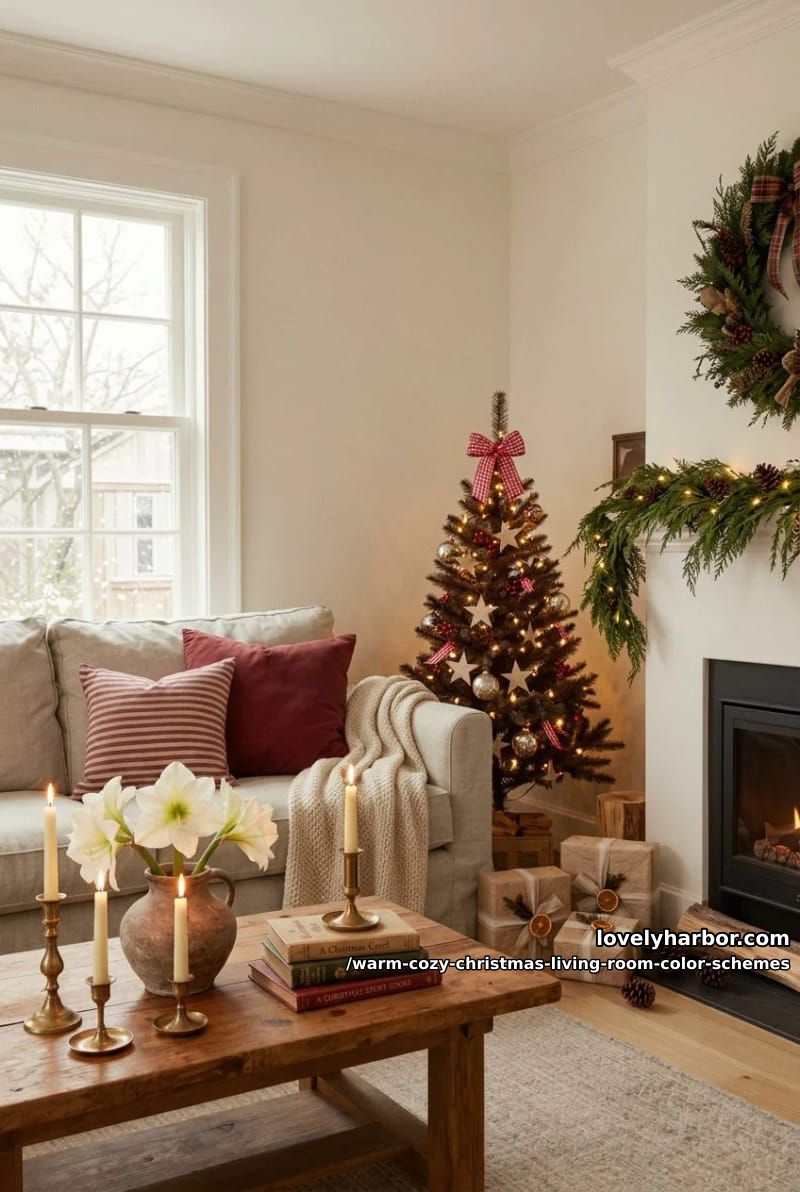
Let cream carry the room and use cranberry only as punctuation. A faded, washed-out cranberry against a clotted-cream wall feels collected rather than themed, and the small amount of green you need comes from a real holly sprig or two, glossy and dark, not a wall color. I spent a few years pushing sage as the sophisticated Christmas green, then lived with it under warm string lights through a December and watched it go grey and faintly seasick. Sage reads English-country garden, not holiday. For a warm scheme, keep your green either deep and true (holly, fir) or skip it.
The quiet, neutral-led palettes
For rooms where you want Christmas to register as texture and light rather than as a color announcement.
4. Warm white, oatmeal, and real greenery
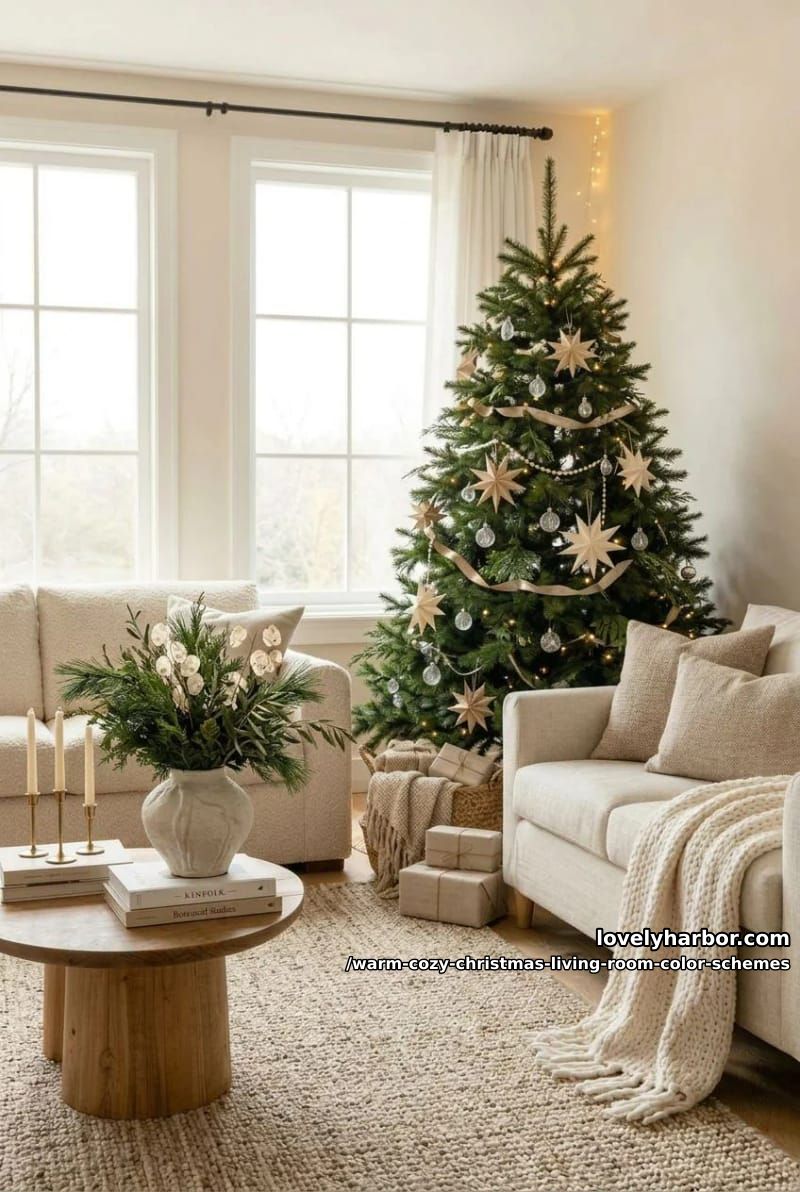
Use a warm white on the walls, never a bright one, and let it do the heavy lifting. The two reference whites here are Benjamin Moore White Dove (LRV around 85, a slight grey keeping it from going yellow) and Sherwin-Williams Alabaster, which is creamier and warmer (it was SW's Color of the Year back in 2016 and reads like that, soft and slightly buttery). Pick by your light: a north-facing room that runs cool and grey wants Alabaster's extra warmth, while a south-facing room flooded with sun can take White Dove's more balanced read without going cream.
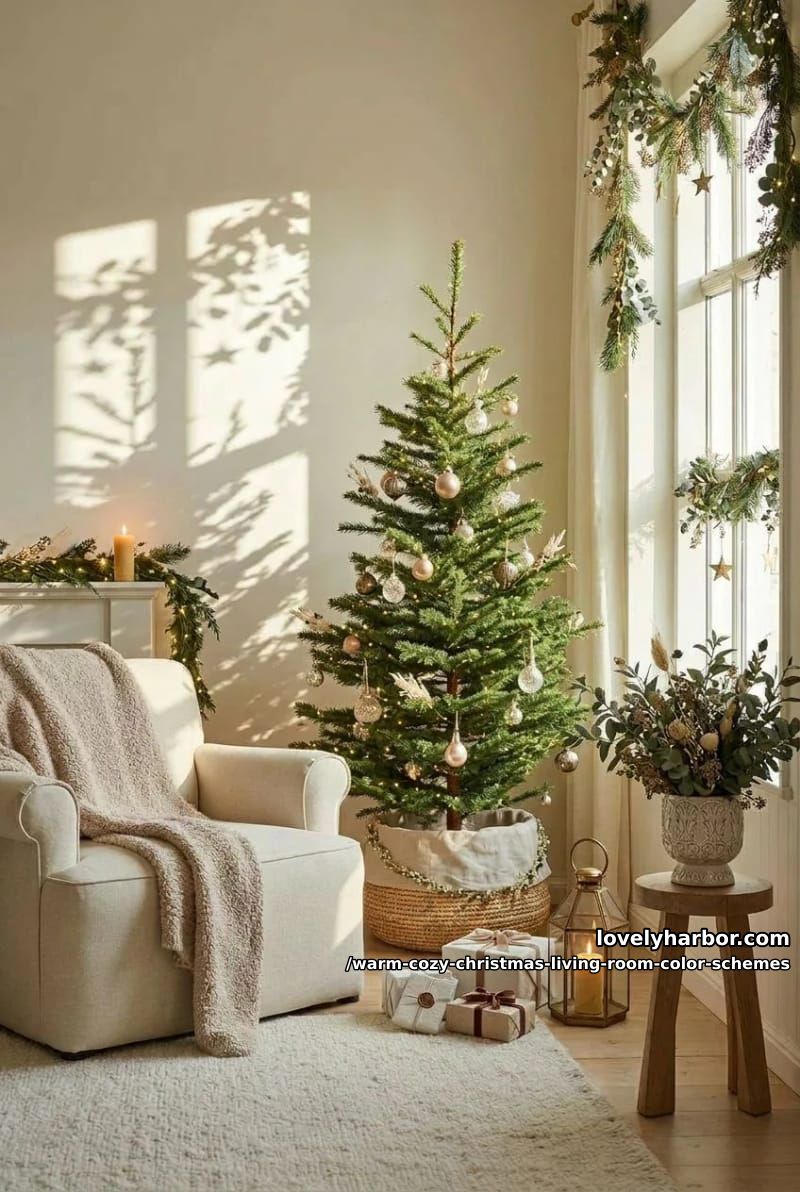
The Christmas part is then just greenery and bulb temperature. Fresh fir, eucalyptus, a chunky oatmeal knit, a bit of paper and clear glass on the tree, and warm-white lights at 2700 kelvin. Cool 4000-kelvin bulbs will undo the whole thing in one evening, turning your careful warm white grey and your greenery flat.
Granted, this only works if your fixed elements cooperate. Cool grey-blue flooring or a stark white kitchen visible from the sofa will drag a warm white toward dingy no matter how good the paint is.
Do this
- Pair warm whites with warm oak, brass, and undyed natural fiber so the warmth reads intentional rather than accidental.
- Run every bulb in the room at 2700 kelvin or lower.
- Test the actual white on the actual wall for a full day. Alabaster and White Dove can swap which one looks better in your specific light.
Avoid
- A crisp no-undertone white like Chantilly Lace next to your warm white. It enhances the yellow and the warm white suddenly looks dirty.
- Cool LED string lights.
- Mixing three different whites on trim, ceiling, and walls and hoping. They will read as a mistake, not a layering.
5. Caramel and camel for people who are done with red
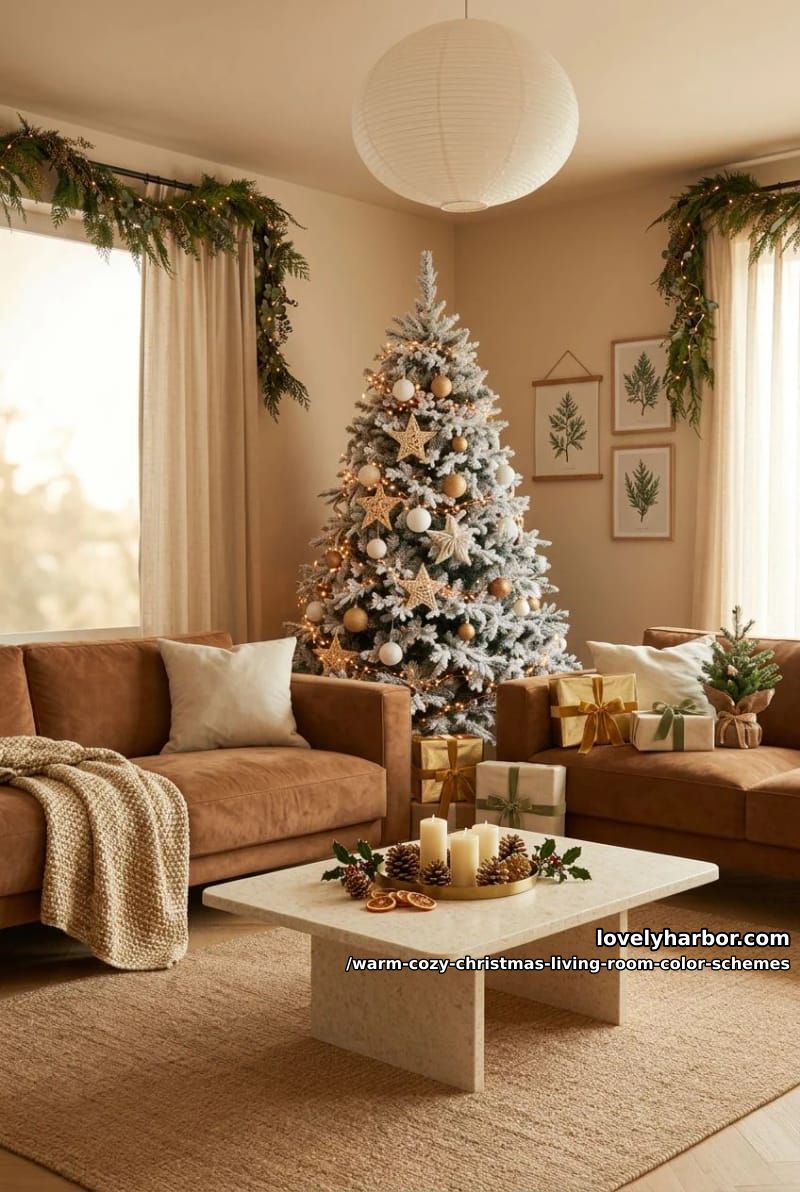
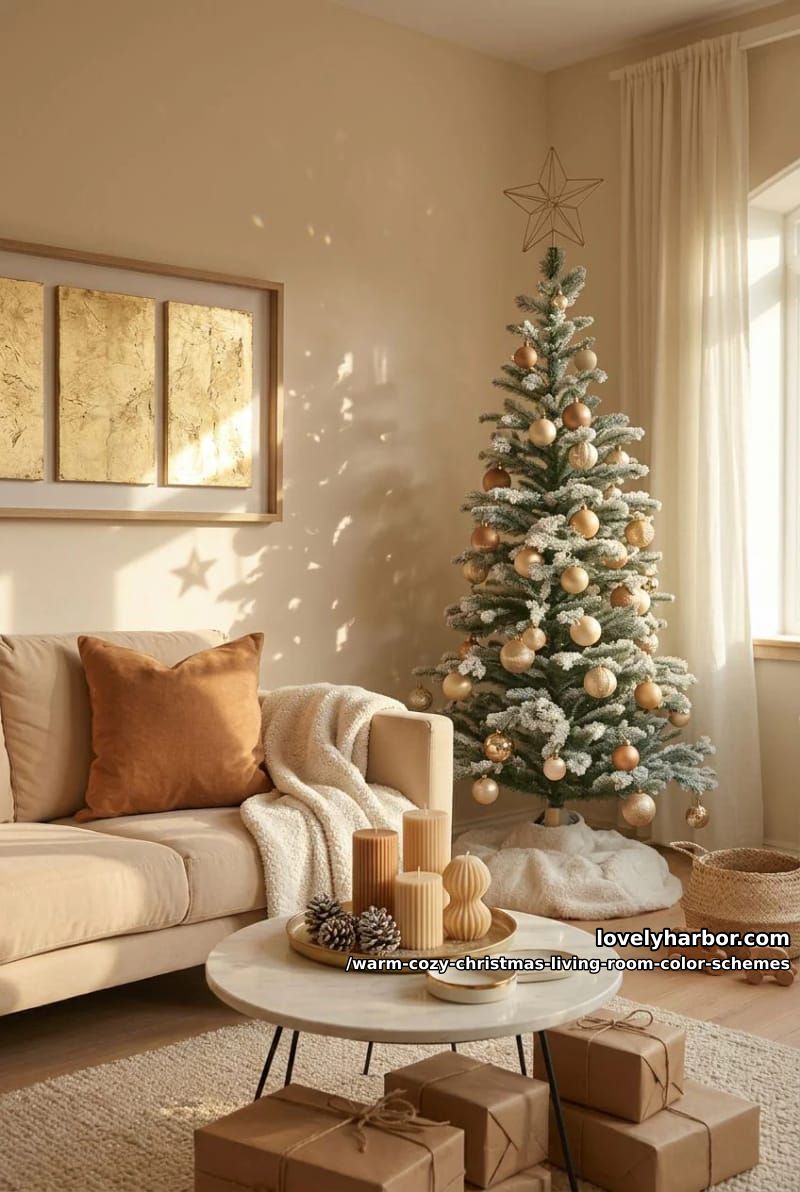
Build the entire palette from caramel, camel, and cream and you get a Christmas room with no red in it at all. This is the most underrated warm scheme on the list because it never reads as a holiday cliché and never needs to come down in a hurry. Lean on texture instead of color: mohair, suede, waffle-weave, brushed-matte ornaments, woven rattan. If you rent and cannot touch the walls, this one is forgiving, since it lives almost entirely in the soft furnishings and the tree.
Earthy, metallic, and unexpected
The less obvious palettes, for when the heritage and neutral routes both feel a little expected.
6. Champagne gold and ivory, kept matte
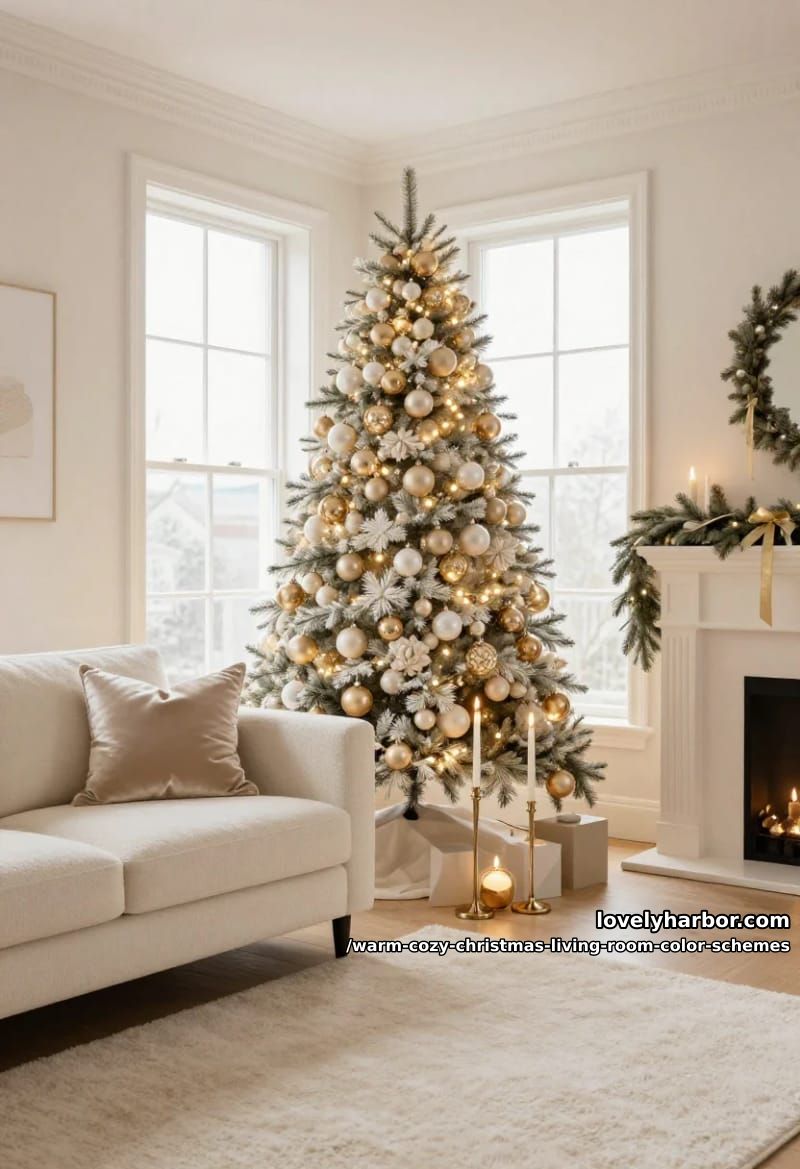
Gold reads as charm only when it is matte; the second it goes mirror-shiny it reads as a discount-store ornament aisle. Brushed champagne gold against ivory, with one cushion allowed a quiet sheen for contrast, is the whole trick. Warm-white lights, no tinsel, and let the metal stay soft.
7. Evergreen and amber for a modern family room glow
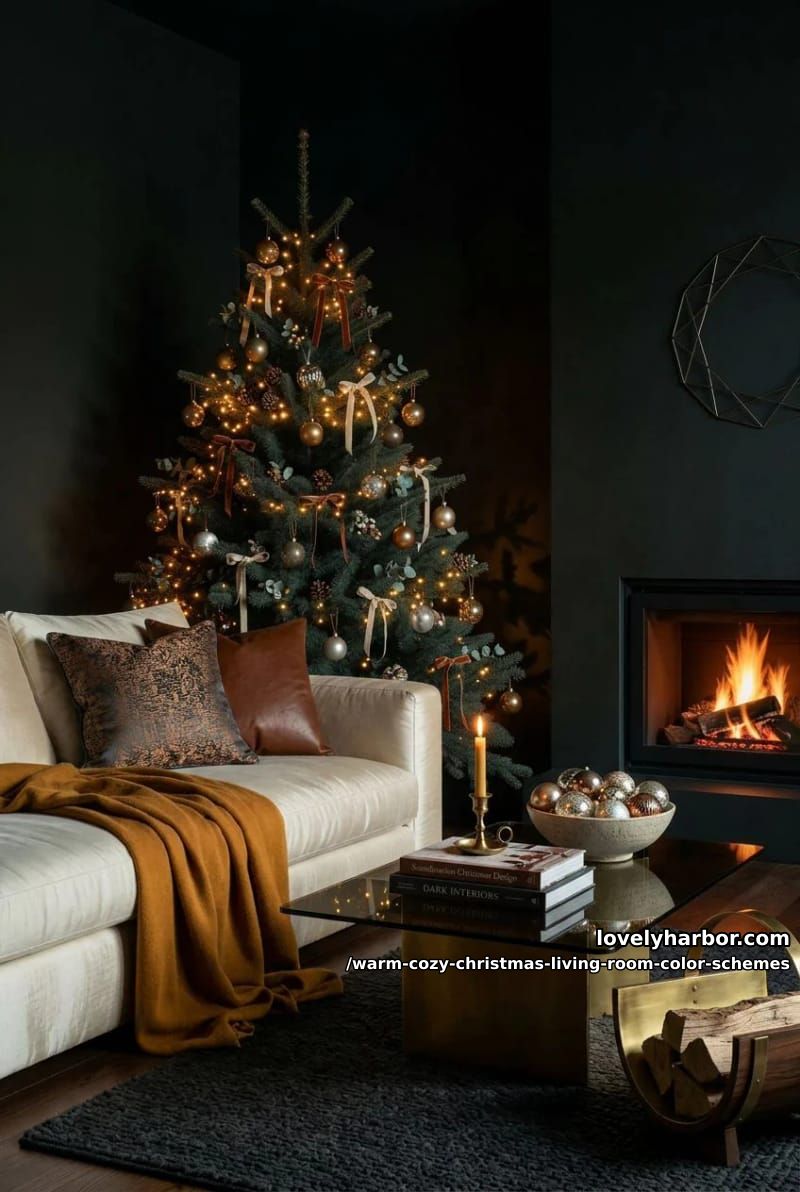
Paint one wall a near-black forest green and light the room amber, and you get the richest scheme on this list. The greens that do this are the deep, blackened ones: Farrow & Ball Studio Green (almost black, one of the first colors the brand made) or Benjamin Moore Hunter Green, which has an LRV of about 6.4 and will read flat black in a dark room, so it genuinely needs natural light or a fire to come alive. The amber comes from the bulbs and the metals, brass and honey-toned glass rather than gold.
Here is the counterintuitive part. Add two cool frost-blue glass ornaments and the whole room reads warmer, not cooler, because the small cold note gives your eye a reference point and the ambers register as ambers by contrast. Two ornaments, no more.
That said, this scheme punishes a half-commitment. A green wall this dark in a bright white room with cool downlights looks like an unfinished paint job, so it wants the warm bulbs and the dark floor to read as deliberate.
8. Terracotta, rust, and olive for an earthy modern scheme
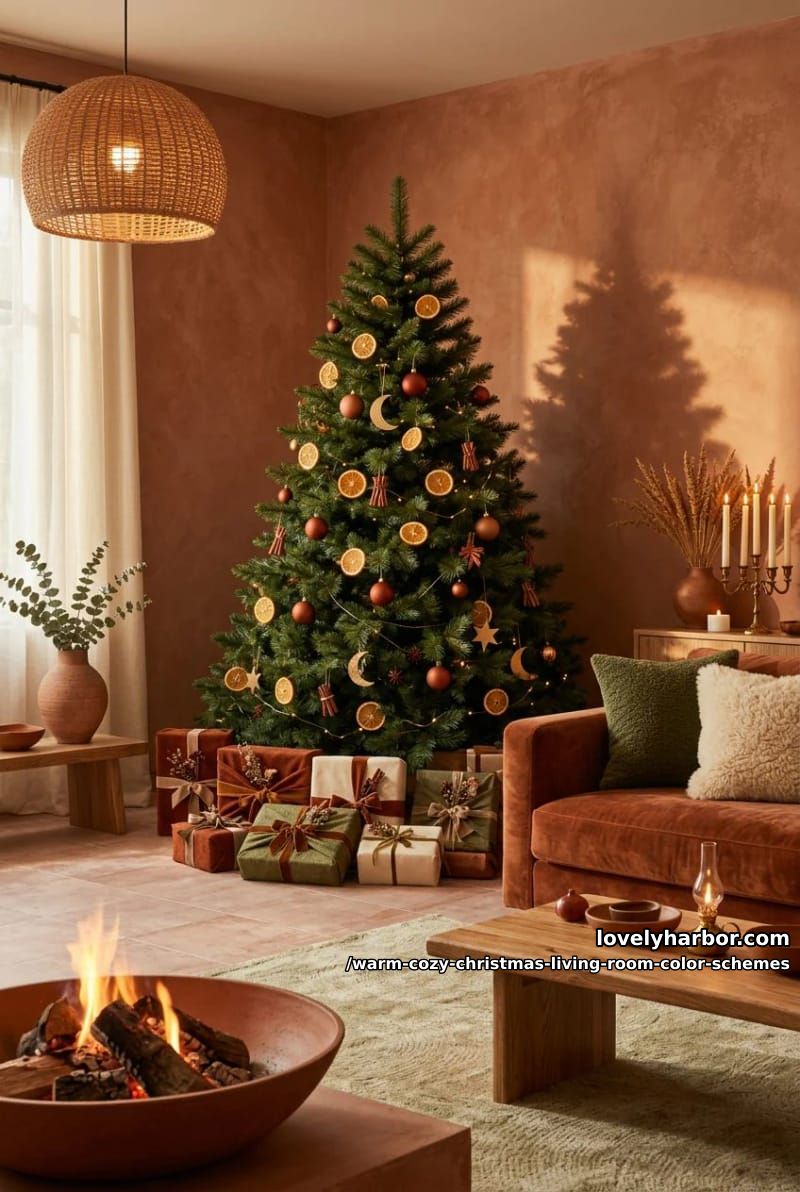
This is the scheme that has been quietly taking over the last couple of seasons, and for once the trend is a good one. Terracotta and rust give you the warmth of red without the holiday-cliché baggage, olive supplies the green at a muted, grown-up register, and the whole thing leans on dried material instead of glass: orange slices, cinnamon bundles, wheat, dried eucalyptus.
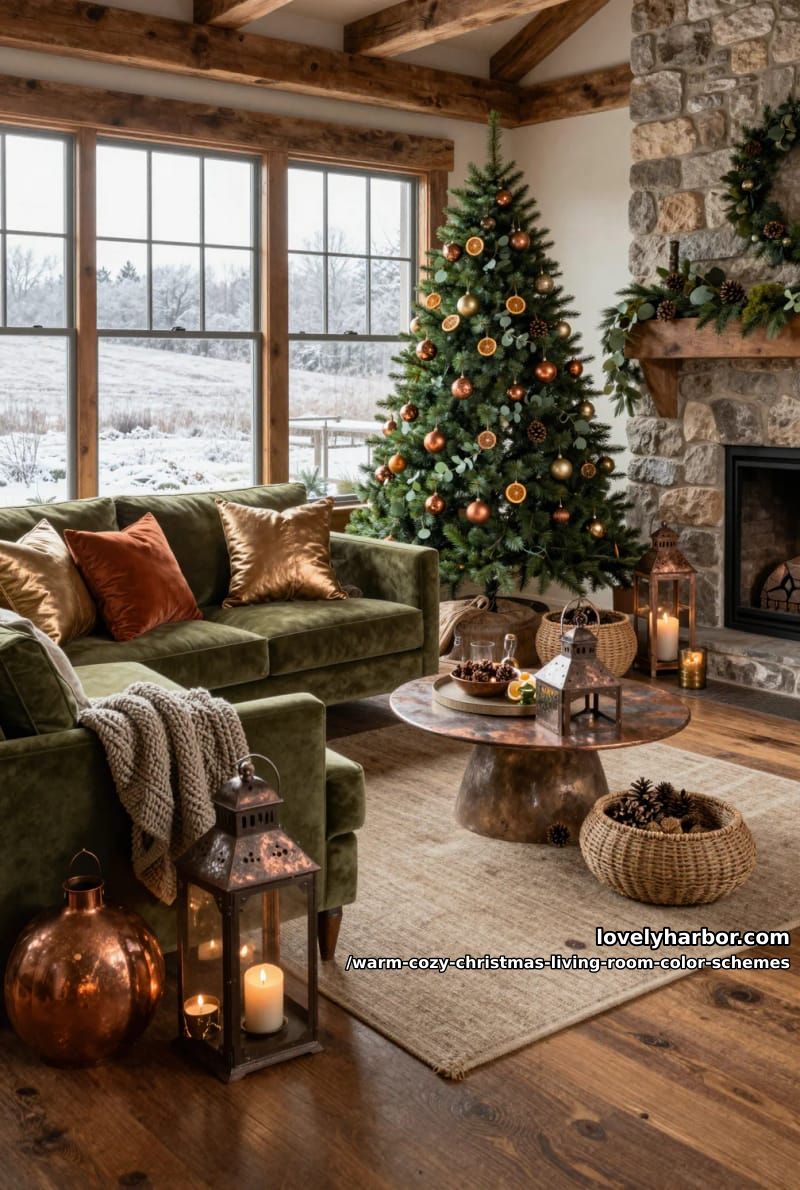
The texture is the entire point here; a limewashed clay wall with its soft cloudy variation, a short-pile velvet, a nubby bouclé, dried botanicals that have actually been dried. Skip glossy ornaments completely. A single shiny bauble in this palette looks like it wandered in from a different, worse room.
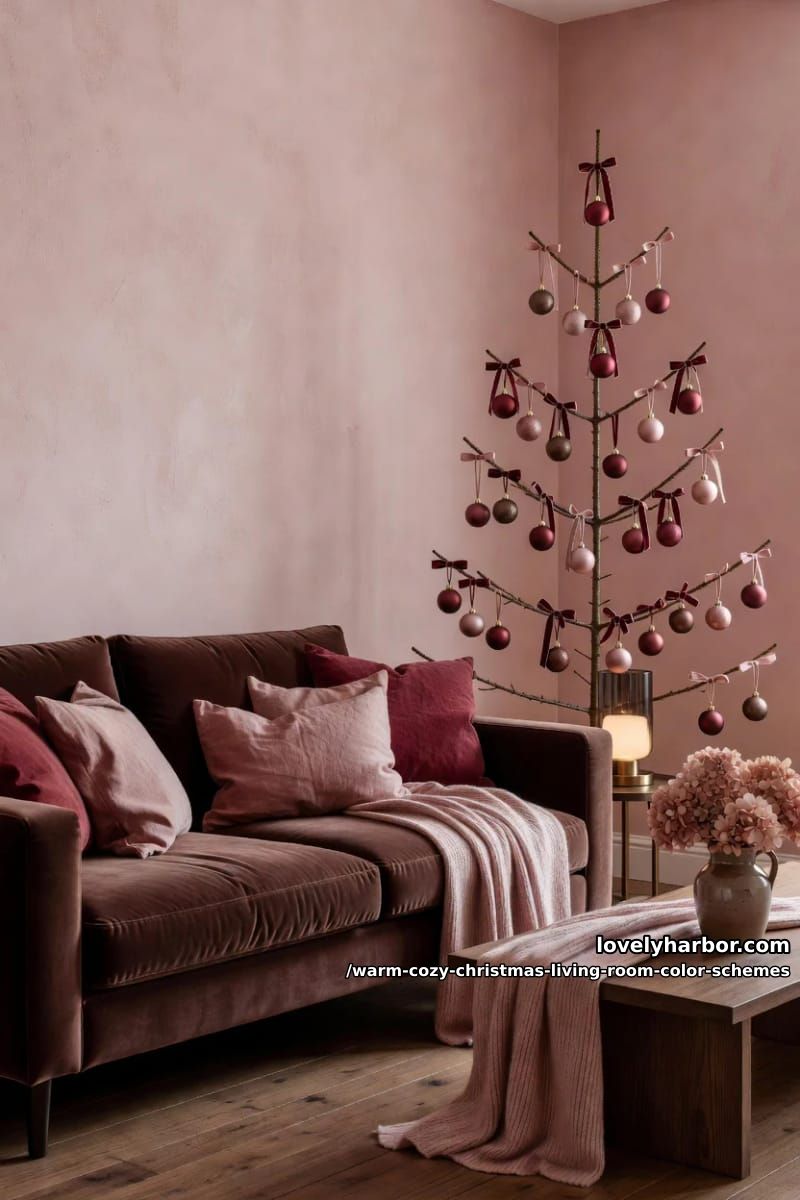
9. Burgundy, dusty blush, and chocolate for something unexpected
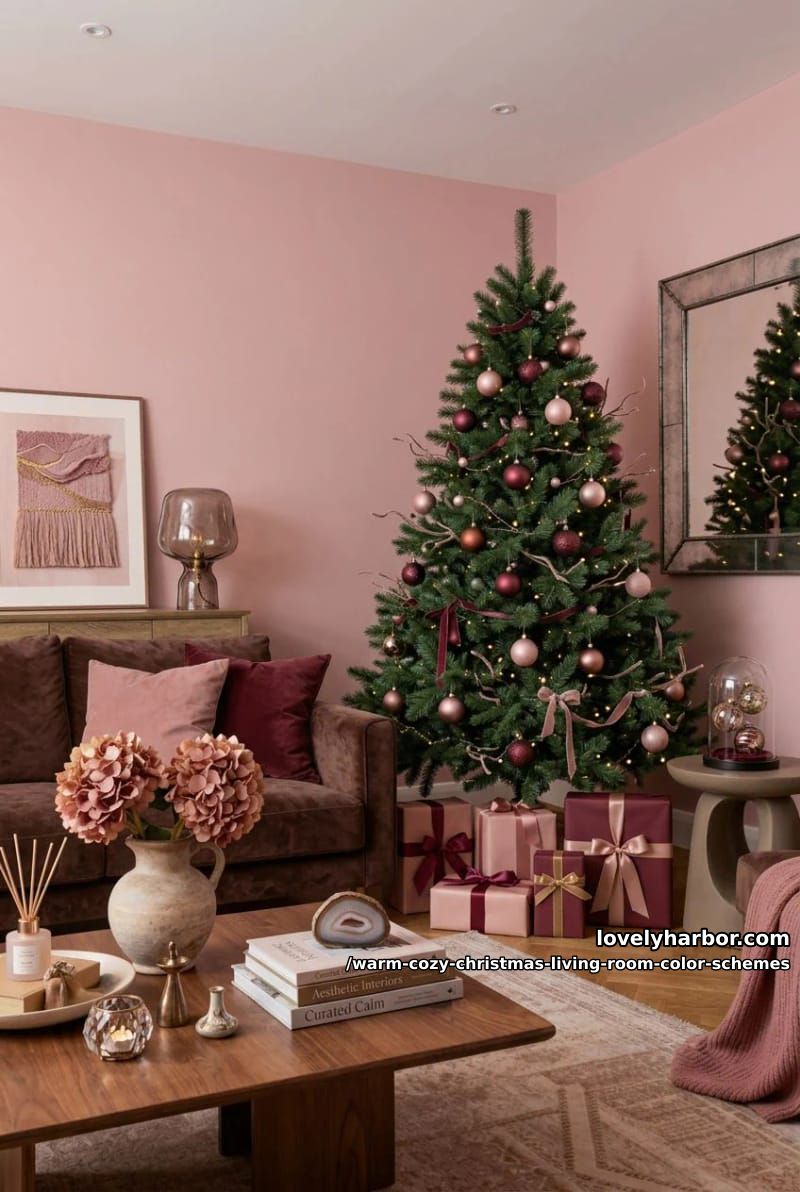
Blush at Christmas sounds wrong until you ground it in burgundy and chocolate, and then it is the most interesting room in the house. A soft plaster-pink wall (Farrow & Ball Setting Plaster is the obvious one, a warm plaster tone with yellow in it) plus a chocolate velvet sofa, burgundy and bronze on the tree, and dusty rose as the lift that keeps the deep tones from going leaden. No green, no bright red, no gold.
Conclusion
If you are starting from scratch, decide the undertone question before you buy a single ornament: are you running warm-warm (the brown-based reds in scheme 1, the terracotta in scheme 8) or going deep and moody (the oxblood in 2, the blackened green in 7)? That one call determines your reds, your greens, your metals, and your bulbs, and it is the thing the warn-block above is really about. Pick your dominant neutral second, then allow yourself exactly one accent color. Most rooms that miss are rooms with three accents fighting.
And whatever you land on, change the bulbs first. A 2700-kelvin warm bulb will flatter every palette here, while a cool 4000-kelvin one will quietly sabotage the warm whites in scheme 4 and the amber glow in scheme 7 before you have even hung an ornament. The paint matters less than people think; the light it sits under matters more.