
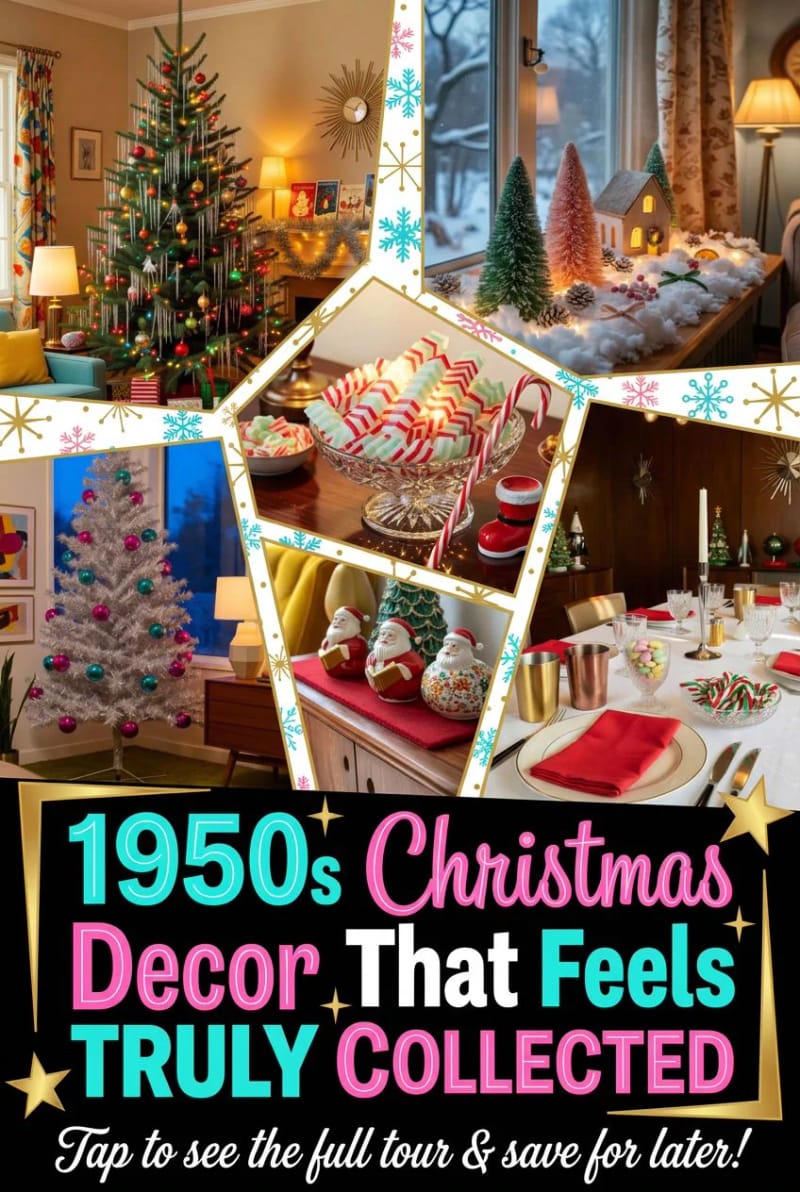
In December 1958 a toy sales manager named Tom Gannon walked past a Ben Franklin store in Chicago, saw a metal Christmas tree in the window, and carried the idea back to the Aluminum Specialty Company in Manitowoc, Wisconsin. By March there was a prototype at the American Toy Fair. That tree is the object almost everyone pictures when they picture a retro 1950s Christmas, and it is barely a fifties object at all: it went on sale for Christmas 1959 and did its real damage in the decade that followed. Knowing which decade a thing actually belongs to is most of the difference between a room that looks collected and one that looks costumed.
The genuinely 1950s signature is glass and light, not plastic. Silvered ornaments, bubbling liquid lamps, lead-heavy icicles hung one at a time, cotton drifts on the windowsill. The plastic blow-mold reindeer and the ceramic tree with the plastic bulbs came later, whatever the Etsy listing says.
Prices here are collector-market ranges as of the 2025 season and they move fast, so treat them as a rough sense of the gap between a $12 wax choir boy and a $1,200 pom-pom tree.
Shiny Brite ornaments, deliberately mismatched

Buy the messy mixed lot, not the matched box of twelve. Max Eckardt founded Shiny Brite in 1937 and had Corning adapt a light-bulb ribbon machine to blow the blanks; by the fifties the company was running four New Jersey factories and turning out ornaments at a thousand a minute. Nobody in 1954 owned a curated tree. They owned whatever survived from 1948 plus whatever the dime store had that year, which is why the authentic look is a red indent next to a pink stripe next to a scuffed gold ball with half its silvering gone.
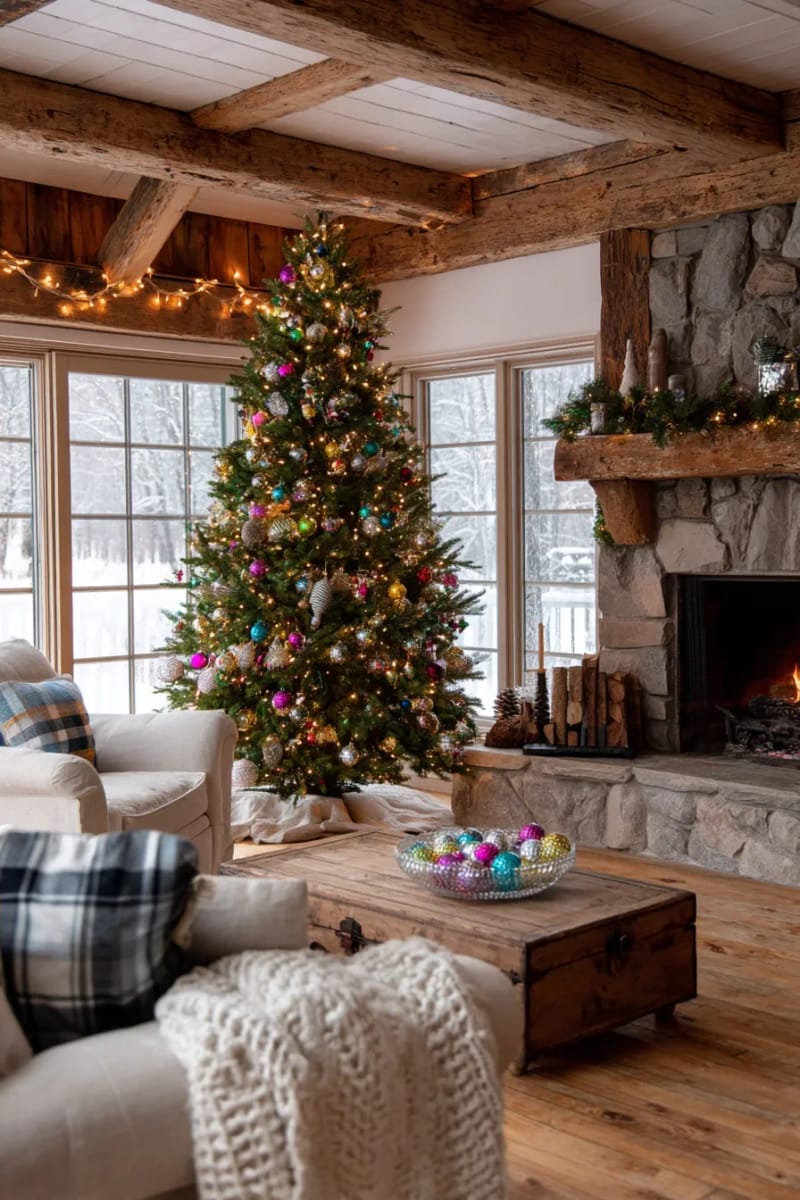
That patchiness is also the thing reproductions cannot give you. Christopher Radko has reissued the Shiny Brite trademark since 2001 and the new ones hang well, but the silver nitrate lining on a real one has usually gone cloudy and grey in patches, and it is that dulling, along with the faded, half-worn colors that separate a genuinely old room from a craft-store version of one, that does the work. Expect to pay $3 to $8 apiece for common vintage balls in a mixed lot and rather more for mica indents.
Put the Putz village on the mantel, not under the tree
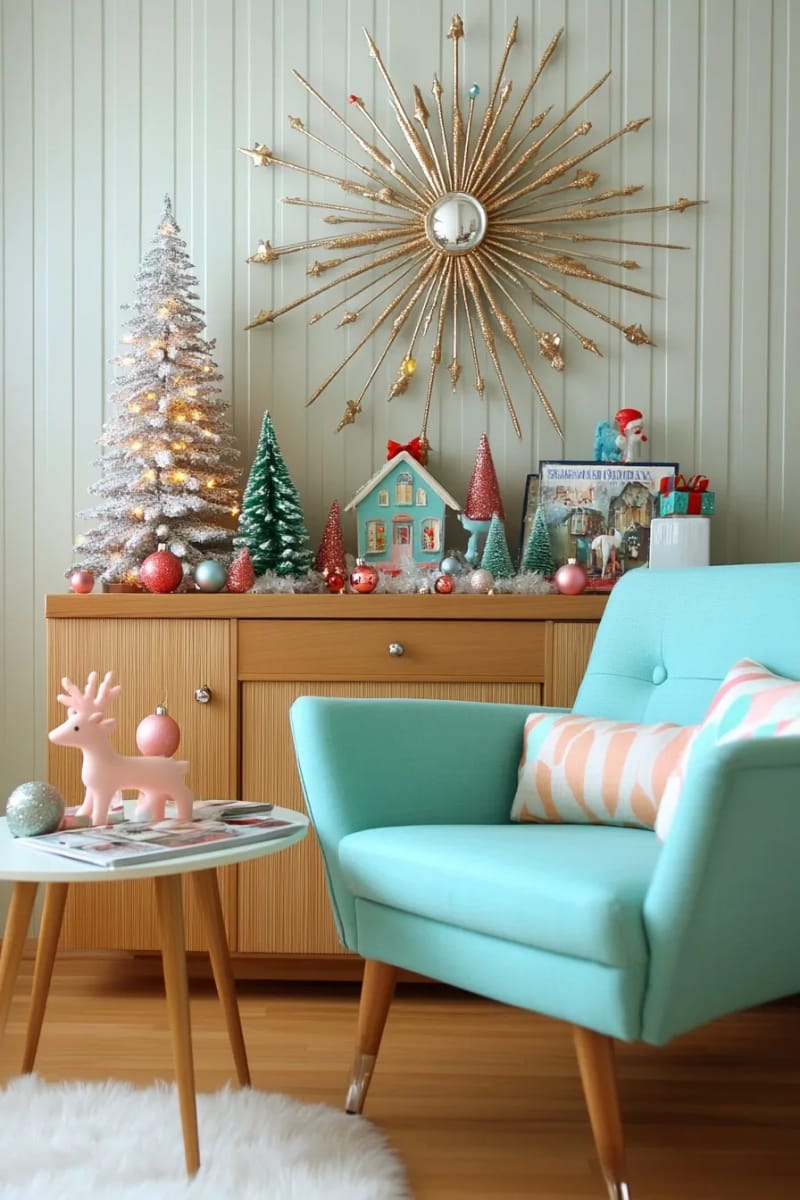
Cardboard glitter houses belong at eye level, where the mica actually catches light. Putz is German for decoration, and the little houses started life as candy containers before they became scenery: rough mica-flecked roofs, cellophane windows, a hole in the back so the house could sit over a bulb from the light string. Under the tree they get lost behind the skirt. On a mantel, lit from behind by a warm bulb, a row of six reads as a small illuminated street.

Most of what circulates was made in Japan, and there is one dating shortcut worth knowing: houses stamped “Occupied Japan” can only be from 1947 to 1952, which puts them squarely in period and makes them worth the extra few dollars. Fill the gaps between houses with bottle brush trees, which are nothing more than bristles twisted into a length of wire, the same construction logic as the chenille stems in a pipe cleaner tree you can twist up in an evening. Loose houses run around $10 to $25; a lot of twenty-five sells for well over $100.
 Christmas Mantel Decorating Ideas That Actually Hold Up All Season Eleven fixes for the mantel that survive past week one, mostly about quantity and physics rather than taste.
Bubble lights are the one 1950s light worth buying
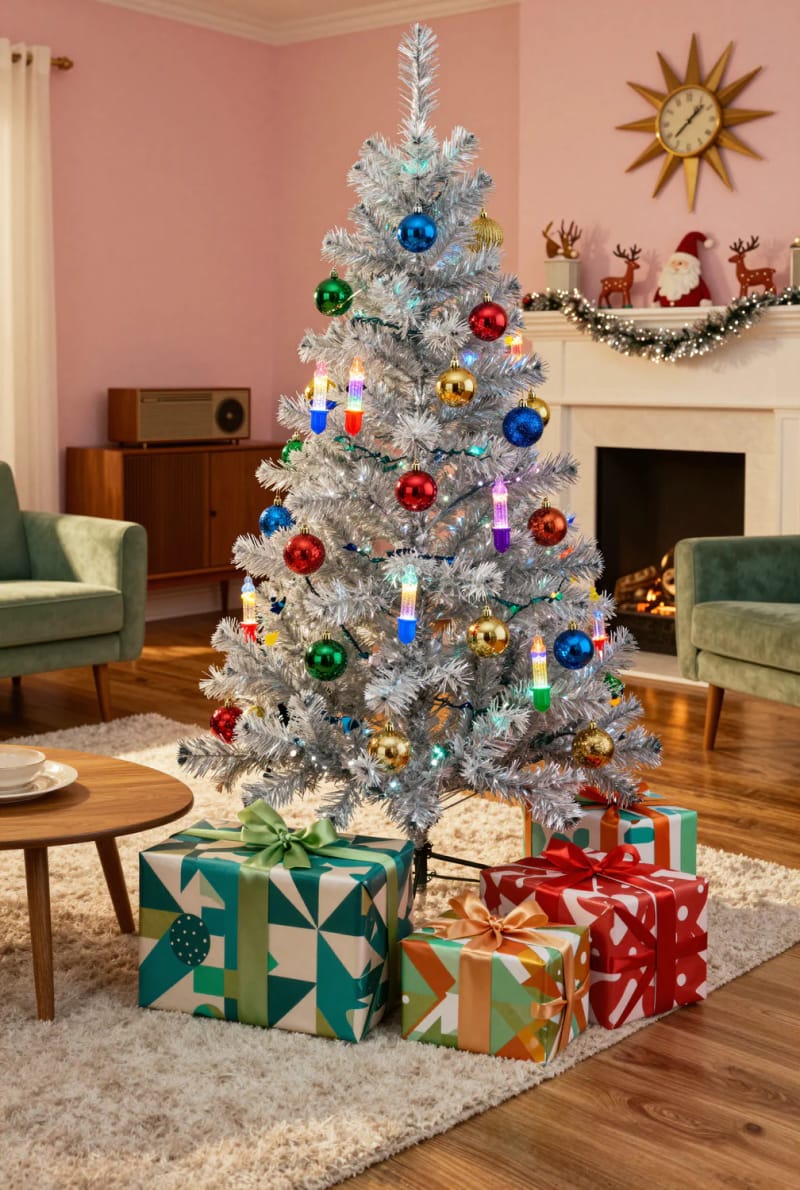
If you buy one vintage electrical item, buy bubble lights. Carl Otis patented the mechanism in 1944 and NOMA put it on the market for Christmas 1946: a sealed vial of methylene chloride sitting on a small bulb, and because the liquid boils at about 104°F, the bulb's own heat is enough to set it going. Nothing modern reproduces the effect. The LED imitations use acrylic rods with permanent fake bubbles moulded into them, which is a bit like buying a photograph of a fireplace.
Two practical notes. They must hang vertically, or the liquid pools and nothing happens, so clip them to branch tops rather than letting them dangle. And they take a minute or two to start, with each color coming up at its own pace. Vintage sets run hot and the old wiring is old wiring; new-production bubble lights are made and are the sane choice if you want a full string, though a row of them along a sill is arguably the better use anyway, in the spirit of a window that has to read from the curb and from the sofa at the same time.
The aluminum tree is a 1960s object, and I would still put one up
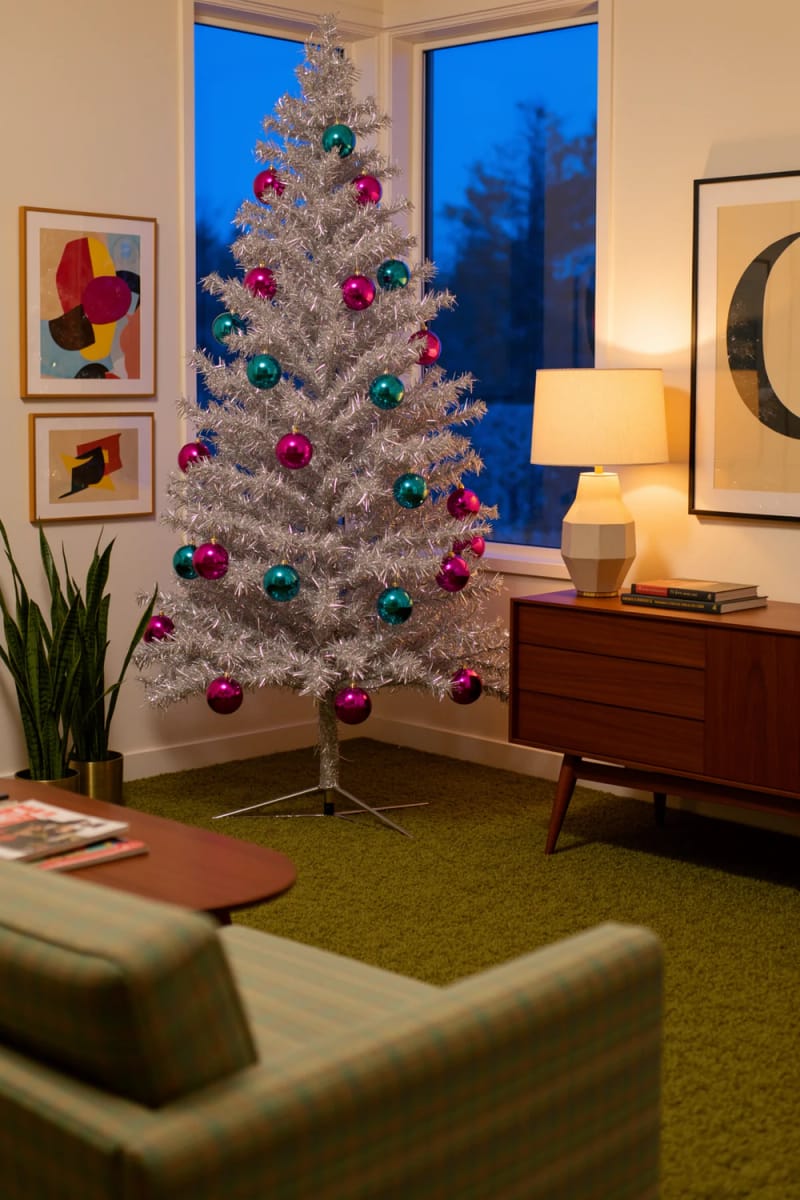
Let me be honest about what this is. The Evergleam went on sale for Christmas 1959, the brand name only arrived in 1960, and Aluminum Specialty built more than a million of the things across the following decade before A Charlie Brown Christmas shamed the country out of them in 1965. It is a Space Age object wearing a fifties costume. It also happens to be the most striking thing you can put in a corner, and the fifties and sixties bleed into each other so thoroughly in the wider mid-century modern Christmas look that nobody sensible will call you on it.
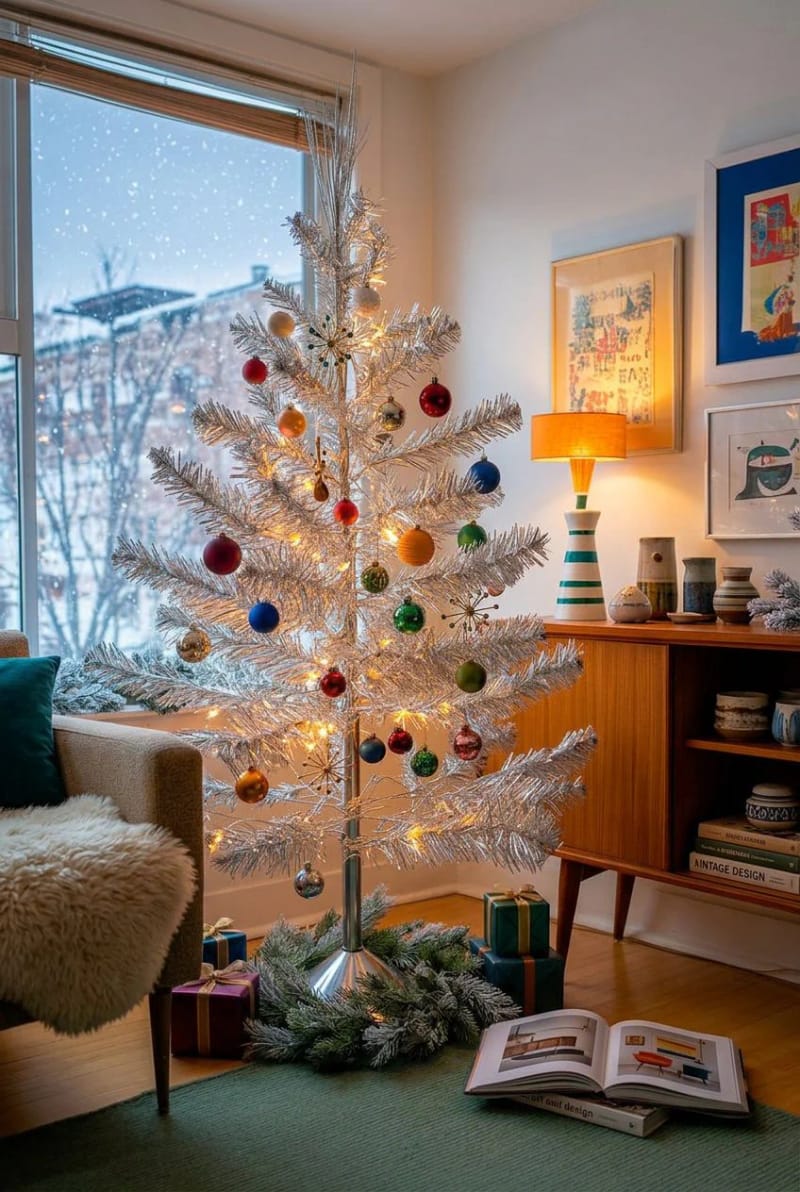
The engineering constraint is the interesting part: you cannot string lights on a metal tree without risking a short, so the whole thing is lit from outside by a color wheel, a floor spotlight behind a slowly rotating disc of colored gels. That is why an aluminum tree in a dark room cycles through amber, green, red and blue rather than twinkling. The Wisconsin Historical Museum’s exhibit on the Evergleam is the best single source on how the thing was actually engineered, down to the drilled trunk holes that set each branch angle.
Budget accordingly. Tabletop trees under four feet trade around $30 to $300; a full-size six or seven footer in good condition with its original box runs from roughly $100 into four figures, and the pom-pom versions, where each branch flares into a burst, are where the silly money lives. Color wheels alone go for $50 to several hundred. A reproduction tree with a modern wheel gets you ninety percent of the look for a fraction of that, and I would not lose sleep over it.
String the Christmas cards instead of stacking them
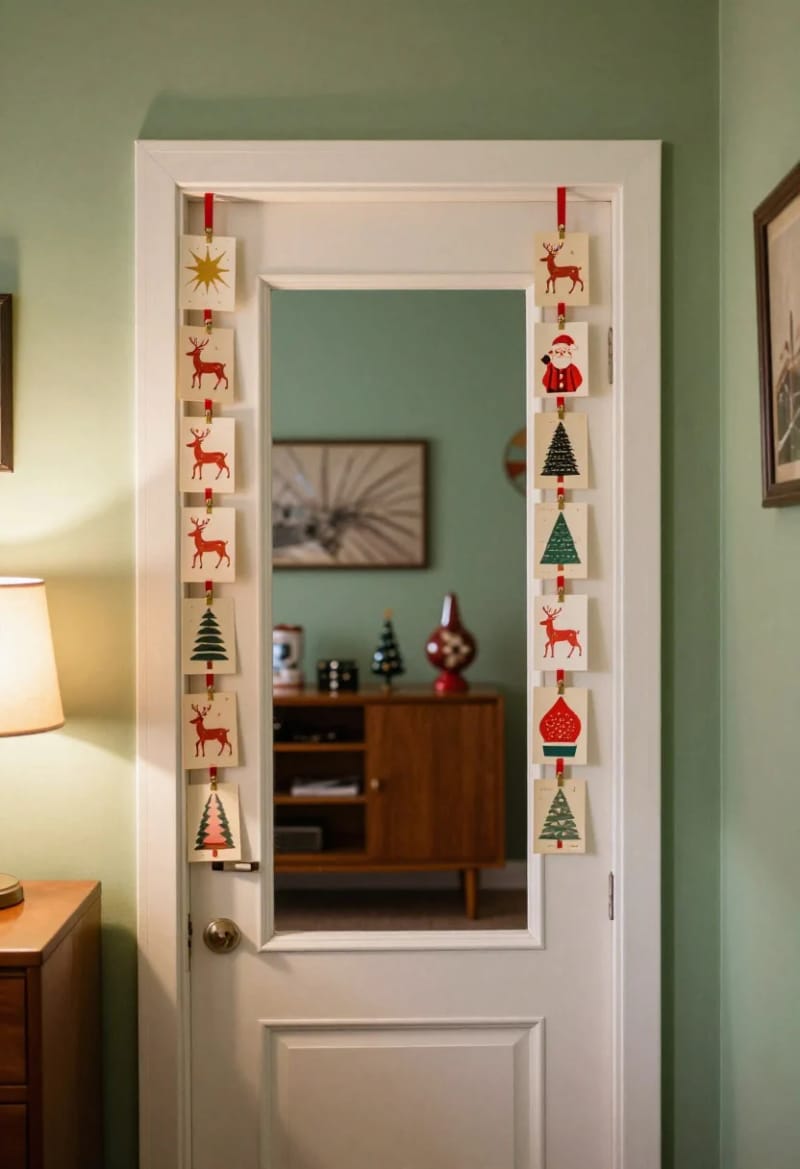
The cheapest genuinely 1950s move in this whole list costs a spool of red grosgrain. Cards arrived by the dozen and got hung, not filed: taped in a fan around the doorframe, clipped to a ribbon down the side of the hall, strung across an archway so guests walked under them.
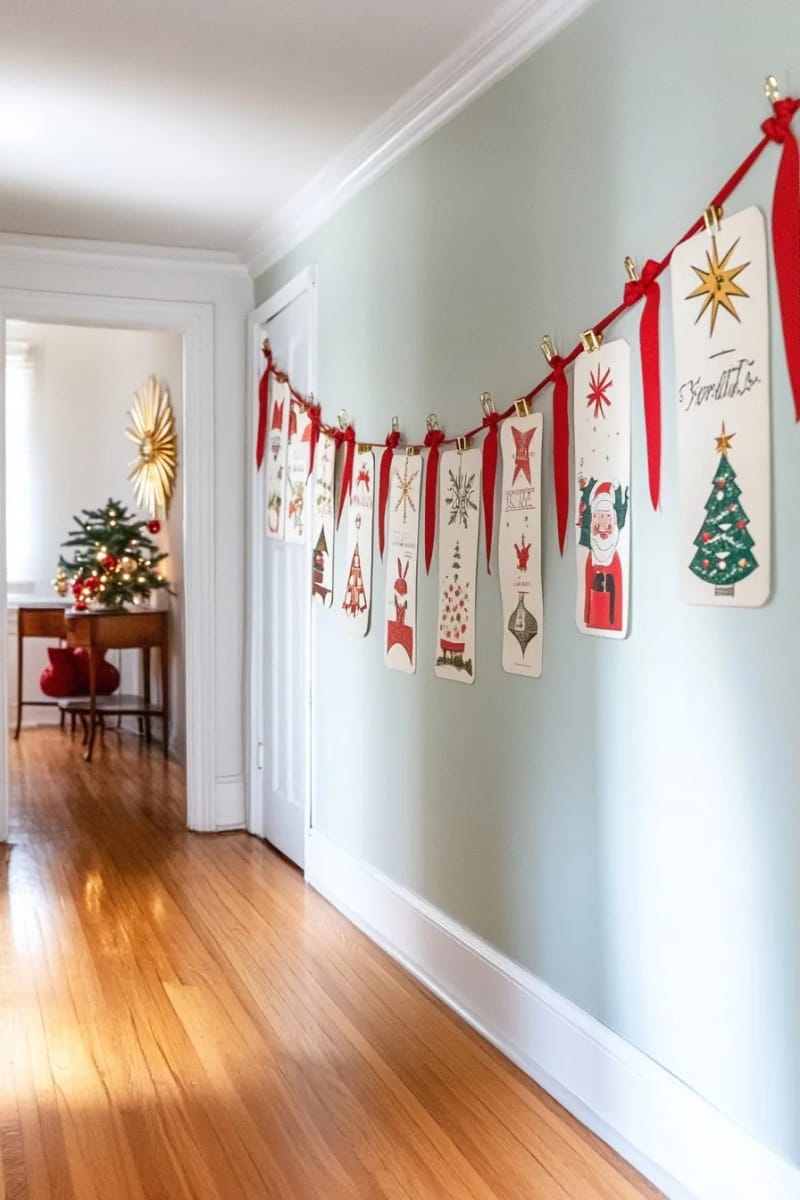
The card art is the payload. Mid-century greeting cards were doing flat two-color printing, gold starbursts, elongated reindeer and geometric trees years before any of it filtered into furniture, and a wall of them delivers more period signal per dollar than anything you can buy. Vintage lots turn up for a few dollars on Etsy, and if you want the arrangement to look intentional rather than accidental, the same logic that governs a hallway that reads decorated rather than cluttered applies: pick one ribbon color and stick to it.
Lametta icicles, hung one strand at a time

Handful-throwing is why your tinsel looks wrong. The 1950s strand was lead alloy, and it was heavy: it hung dead straight, it did not tangle, it did not cling to itself with static. Susan Waggoner, who has written a good deal on the history of the holiday, describes putting it on a single strand at a time to get that dripping icicle effect, which sounds insane until you have seen a tree done that way. The lead went away by voluntary agreement between the FDA and the manufacturers in 1972, and the chemistry of what replaced it is a genuinely interesting read.
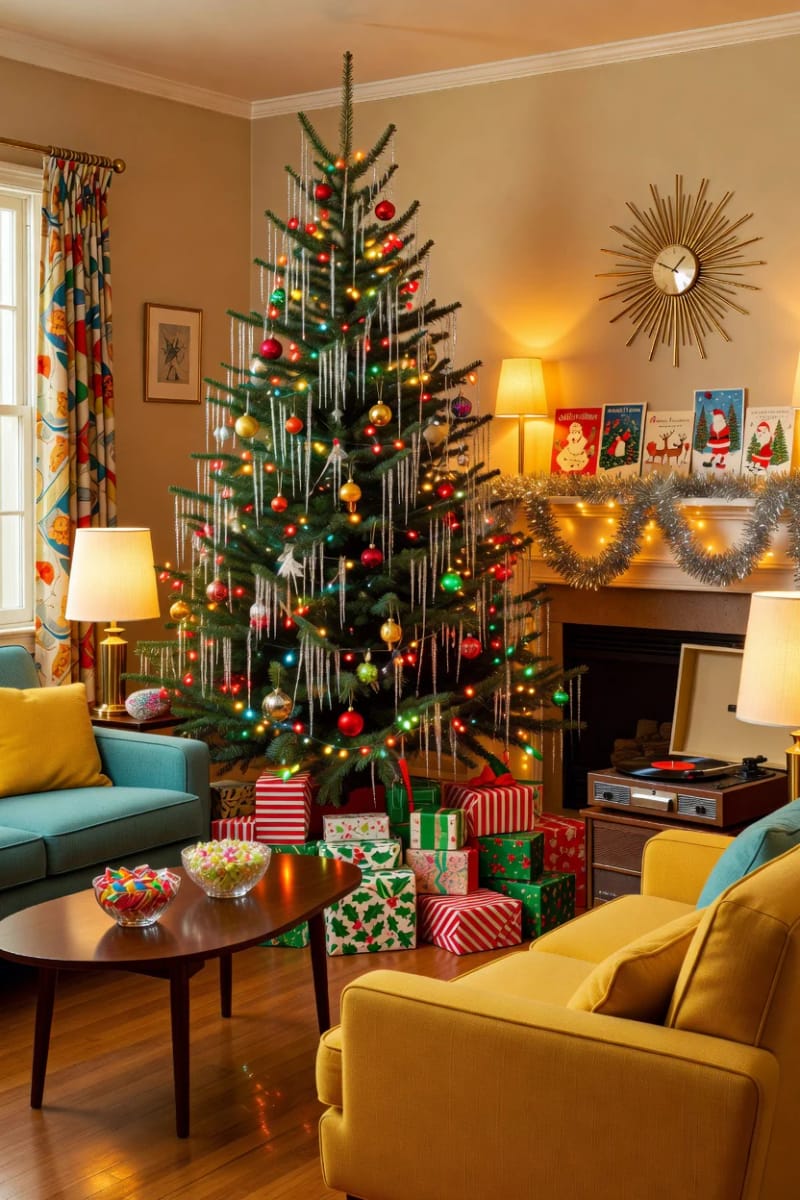
Modern PVC and mylar icicles are feather-light and behave badly. The workaround is to buy foil lametta rather than plastic film, hang it only on the outer third of the branches where it can fall freely, and accept that you are going to spend a slow, dull hour doing it while something plays in the background. There is no shortcut here that does not look like a shortcut.
Pink, turquoise and chartreuse beat red and green
The palette is the fastest tell in the room, and the fifties palette is not the one you think. Shiny Brite sold red and green, yes, but also gold, pink and blue, and the aluminum trees came in silver, green, gold and pink. Turquoise, coral, chartreuse and blush turn up on everything from the glassware to the flocked reindeer figurines that sat on the sideboard.

Pick two of those and one metal, then hold the line. A pink-and-turquoise tree with silver icicles is unmistakably 1955; the same tree with a few red baubles thrown in for safety is nothing in particular. If the idea of committing the whole tree makes you nervous, the middle path is a pink tree carrying the color on its own while everything else in the room stays neutral. The flocked deer, sold four to a box in assorted colors, are the low-commitment version: put them on a shelf and they set the palette for the entire room without you touching the tree.
Cotton batting snow, and never angel hair
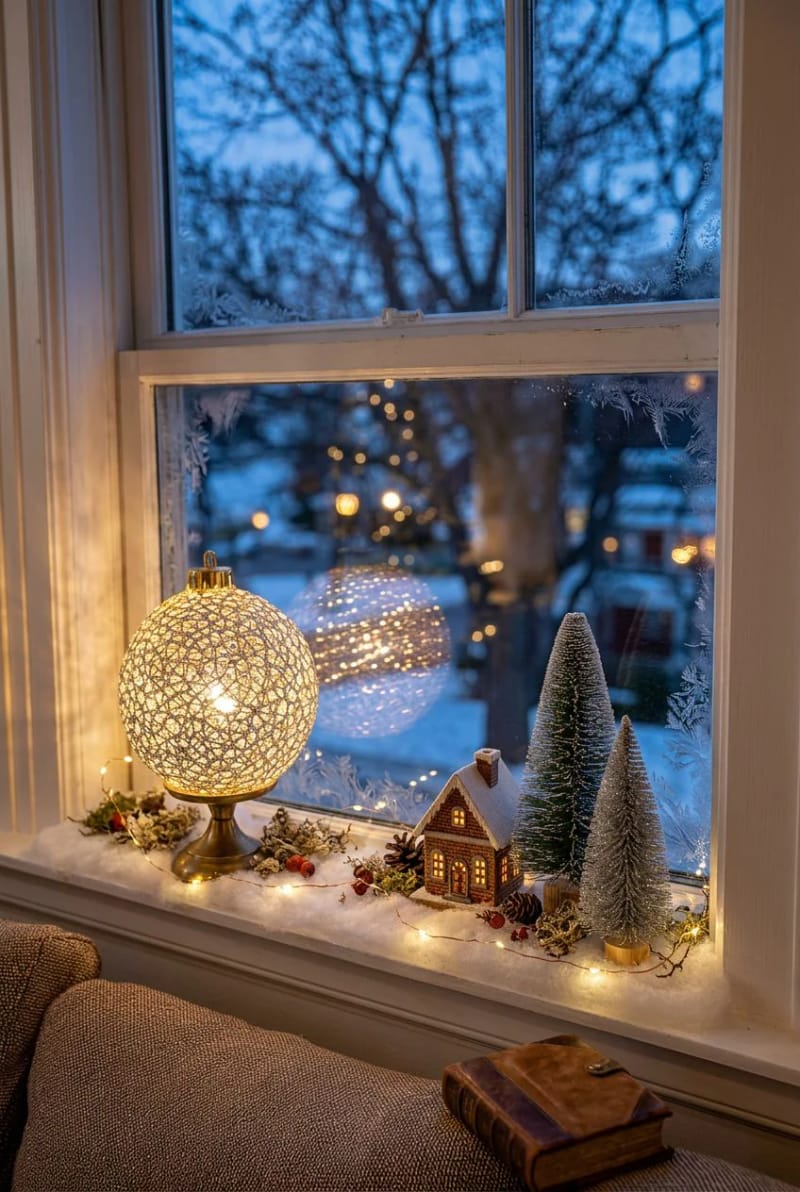
Snow drifts in 1950s photographs are cotton, laid in rolls along windowsills and banked around the base of the tree, and you can still do exactly that with quilt batting from any fabric shop. Pull it apart so the edges go wispy instead of cut, dust it with a little glass glitter or mica flakes, and tuck the seams under. It reads better in low light than anything sprayed from a can.
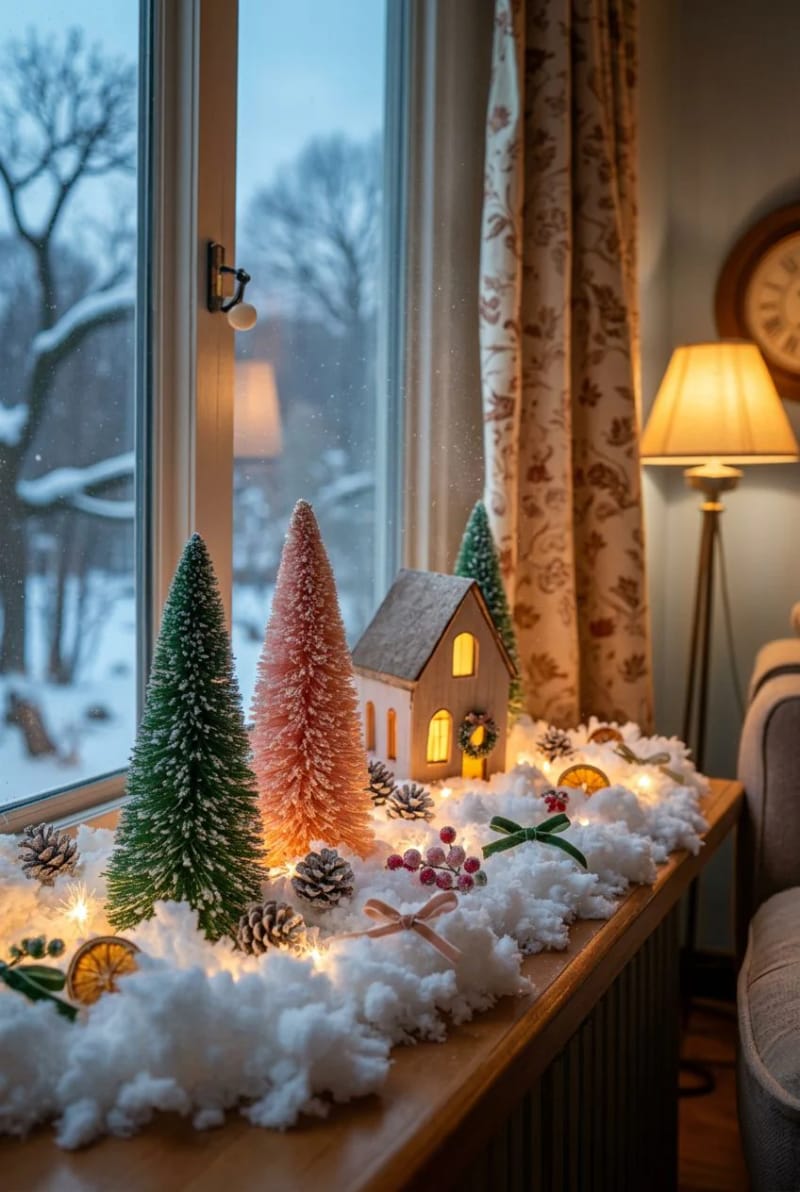
What you should not do is buy the vintage boxes of angel hair, however lovely the packaging is.
The white cloud material sold through the fifties and sixties is fine glass fiber, and the boxes themselves carried a caution to that effect. It leaves splinters in your fingers, your forearms and your clothing, and it is the reason a lot of people remember a crying child at some point in the family Christmas story. Unopened boxes still circulate on eBay. If you own one, keep it sealed as an artifact, or handle it only with gloves and long sleeves and keep it entirely away from children and pets. Cotton batting gets you the same soft drift with none of it.
Gurley caroler candles, and buy them new
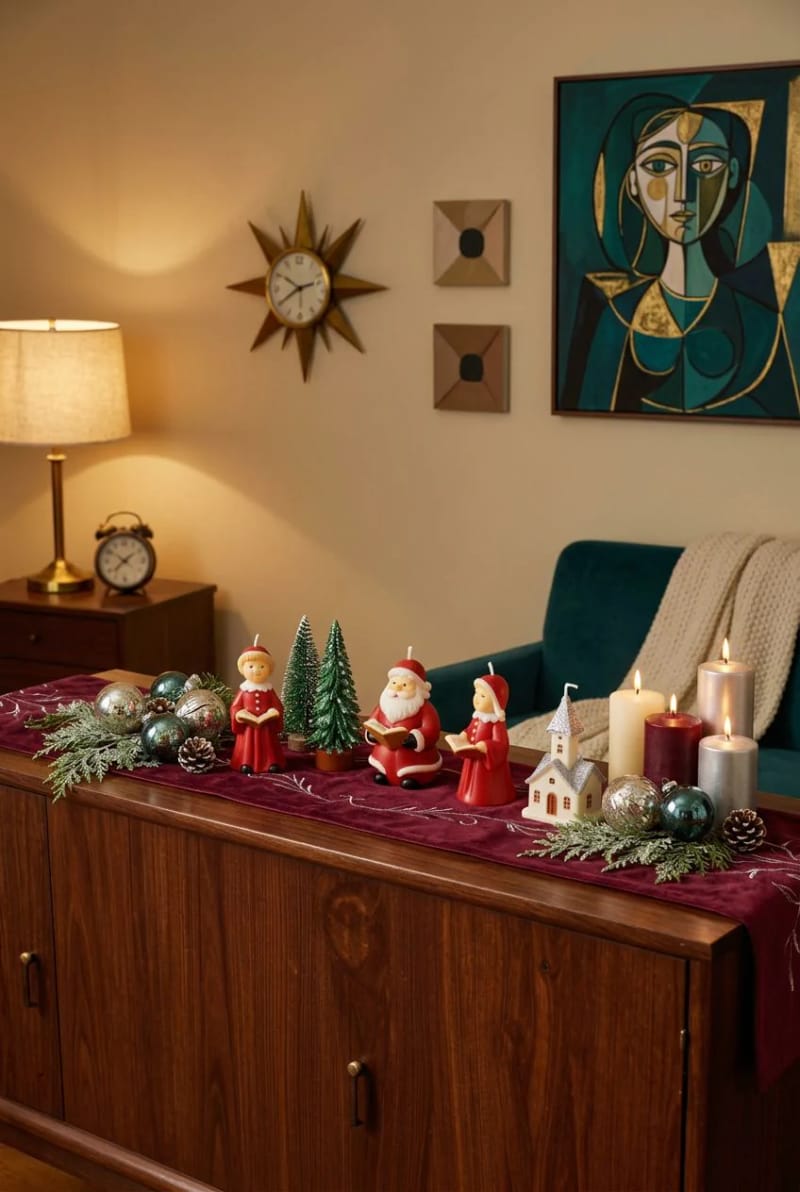
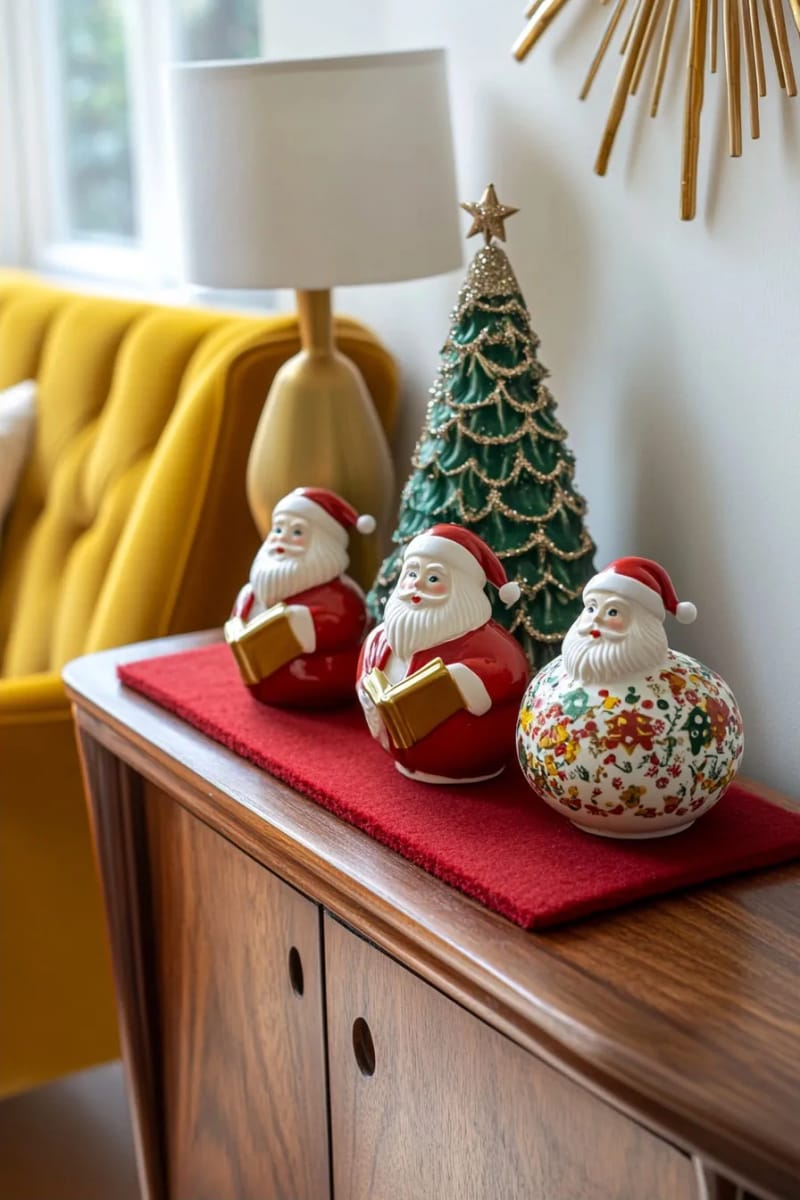
Buy the reproductions and spend the difference on glass. Franklin Gurley bought the Tavern candle brand in 1949 and renamed the company after himself, and through the fifties Gurley Novelty sold little wax carolers, Santas, trees and churches through the dime stores for well under a dollar apiece. They were never meant to be lit; they were meant to be looked at, which is why so many survive.
Here is the part collectors will not enjoy: the Vermont Country Store bought the original molds and still runs figures off them, so the new candle is the same shape as the old one. A vintage single runs $5 to $45 depending on size and condition, and a boxed set climbs well past that. I would not pay $40 for a sixty-year-old wax choir boy that will slump the first warm evening on a mantel above a working fire.
Hang a plastic Santa where the wreath would go
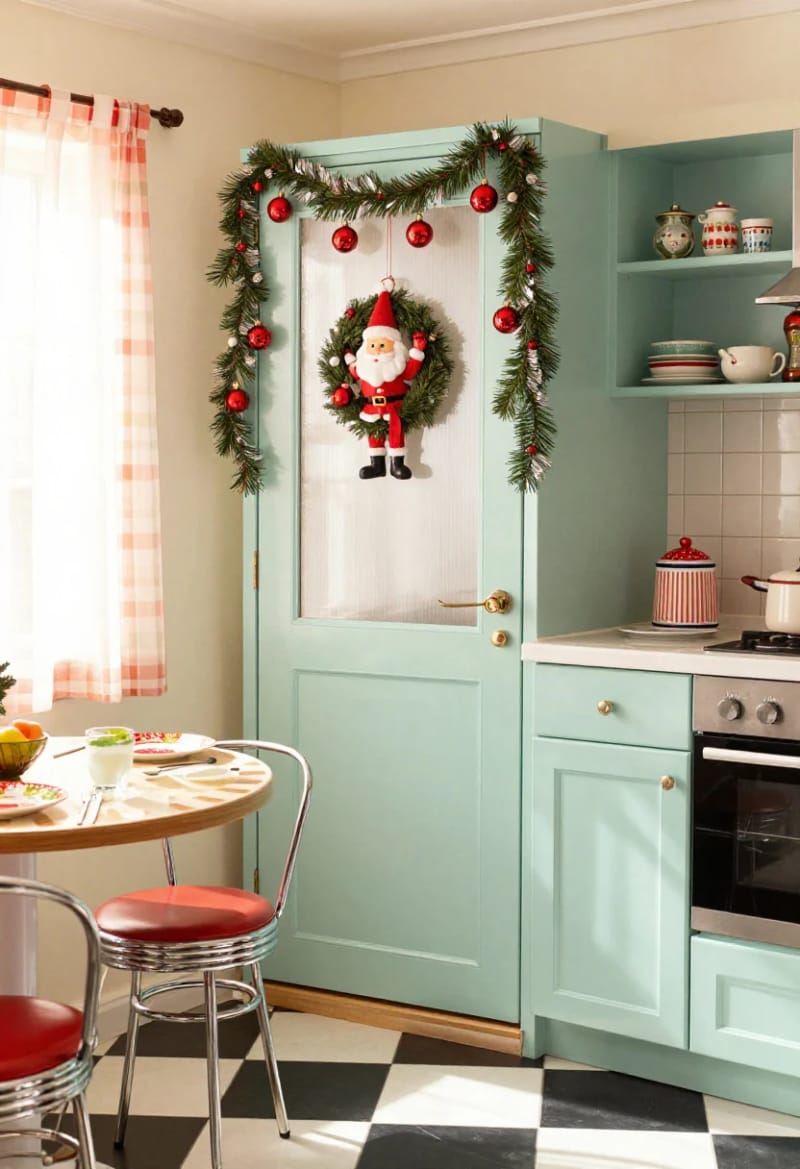
The wreath is the safe choice and it is the main reason so many retro rooms end up looking like a catalog spread. The kitschier option is period-correct: through the late forties and fifties, companies like Miller Electric, Royalite and Harett-Gilman were turning out hard plastic Santas, snowmen, angels and reindeer, some lit from inside, and the flat wall plaques doubled as candy dishes. Put one on the back door, or on the kitchen wall over the counter, and it does more period work than a foot of greenery.
The dining table is where a 1950s Christmas actually lived
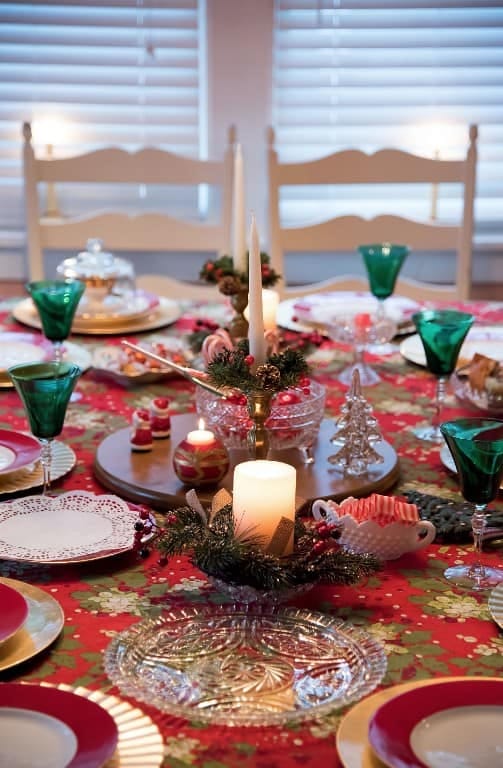
Almost every decorating guide treats the fifties table as an afterthought, and it was the main event. The tree stood in the corner and got looked at; the table got used, twice a day, for a week. That is where the chrome, the cut glass, the anodized aluminum tumblers in gold and copper and green, the Pyrex in its patterned bowls, and the punch bowl with its dozen matching cups all lived. If you are hunting one thing at an estate sale this year, hunt tumblers.

Build the table around low, dense objects rather than a tall centerpiece: a cut-glass bowl of ribbon candy, a pair of Gurley carolers, a row of nut cups, and a foil-fringed runner down the middle. Keep the whole thing under about eight inches high so people can see each other. Candles in the chrome holders, not in a pine wreath.
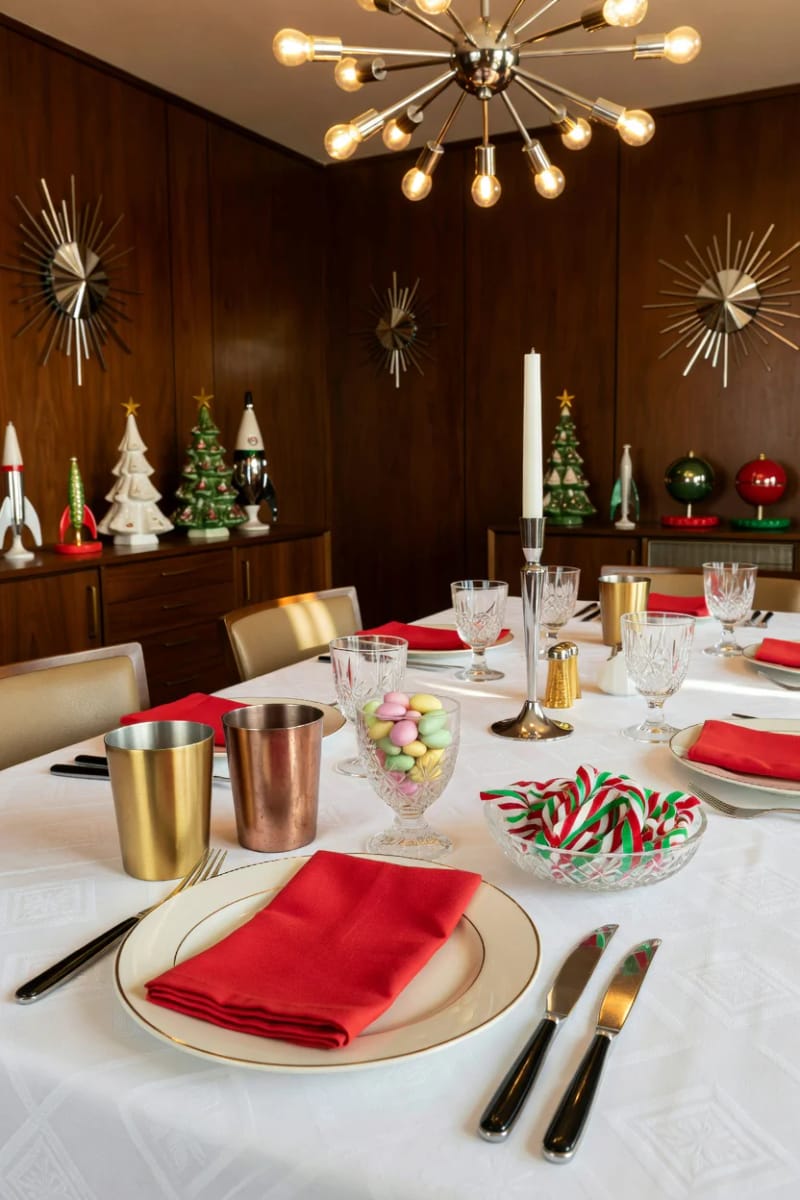
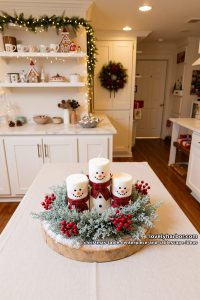 12 Christmas Table Centerpiece and Tablescape Ideas (and the One Rule That Makes Them Work) Twelve centerpieces built around the thing most holiday tables get wrong, which is height.
Ribbon candy in a cut-glass dish by the door
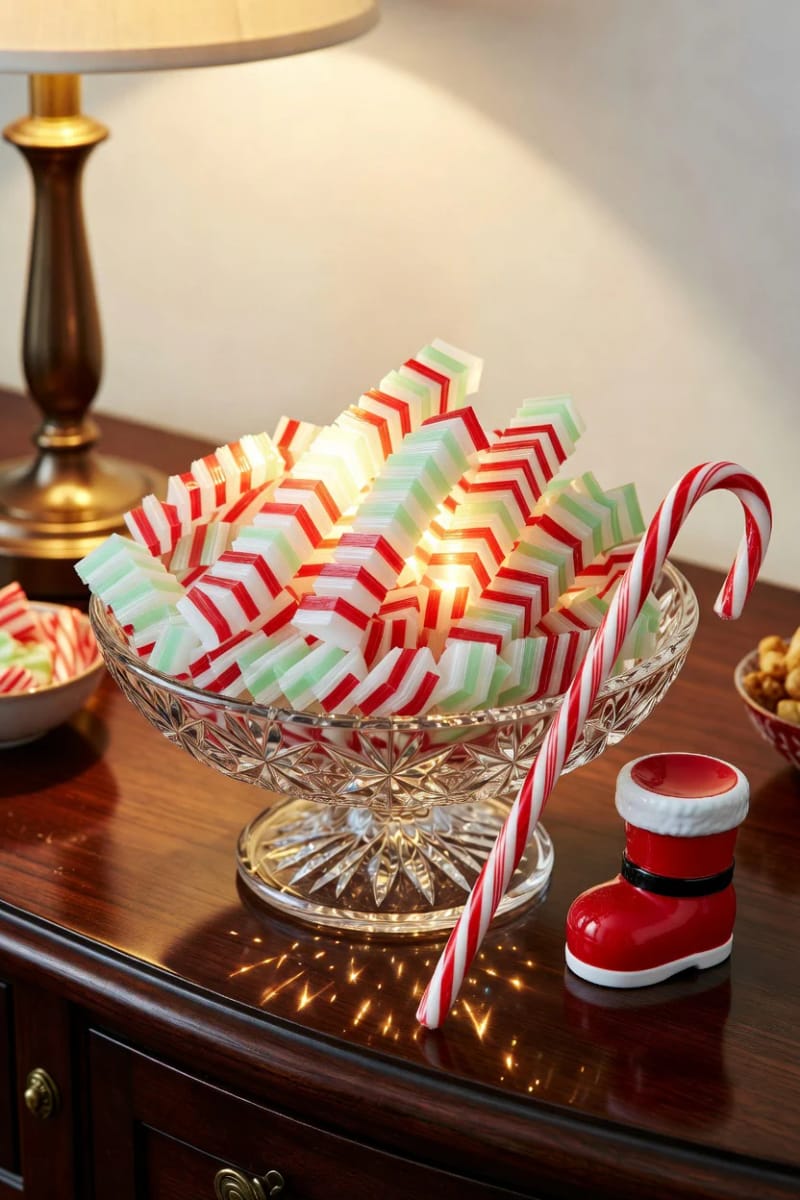
Fifties houses put out candy as decoration and nobody pretended otherwise. Ribbon candy, hard candy, candy canes, and the small moulded plastic boots and Santas that came with a cardboard insert holding a few sweets, almost always long gone by the time you find one. A star-cut glass dish on the hall console, filled and lit from the side, does two jobs at once, and it is the sort of thing guests actually touch. Ribbon candy is still made; buy it, refill the dish once, and let it go slightly stale like everyone's grandmother did.
Buy the glass first
If you are starting from nothing, the order matters more than the budget: a mixed lot of Shiny Brites and one string of bubble lights will make a room read 1955 for under a hundred dollars, and everything after that is refinement. The aluminum tree and its color wheel are the expensive end, they are the sixties wearing a fifties hat, and I would still get to them eventually. Just not before the icicles, which cost nothing and take the longest.
Related Posts
- 25 Traditional Christmas Decor Ideas with a Nostalgic Vintage Touch
- Vintage and Victorian Christmas Decorating: 11 Ideas for a Faded, Heirloom Holiday
- Christmas Mantel Decor Ideas With Garland That Look Designer, Not Draped-On
- Whoville-Inspired Indoor Christmas Decorations That Skip the Generic Grinch Look
- 21 Best Vintage Halloween Decor Ideas for a Timeless Touch
- 19 Charming Vintage Easter Decorations: to Create a Nostalgic Holiday Ambiance