
The rustic mantel garlands that photograph well are all carrying more material than a single store-bought length of pine holds: twelve feet of greenery crushed onto a five-foot shelf, one tail falling toward the hearth, pinecones wired in tight clusters instead of glued on one by one. That density is most of the difference, and it costs less than the pre-decorated versions do. What follows is a mix of the ideas worth an evening of work (dried citrus, wired rosehips, a bare-branch run with no evergreen at all) and the small specs that decide whether the whole thing reads warm or reads plastic, down to the color temperature of the lights you drape through it.

Weight the mantel garland to one end and let it fall long
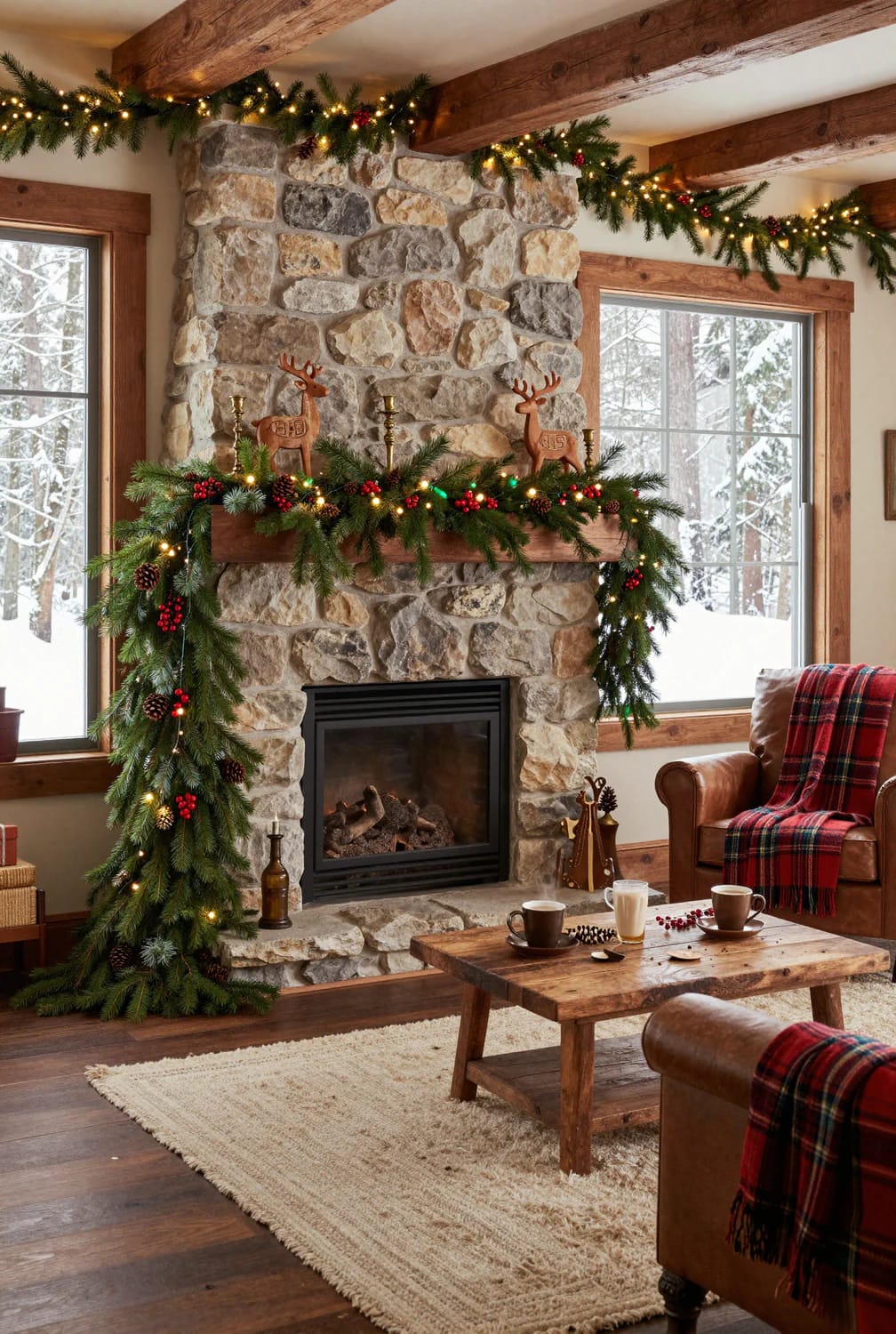
Skip the symmetrical swag. A garland that dips evenly in the middle and stops flush at both corners is what a hotel lobby does, and it is the single fastest way to make a rustic mantel look catalog-ordered. Push the bulk of the greenery two thirds of the way toward one end, let one tail fall fifteen to twenty inches down the side of the surround, and cut the other side short so it barely clears the corner.
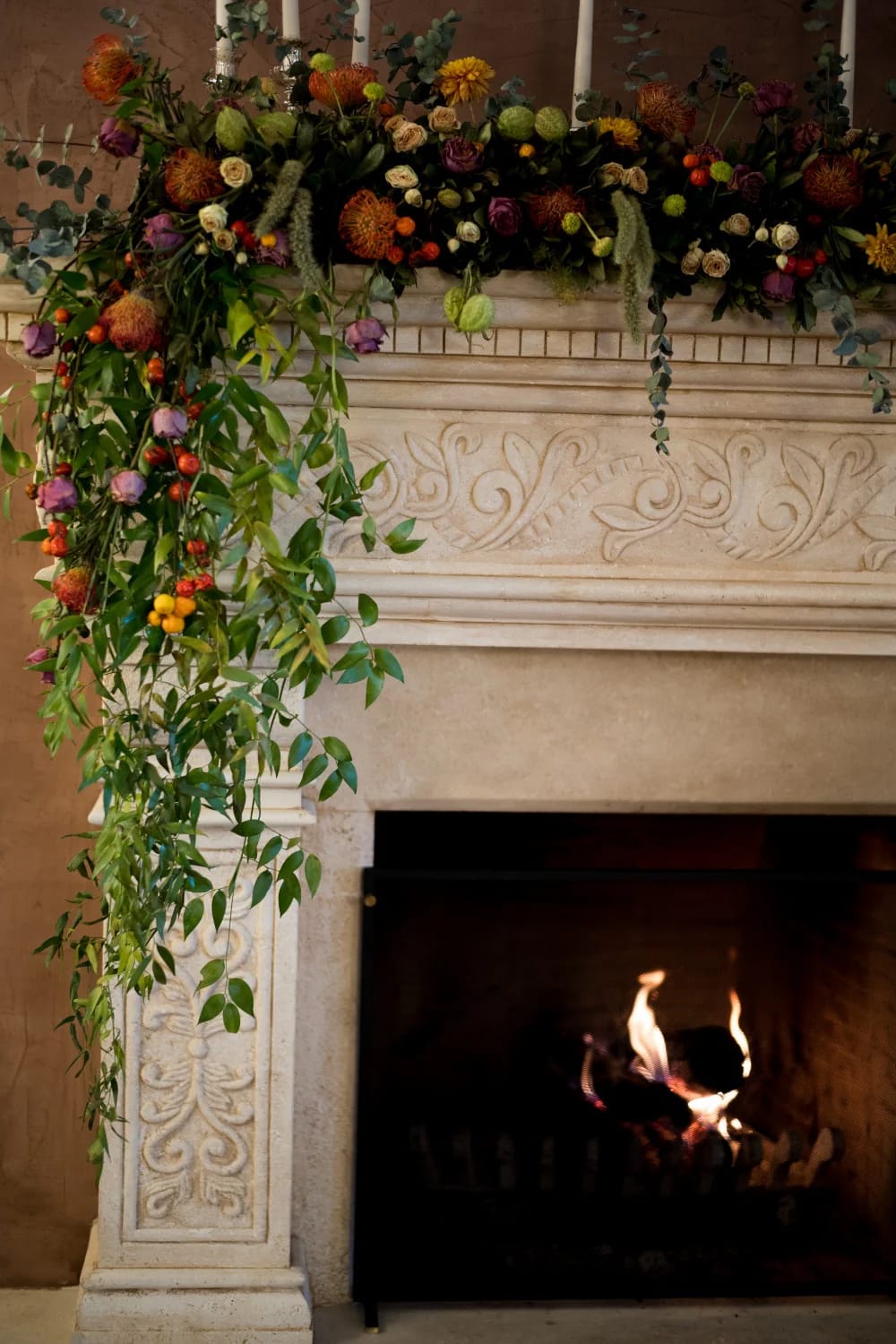
Buy long. For a standard five-foot mantel you want at least nine feet of garland, and twelve is better; the extra length is what lets you double it back on itself for depth rather than stretching one thin rope of pine across the shelf. Anchor it with a few tacks or adhesive hooks under the lip where nobody looks, then bunch and rotate the greenery so the cut ends face the wall.



Weave dried orange slices into the garland instead of ornaments
Dried citrus is the cheapest thing on this page and the one people ask about. Slice navels an eighth to a quarter inch thick, blot both sides, and bake at 200°F for roughly three hours, flipping every thirty to forty-five minutes so the rinds do not scorch to brown; the thinner slices come out translucent, which is the whole point once a light strand sits behind them. The full method, including what to do with the cinnamon sticks so the whole thing does not read as a school craft project, is worth reading before you heat the oven.
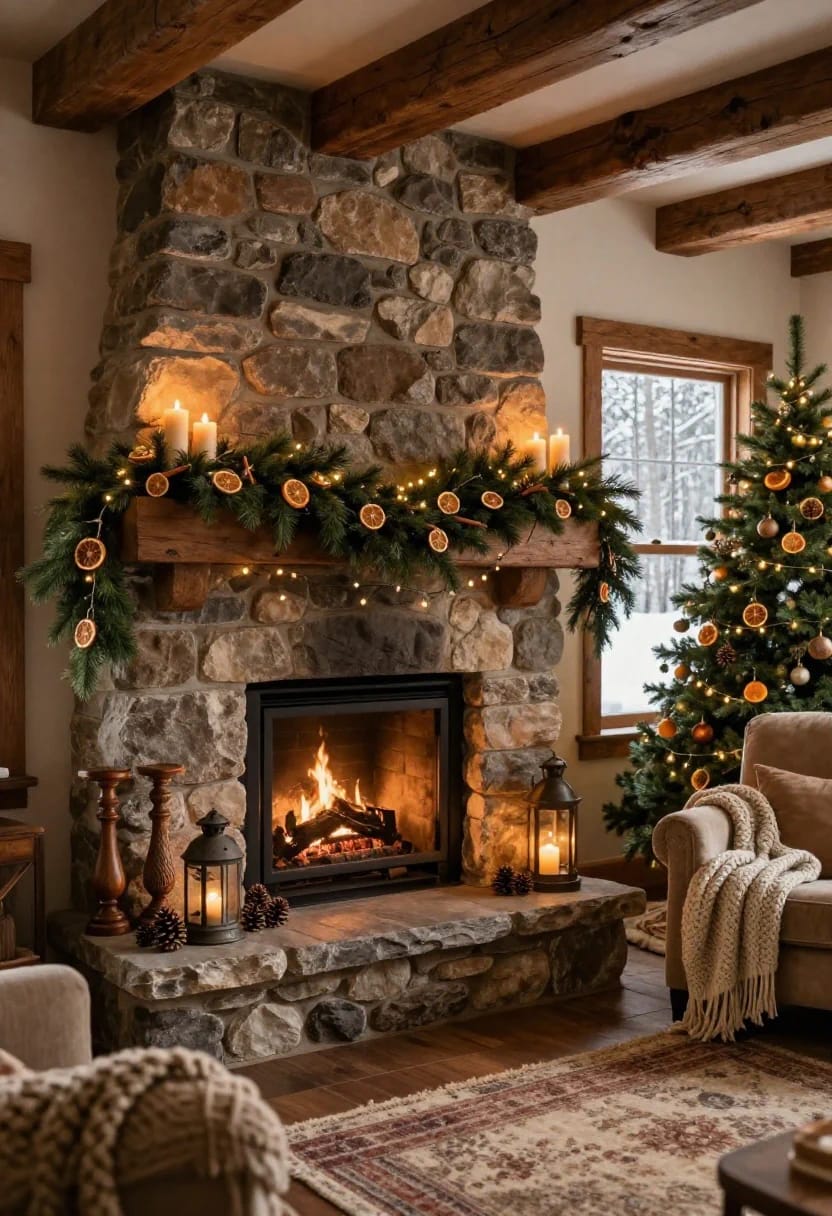
Do not string them into their own separate rope and hang it in front. Poke two holes near the rind with a skewer, run a short length of twine through, and tie individual slices into the greenery in loose groups of three, tucked at different depths so some catch light and some sit shadowed. Cinnamon bundles tied in threes go in the same way. Stored airtight, the slices keep for a couple of seasons, though the color fades toward brick.
A bare-branch garland reads more woodland than any evergreen
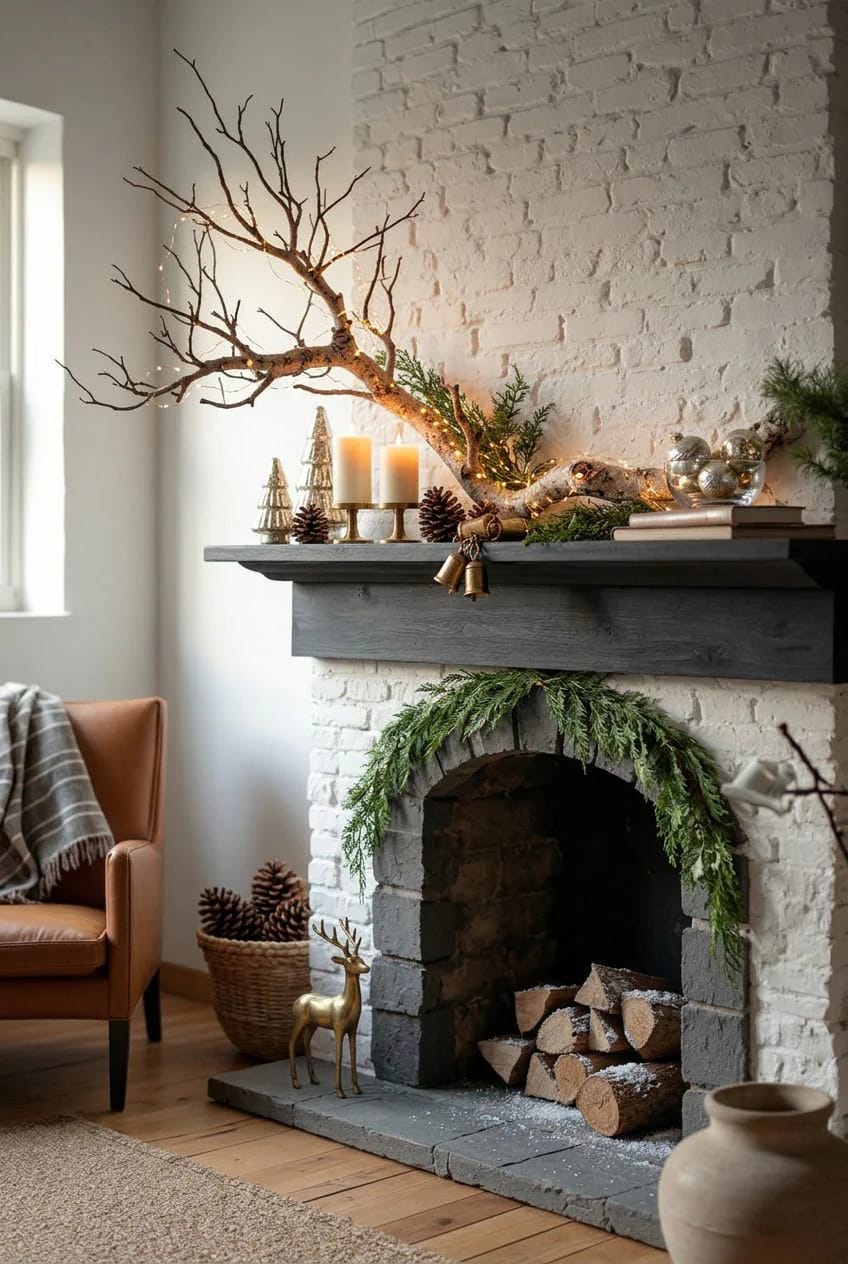
Cut branches cost nothing and hold their shape all winter, which is more than fir can say by New Year. Birch, manzanita and alder all work; look for pieces with strong lateral twigs, lay them end to end along the shelf so they interlock, and wire the joints with a few twists of florist wire hidden underneath. The look is spare and closer to a real woodland reference, birch logs and lichen and all, than the plastic pine most people default to.
It photographs colder than evergreen, so this one wants candles or a warm strand somewhere in frame to stop it reading like a stick collection.
Layer a wooden bead garland under the greenery, not on top of it
Beads belong underneath, threaded through the branches so they surface at intervals, not draped across the front like a necklace on a mannequin. Most pre-made bead garlands sold as decor run only 58 to 60 inches, which barely spans a five-foot mantel flat and looks stingy the moment you try to swag it.
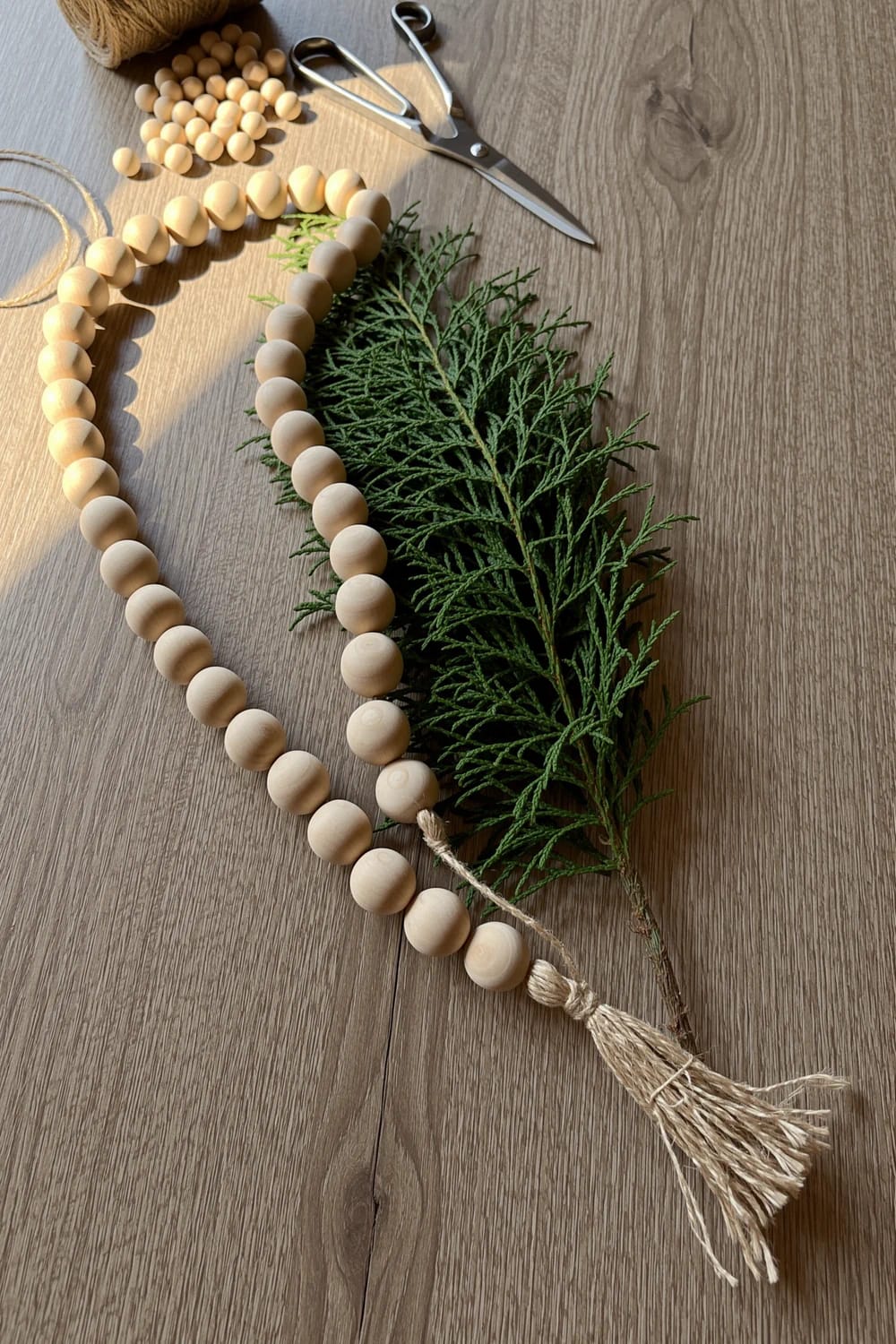
String your own instead. An 800-piece pack of unfinished wood beads in 6mm to 20mm sizes gives you enough for six feet of cord with size variation, which is what stops it reading as a craft-store kit. Run them on jute, not fishing line, and let the cord show. If you like the raw grain enough to keep going, the same unfinished wood tones work on the tree.
Tarnished brass bells beat glass ornaments on a rustic mantel garland
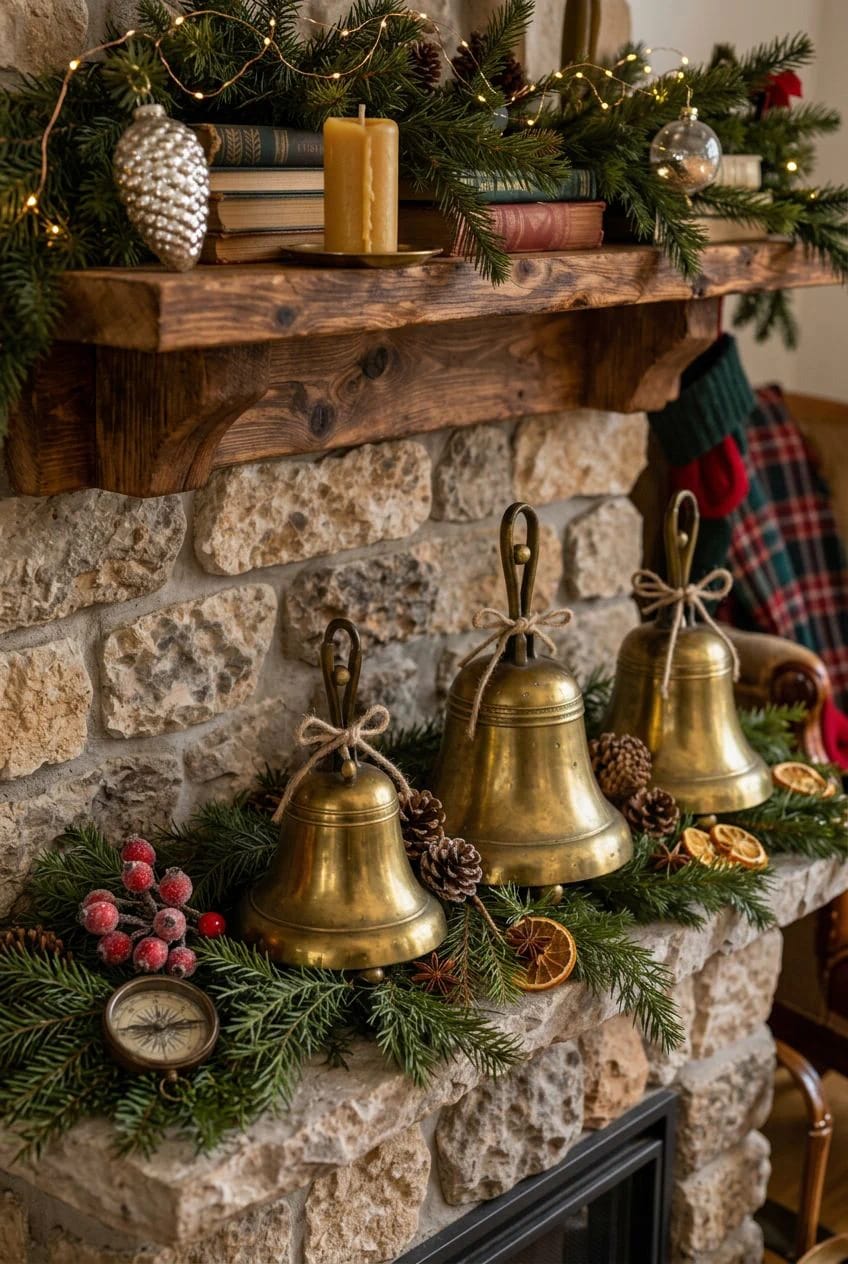
Glass balls belong on trees, where they hang free and turn. Wire two or three tarnished brass or tin bells into the garland at uneven intervals instead, low on the underside so they show against the shadow, and leave the polish alone; the dull brass is what puts the piece in a farmhouse register rather than a formal one. Bells are also the rare mantel object that survives being knocked by a passing dog.

Wire your own pinecones and rosehips into a plain pine garland

Buy the cheapest plain pine garland you can find and spend the savings on what goes into it. Pre-decorated garlands are the worst value in the aisle: the cones are glued facing out in even intervals, the berries are glitter-dipped plastic, and you cannot rearrange any of it. A bag of pinecones plus a spool of 22-gauge green paddle wire costs a few dollars and gives you control over every placement.
Wire cones in clusters of three at different depths, one nested deep enough that only the top scales show. For color, use real dried rosehips, rose-brown juniper berries, or dark eucalyptus pods, the same foraged materials that carry a natural Christmas through the rest of the house, rather than the glittered red plastic sprigs, which read as plastic from across the room and worse in photos. Group them; scatter them evenly and the eye stops registering them at all.

Light the mantel garland at 2700K, and hide the battery pack
Warm white at roughly 2700K, and nothing else. Multicolor sets and anything above about 3000K throw a blue cast over greenery and drained wood tones, which undoes the entire palette you just built; the amber-leaning strands sold as warm white are what make dried citrus glow instead of going grey.

Weave the strand two or three inches deep, not along the surface, so what you see is glow rather than a row of dots. Battery packs with a six-hour timer save you crawling behind the greenery every night; one strand of 100 micro LEDs at 33 feet, like these 2700K warm white battery fairy lights with a timer, covers a mantel run with slack to spare. Tape the pack to the underside of the shelf or bury it behind a book stack. And keep any real flame well clear of it all: NFPA figures attribute roughly 44% of home decoration fires to decorations sitting too close to a heat source.
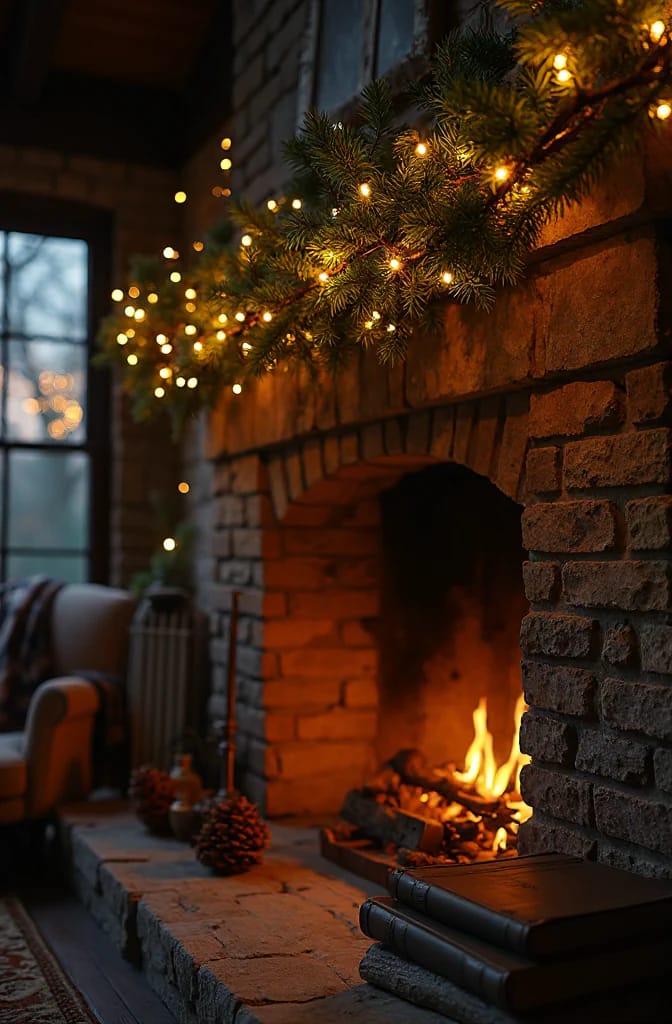
A neutral garland of eucalyptus, wheat and cotton for a quieter Christmas mantel
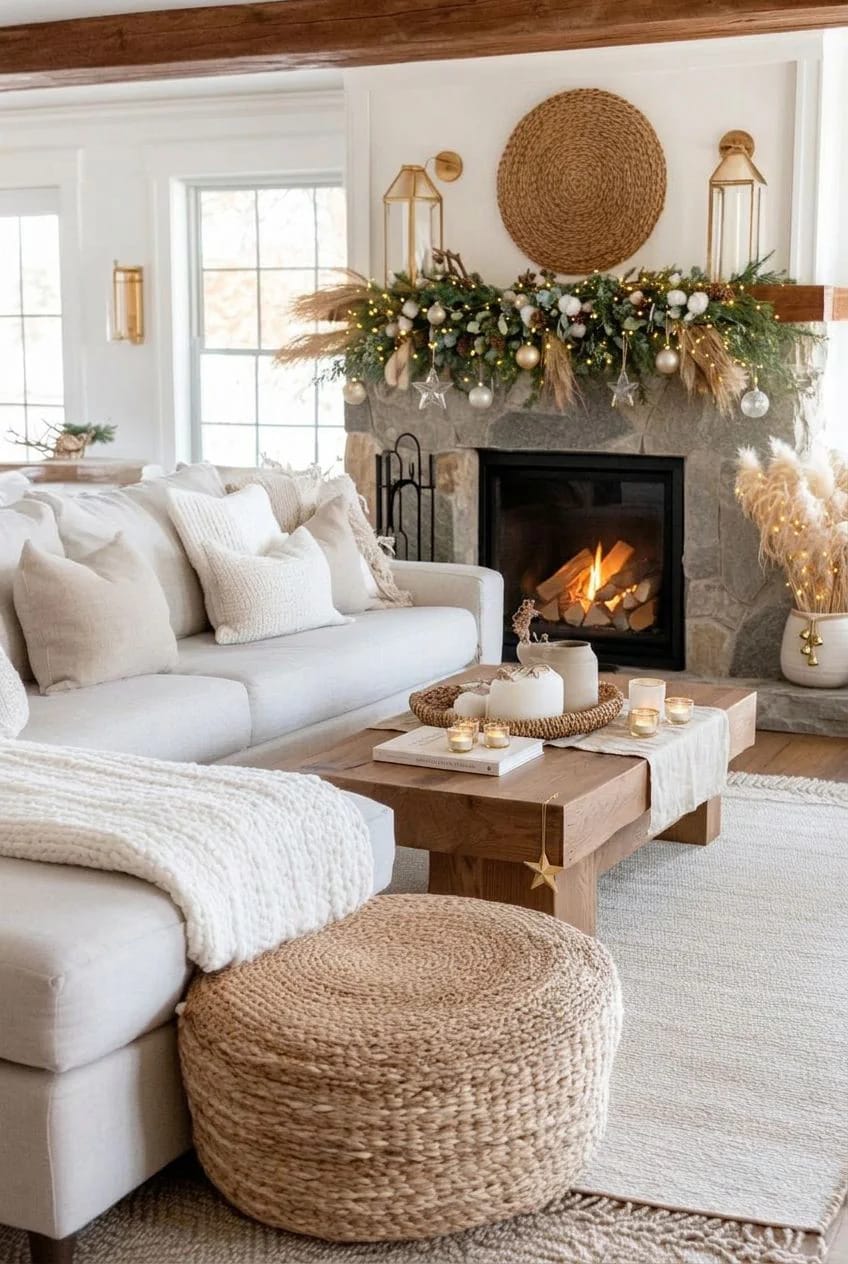
Build the whole run in the beige-to-sage range and let texture do the work: silver dollar eucalyptus as the base, dried wheat or bunny tail grass fanned in at intervals, cotton stems for the white notes. It keeps a rustic mantel legible in a room that is not otherwise green and red, and it holds up in January when you are tired of Christmas but not of the fireplace looking dressed. The failure mode is worth knowing before you commit: pull the color out and a neutral room can read cold and half-decorated instead of warm, so the texture has to carry what the red used to.
Preserved eucalyptus is the expensive part, running higher per foot than pine; dried wheat from a craft store costs almost nothing and stretches it.
Thread plaid wool ribbon through the garland instead of tying a bow

Bows date a mantel faster than anything else on it. Thread the ribbon through the greenery instead, over and under, letting it surface three or four times across the run and finish in a long unfinished tail down one side; cut the ends on a diagonal and pull a few threads loose so the edge frays. Wool plaid or heavy linen tape, not the wired satin sold in craft aisles, which holds an artificial curl no matter what you do to it.
Run a second garland along the firebox, not just the mantel shelf
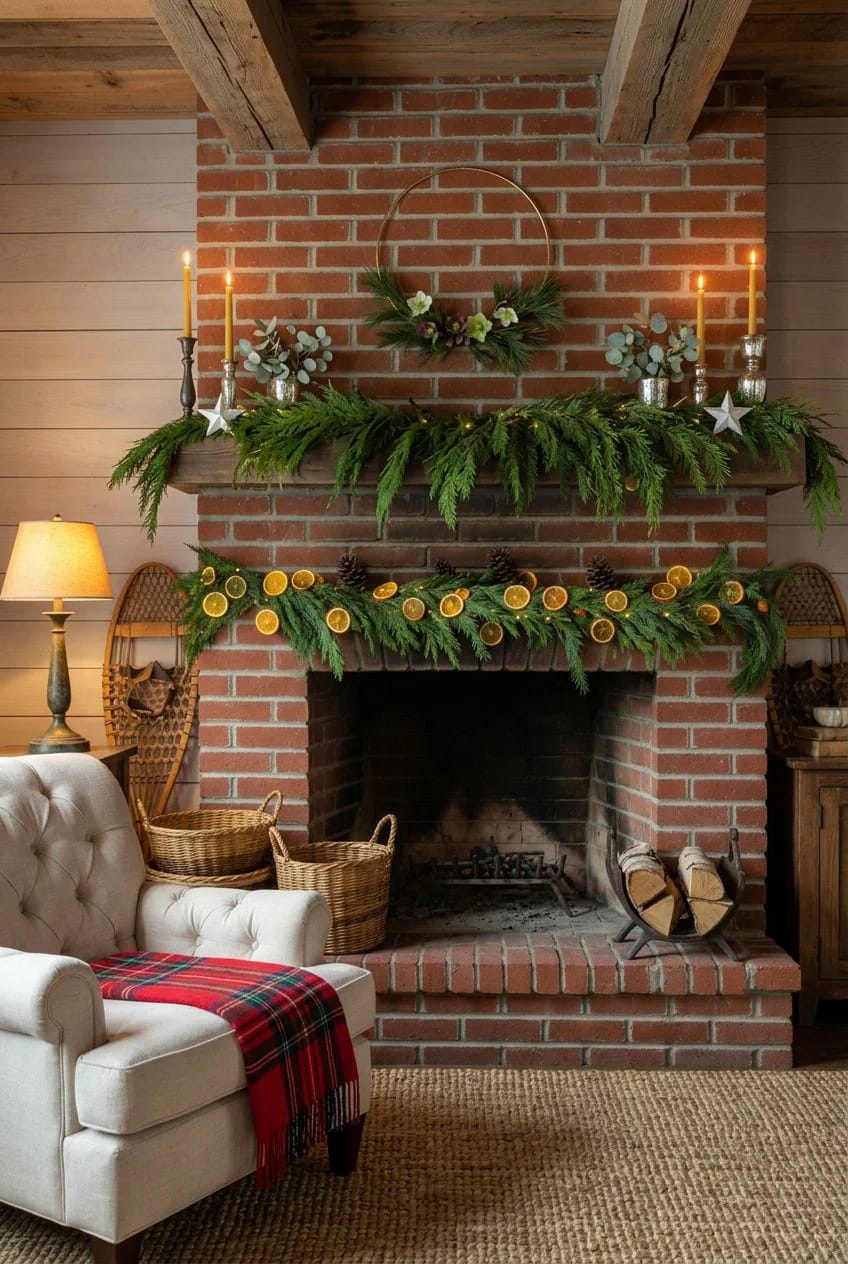
Most people decorate the shelf and stop, which leaves the fireplace bottom-heavy and the eye stuck at chest height. A slimmer garland pinned around the top and upper sides of the firebox opening, hugging the brick rather than swagging, doubles the greenery without adding clutter and pulls the whole composition down to the hearth. Only do this with an unused firebox or one you are prepared to strip before lighting.
 25 Best Ways to Decorate Your Fireplace for Christmas Once the mantel is done: the surround, the hearth, and the stockings hanging off it.
Fresh-cut cedar is worth it, but only for the last three weeks
Real cedar indoors gives you two to four weeks before it goes brittle, so buying it on December 1 means watching it die through the best part of the season. Buy it in the second week of December and it will still be soft and fragrant on Christmas Day, which is the day that matters. Expect roughly $1.50 to $5 a foot depending on where it comes from; a 20-foot run at the big-box garden center often lands near the bottom of that, farm-shipped garlands near the top.
Three things extend it, and they are worth the hour:
- Soak the whole garland in a bathtub of cool water overnight before it goes up, then let it drip dry.
- Spray it with an anti-transpirant like Wilt-Pruf, which lays down a clear film that slows moisture loss. Light coat. Douse it and the needles go dull and sticky.
- Mist every day or two, and keep it off a mantel above a fireplace you actually light.
That same soak-and-spray routine is what keeps fresh greenery on an exterior door from browning by New Year, and outdoors it buys you longer, because the cold does half the work.
The heat is the catch nobody mentions in the pretty photos, and it is why the fresh-cedar mantel and the working fireplace are, in most houses, two different rooms. If you burn fires most nights, use a good faux cedar base and wire fresh tips into the front third where they show; you get the smell and the color where the eye lands, and you replace a handful of cuttings rather than the whole run.
Hang it in this order
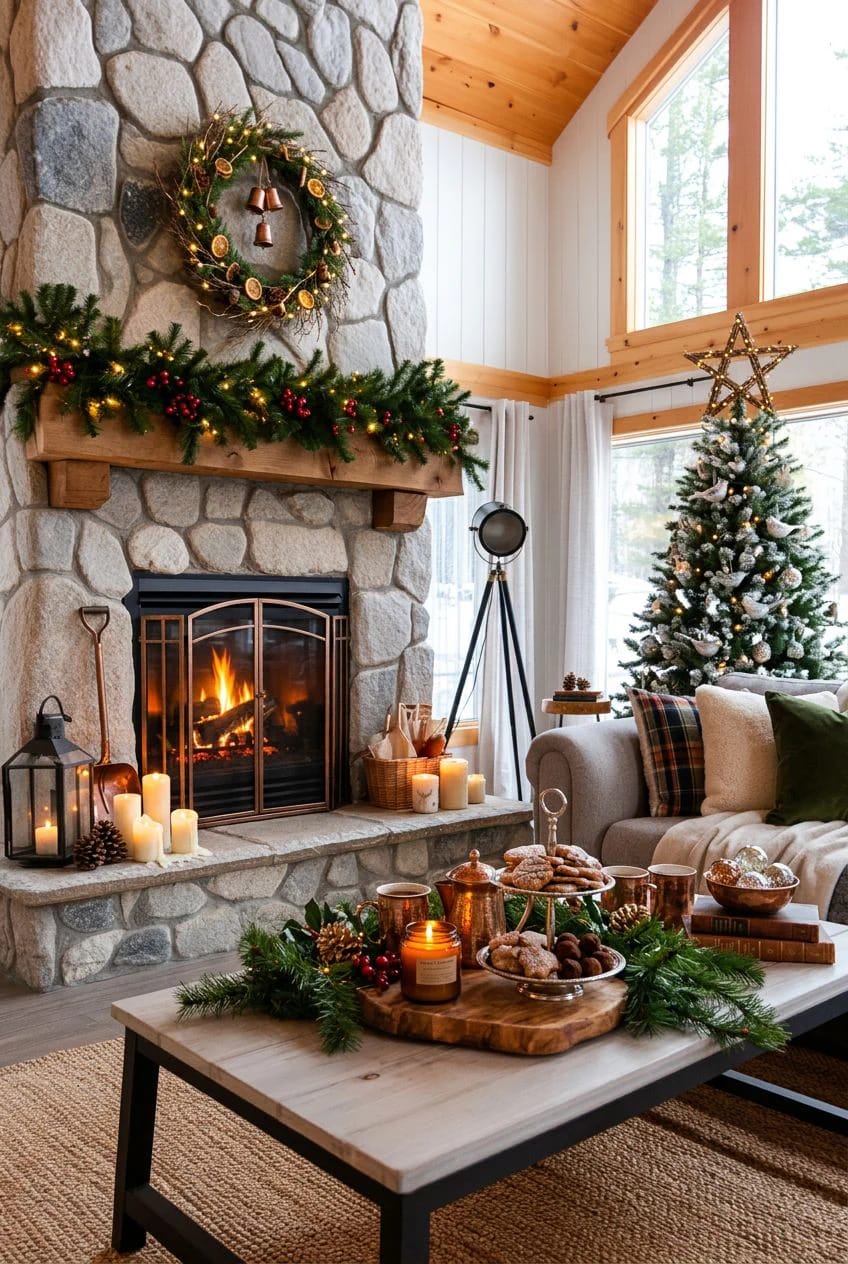
Greenery and structure first, while you can still move everything: the long tail, the bunching, the second run around the firebox if you are doing one. Lights next, buried deep, before anything else gets wired on top of them. Then the heavy objects (cones, bells, beads), then citrus, and ribbon dead last, because ribbon is the only element you can adjust without disturbing anything underneath it.
Where I would spend: the wire and the extra greenery. Where I would not: pre-decorated garland, glittered berries, wired satin ribbon.
One thing I could not pin down is how long a wired-on rosehip cluster actually holds its color indoors, since the numbers vary wildly by source and by house. Expect fade, treat it as a season's investment, and keep the cones, which last for years.
Related Posts
- Christmas Mantel Decor Ideas With Garland That Look Designer, Not Draped-On
- 31 Rustic Farmhouse Christmas Decor Ideas For A Cozy Holiday
- Christmas Mantel Decorating Ideas That Actually Hold Up All Season
- Farmhouse Christmas Decor: 12 Ideas That Skip the Red-and-Green Cliché
- Farmhouse Front Porch Christmas Decor Ideas That Read Warm, Not Staged
- 23 Woodsy Christmas Decor Ideas for a Rustic, Cabin-Cozy Holiday