
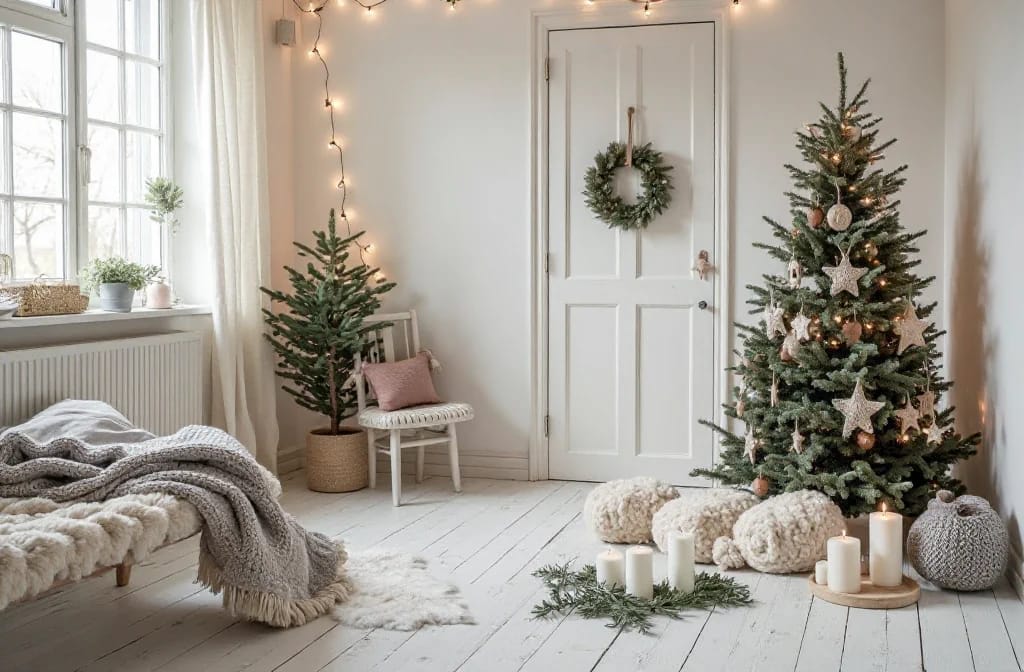
Most Scandinavian Christmas decor goes wrong at the material stage rather than the styling stage: the wood is stained honey-orange, the ornaments are glossy white ceramic, and the result reads as farmhouse with the red turned down. The Nordic version is paler, drier and considerably more boring up close, which is the point. What follows is eleven ways to use unfinished pale wood and real straw ornaments, including where the straw should actually go (rarely the tree) and the one finish that will wreck a wood slice within two seasons.
Straw is the harder half of the pair. It costs almost nothing, it is genuinely traditional across Sweden, Finland, Germany and the Baltics, and it reads as a craft-fair leftover the second you scatter six pieces thinly over a six-foot tree. Volume and placement carry it.
The pale wood half is easier to buy and much easier to overdo. Almost nothing here requires a real tree, and roughly half of it survives a rental with no drill and no hooks in the plaster.
Straw stars belong in the window, not buried on the tree
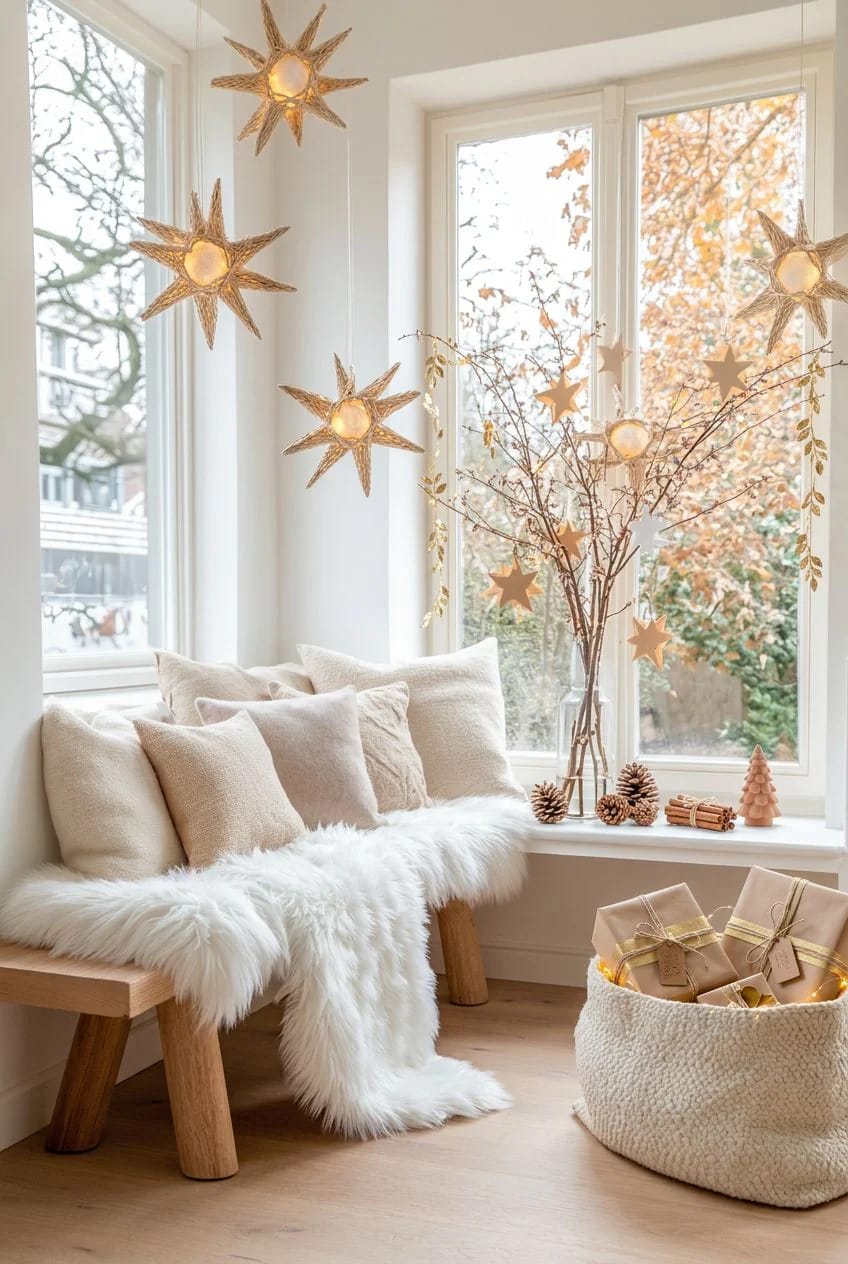
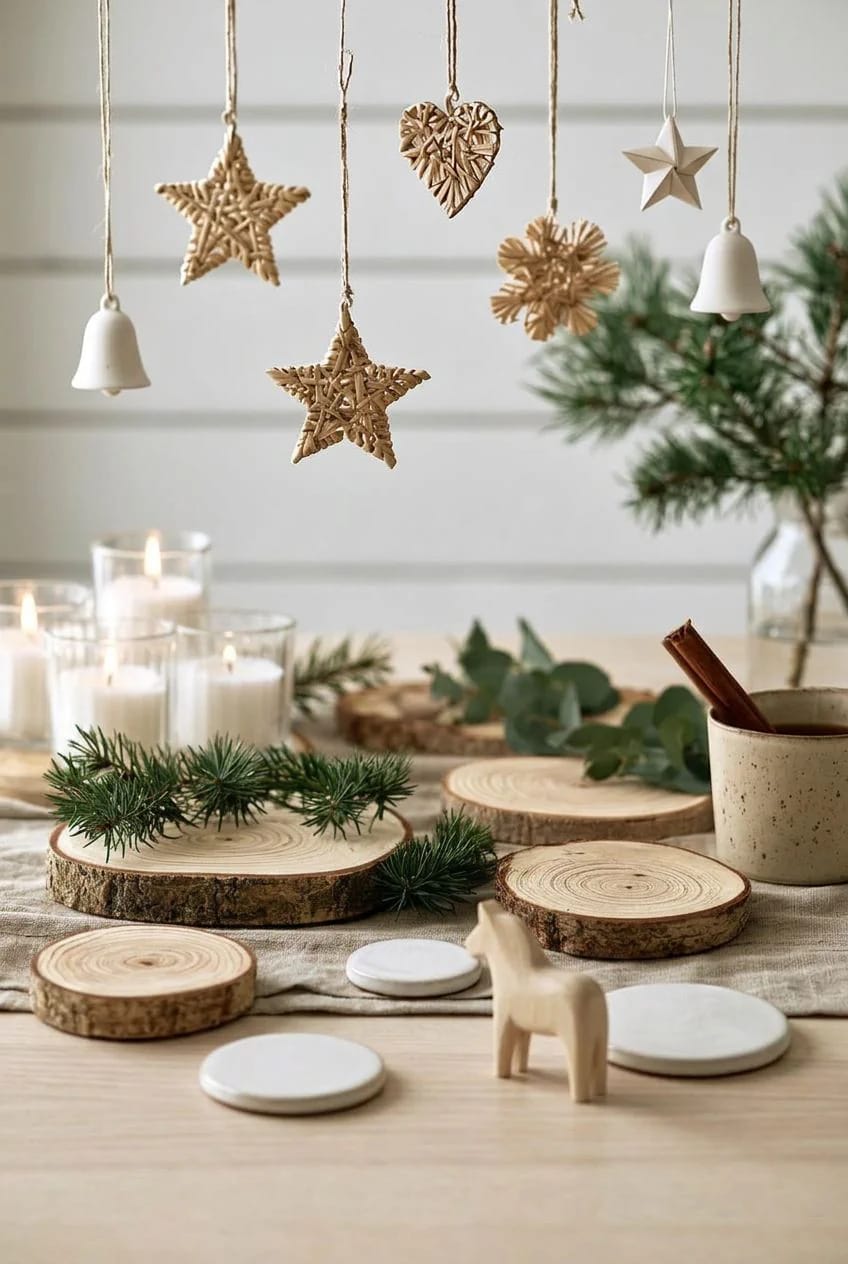
Hang the flat woven straw stars in the window on lengths of red thread, at three or four different drops, and the tree can stay almost bare. A straw star is a flat, translucent object: on a branch it disappears into the needles, and against daylight or a dark evening pane it turns into a silhouette. This is the arrangement the Scandinavian window has used for generations, and it is the single highest-return move in this whole material family.
Granted, it only works if you commit to the spacing. Five stars at 20, 35 and 50 centimetres from the rail, staggered rather than lined up, beats a neat row every time. Fishing line reads cheap here because the straw is matte and the line is not; cotton or linen thread in undyed white or a dull red matches the fibre. If the whole window scheme interests you more than the tree, the wider set of Nordic decorating moves that keep a room calm instead of busy is worth reading alongside this.
Sand the wood slices, then leave them alone
Raw sanded birch or ash slices are the correct pale wood ornament, and the finish you put on them is what decides whether they look Nordic or look like a school project. Sand to 180 grit, knock the edges back with a folded piece of the same paper, and stop. The unsealed face stays chalk-pale and slightly dusty, which is exactly the surface the straw wants to sit next to.
Why the slices split down the middle
A round cut across a green log dries unevenly, because wood shrinks roughly twice as much around the rings as it does along the radius. Something has to give, and what gives is a crack running from the bark edge toward the pith. Buying kiln-dried slices avoids the problem entirely. If you are cutting your own from a fallen branch, cut them thicker than you think (around 15mm), stack them flat with air on both faces, and give them several weeks somewhere unheated before you drill for the thread. A slice with one clean radial check in it is fine, incidentally. A slice that has split into two pieces is firewood.
Skip the polyurethane
Oil-based polyurethane ambers as it cures and keeps ambering, so the pale birch you sealed in December is a warm yellow-orange by the following December, and glossy on top of that. Nothing pulls a Scandinavian palette toward 2008 farmhouse faster. If you need some protection, a thin coat of matte water-based acrylic or a white-pigmented wax holds the tone. Left bare, the wood picks up handling marks and slowly greys, which is a better outcome than the yellowing. There are more shapes worth cutting than plain rounds once you have the finish question settled.
A bare straw wreath outperforms the decorated one on a pale door
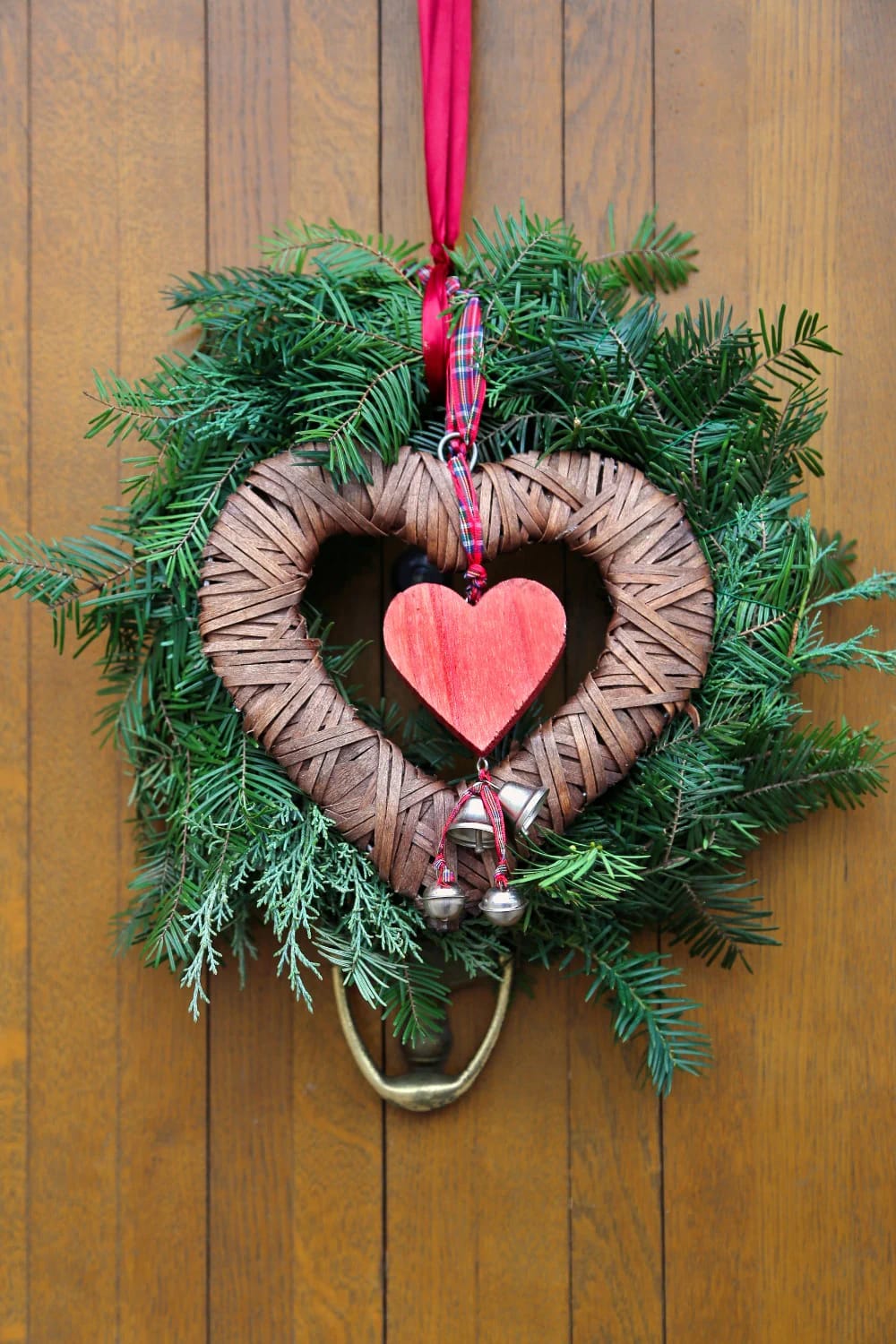
Buy the straw wreath base that is sold as a craft blank and hang it exactly as it comes. The braided or bound straw ring has a genuine texture, a warm gold that sits between beige and honey, and a circular geometry that a pale door does all the work for. Adding eucalyptus, a bow and three baubles converts it into something you could buy anywhere.
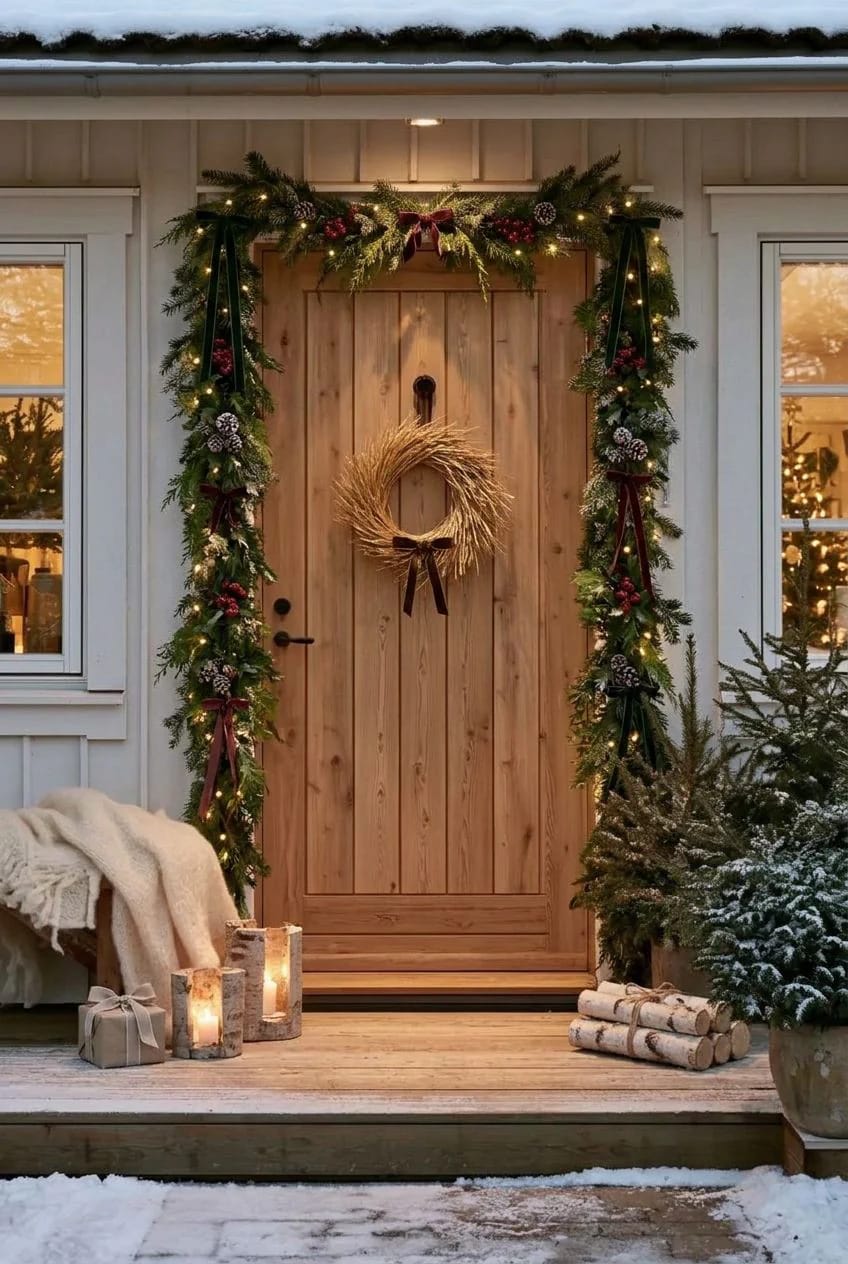
That said, a completely undecorated wreath is a strong position, and one concession keeps it readable as Christmas: a length of flat red cotton tape, tied once at the top, ends cut square and left long. Not a bow.
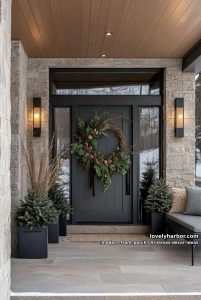 Modern Front Porch Christmas Decor Ideas That Skip the Clutter How to let one object carry the entrance instead of arranging a dozen.
The julbock works small, on a table, not knee-high by the door
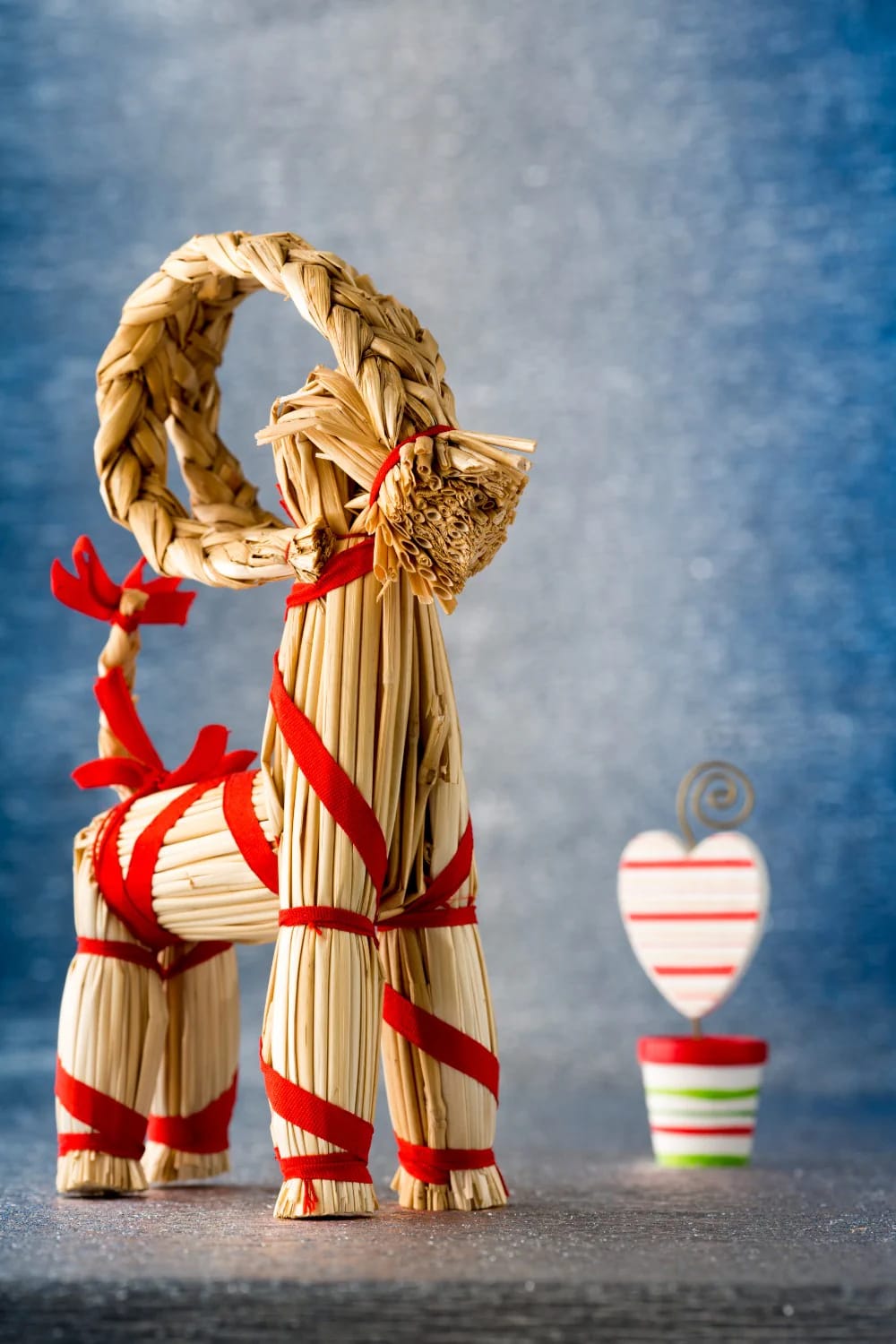
Keep the straw goat under about 20 centimetres and put it on a surface people look down at: a sideboard, the dining table, a windowsill beside the stars. The julbock is the oldest recognisably Nordic Christmas object in this list, older than the tree in most of Scandinavia, and the giant version sold for floor placement turns folk art into a mascot. Gävle has been building its enormous one since 1966 and people keep setting fire to it, which tells you something about scale and dignity.
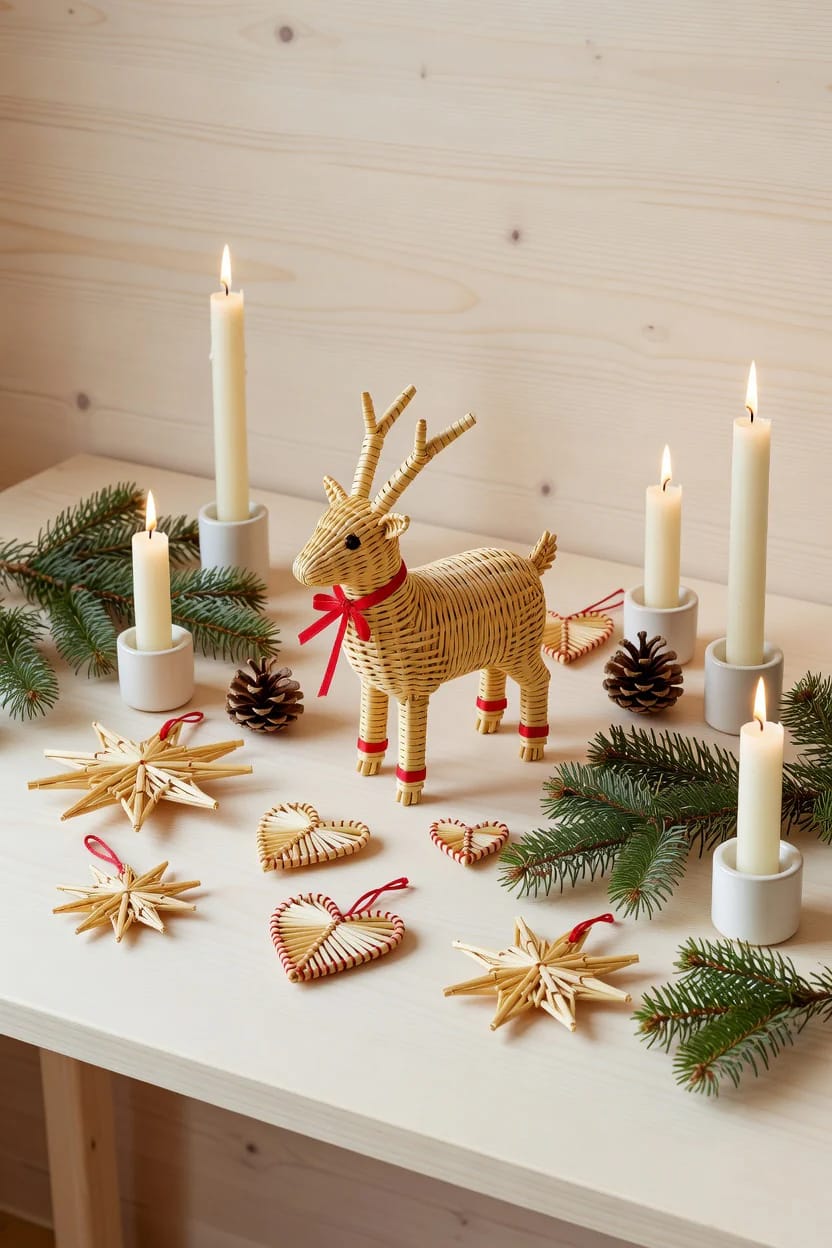
One goat is a folk object. Three goats in graduated sizes is a gift shop display, and the graduated set is exactly how they are sold. Buy the middle one and leave the others. The same restraint governs the whole raw-timber and dark-greenery direction, which shares this palette but pushes it colder.
Pale wood beads instead of tinsel or ribbon garland
Unfinished beech or birch beads on cotton cord give the tree a horizontal line without adding shine. Look for beads in the 18 to 25mm range: smaller reads as a rosary at any distance, larger starts to look like a nursery mobile. Undyed, unlacquered, and knotted between beads so they space themselves rather than sliding into clumps at the bottom of every swag.
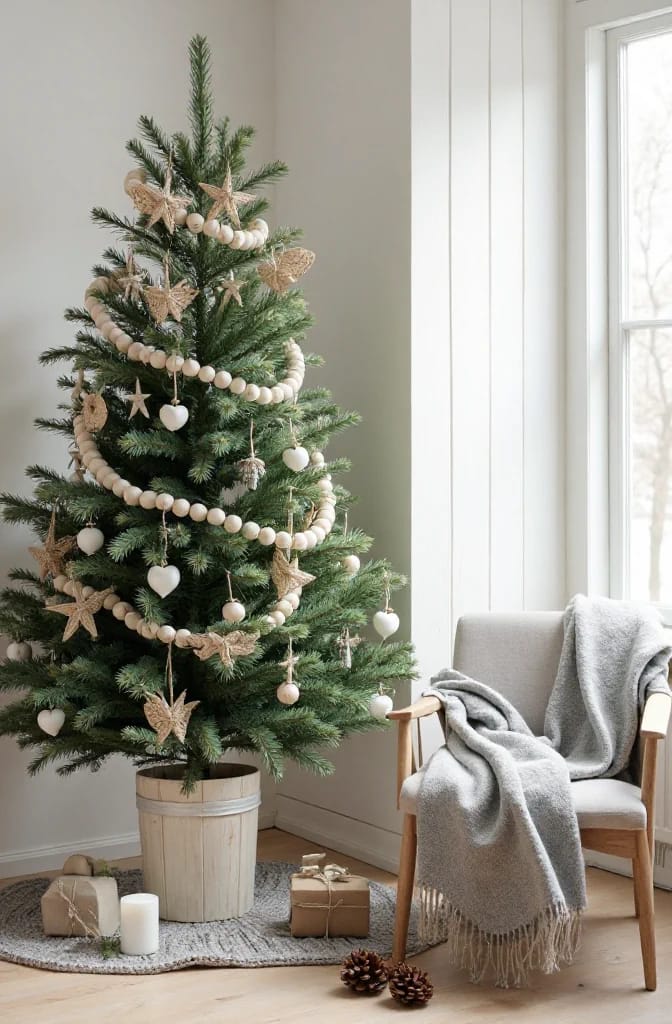
Beads also solve a problem the straw creates, which is that a tree of flat gold objects has no depth. Round pale wood in front of flat pale straw separates the two layers. The rest of the natural-material palette worth pairing with these two runs in the same direction.
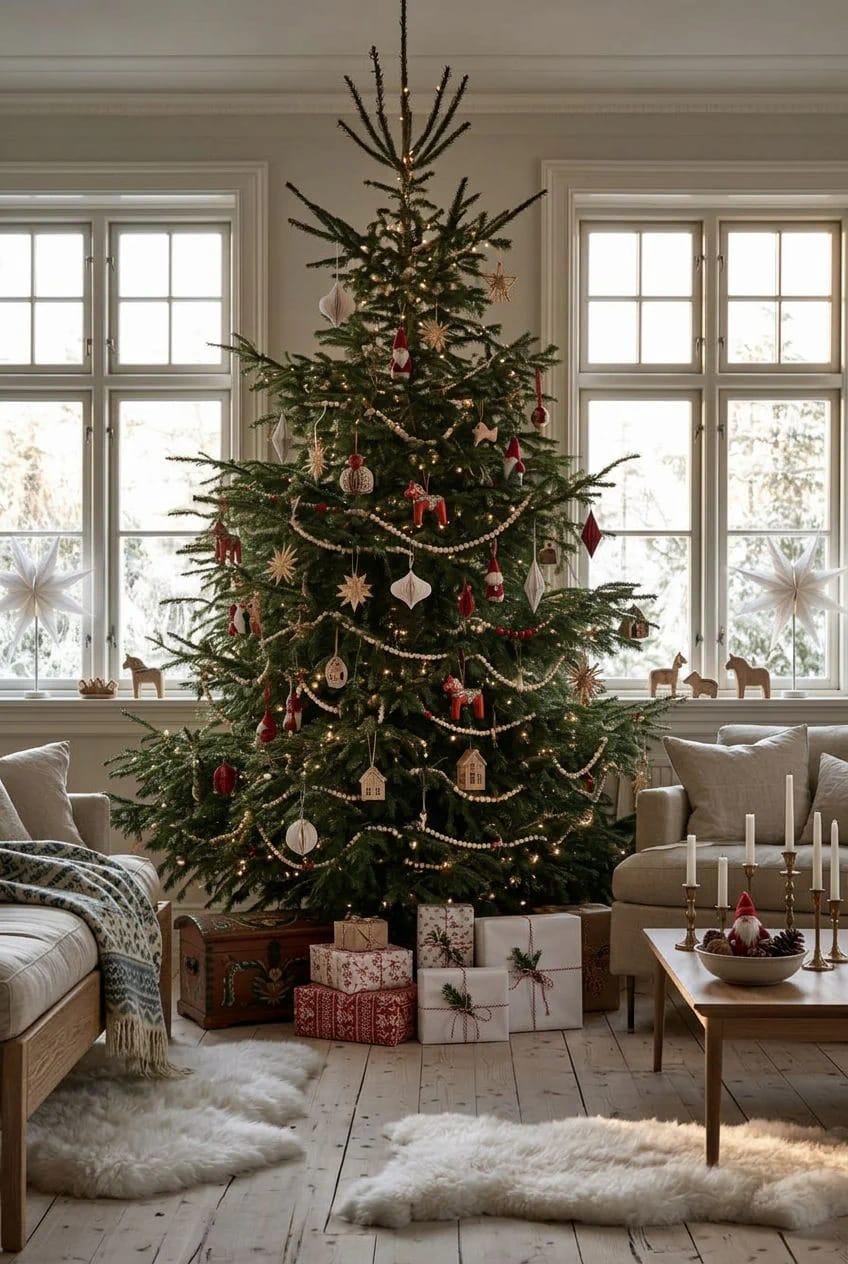
Hang a straw himmeli over the table where nothing else competes
A himmeli is the geometric straw mobile of Finnish and Estonian tradition, threaded from cut lengths of rye straw into linked tetrahedrons and suspended over the table. It is the one piece here that earns a ceiling hook. Hung 70 to 80 centimetres above the tabletop, it rotates on its own in the room's air currents, which is most of its effect and the reason it should not share the ceiling with a pendant lamp.
If you are threading your own
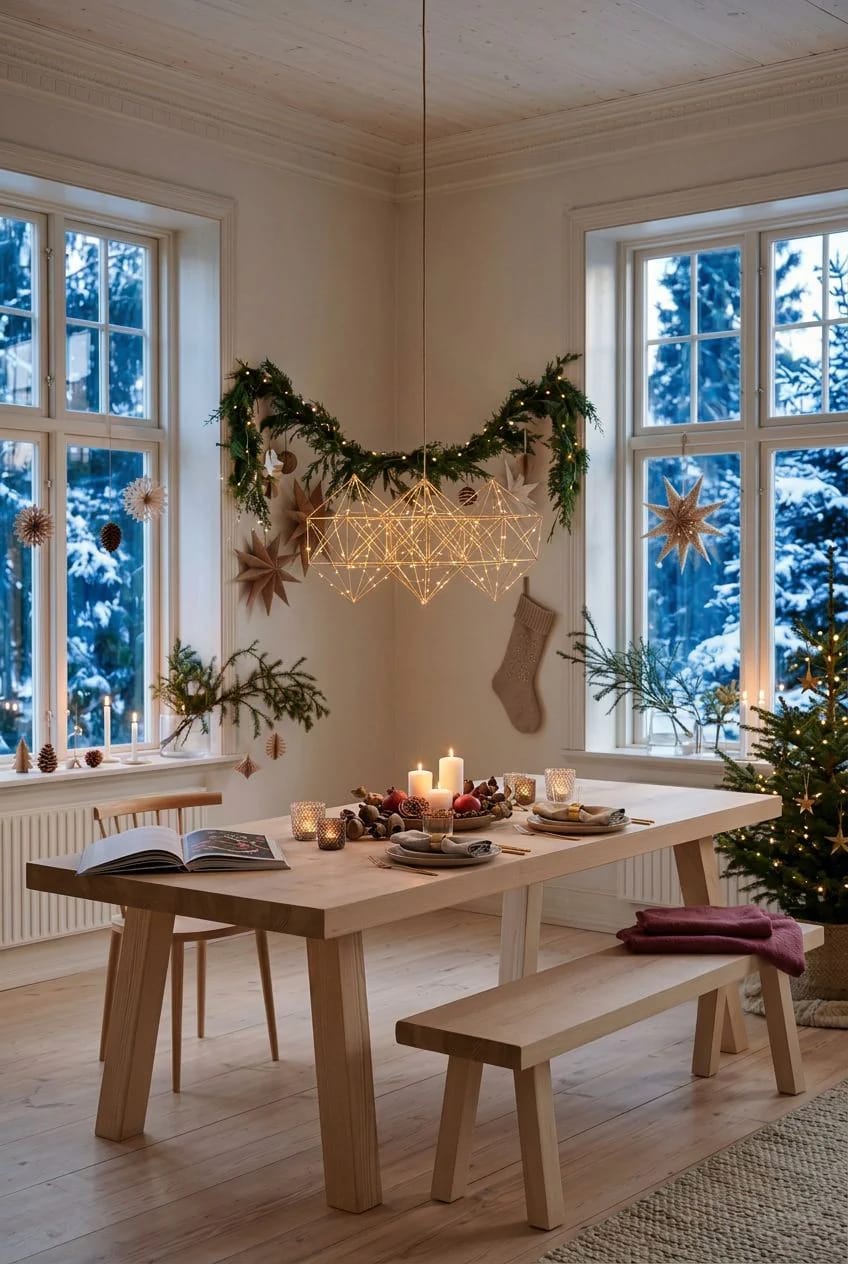
Rye straw is traditional and needs about twenty minutes in warm water before it will take a bend without splitting. Paper drinking straws are the common shortcut and they are a downgrade you can see from across the room: uniform diameter, printed matte white, no fibre. If you are not soaking real straw, buy the finished himmeli instead.
Mass the straw ornaments: twenty on one tree, not six
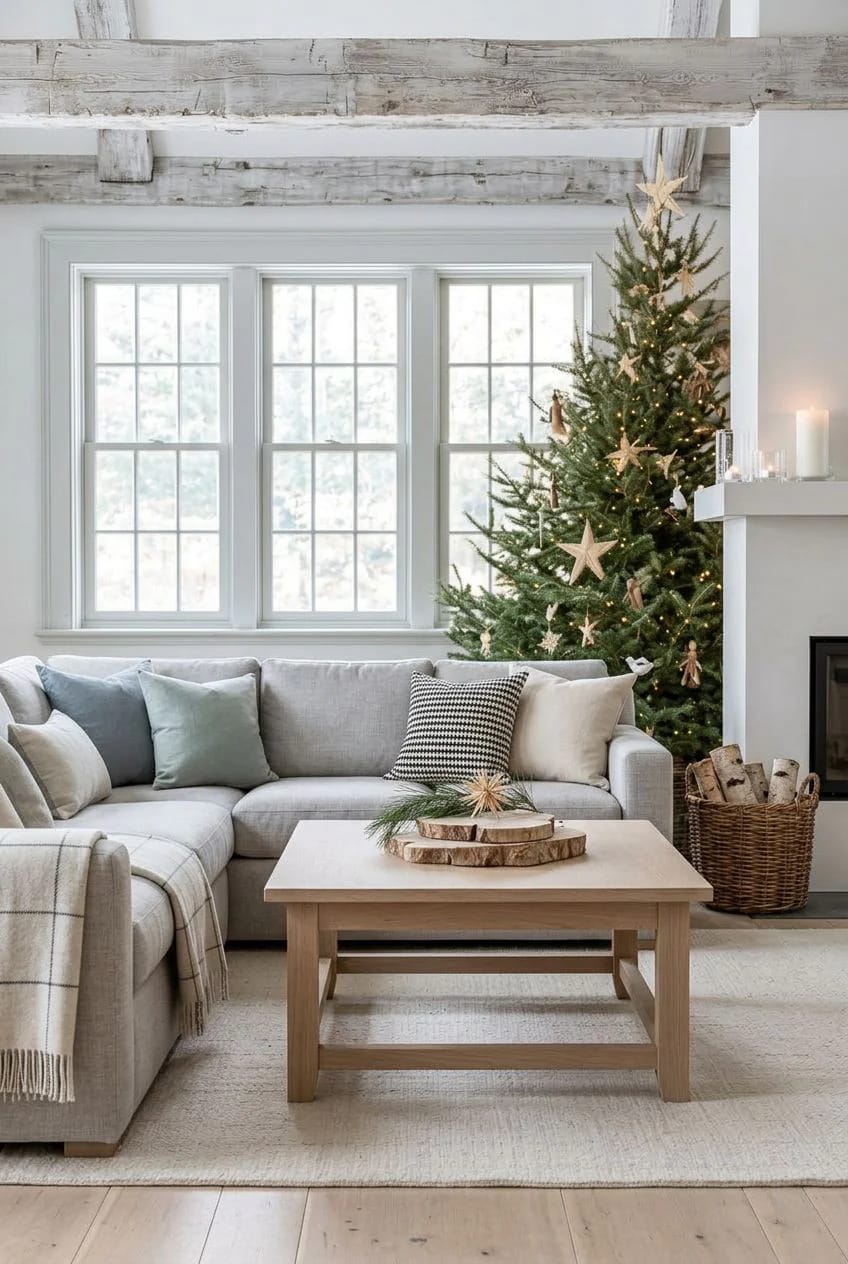
Straw ornaments only work in quantity, which is why the sets sold across Sweden and Germany run to 20, 30 or 52 pieces rather than four. Six scattered pieces on a full tree read as leftovers. Twenty of the same material, in three or four repeating shapes (star, snowflake, heart, bell), read as a decision.
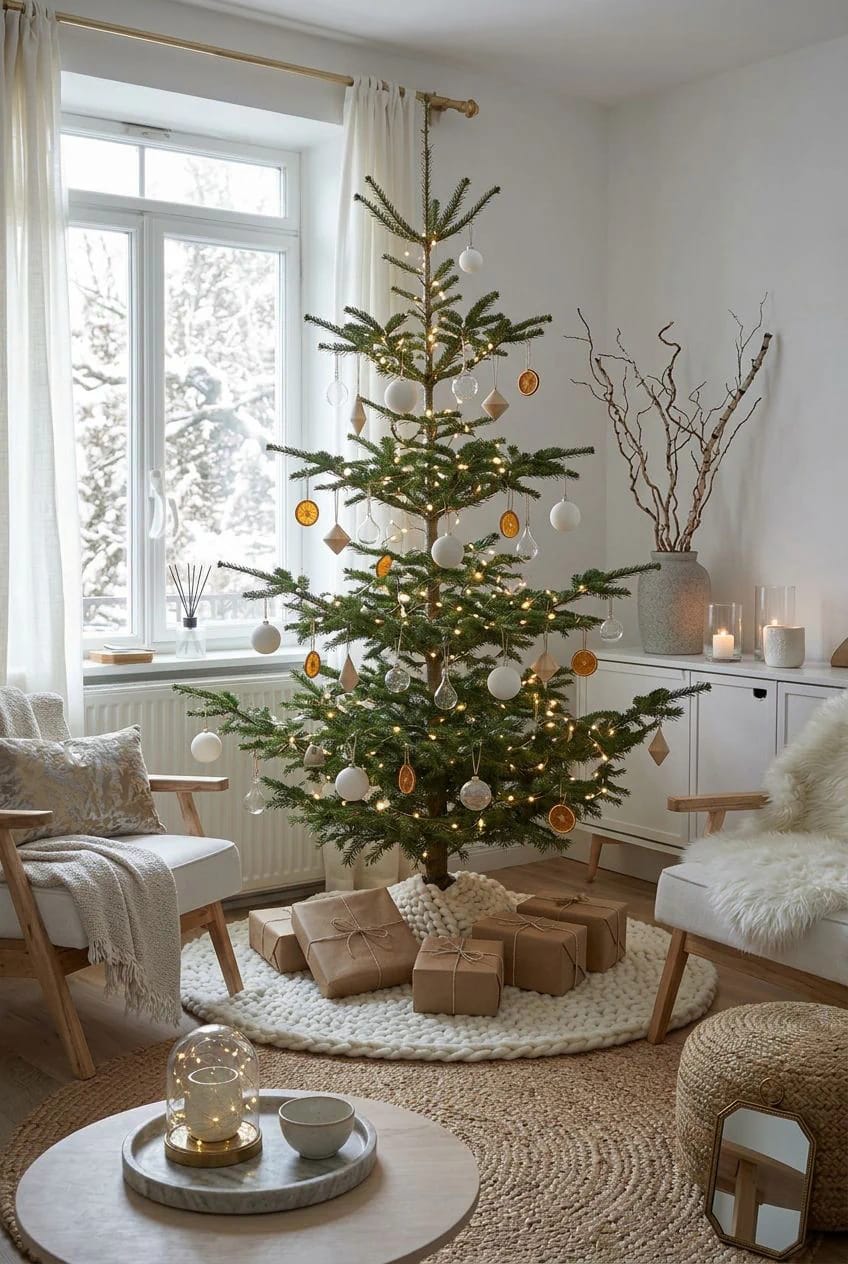
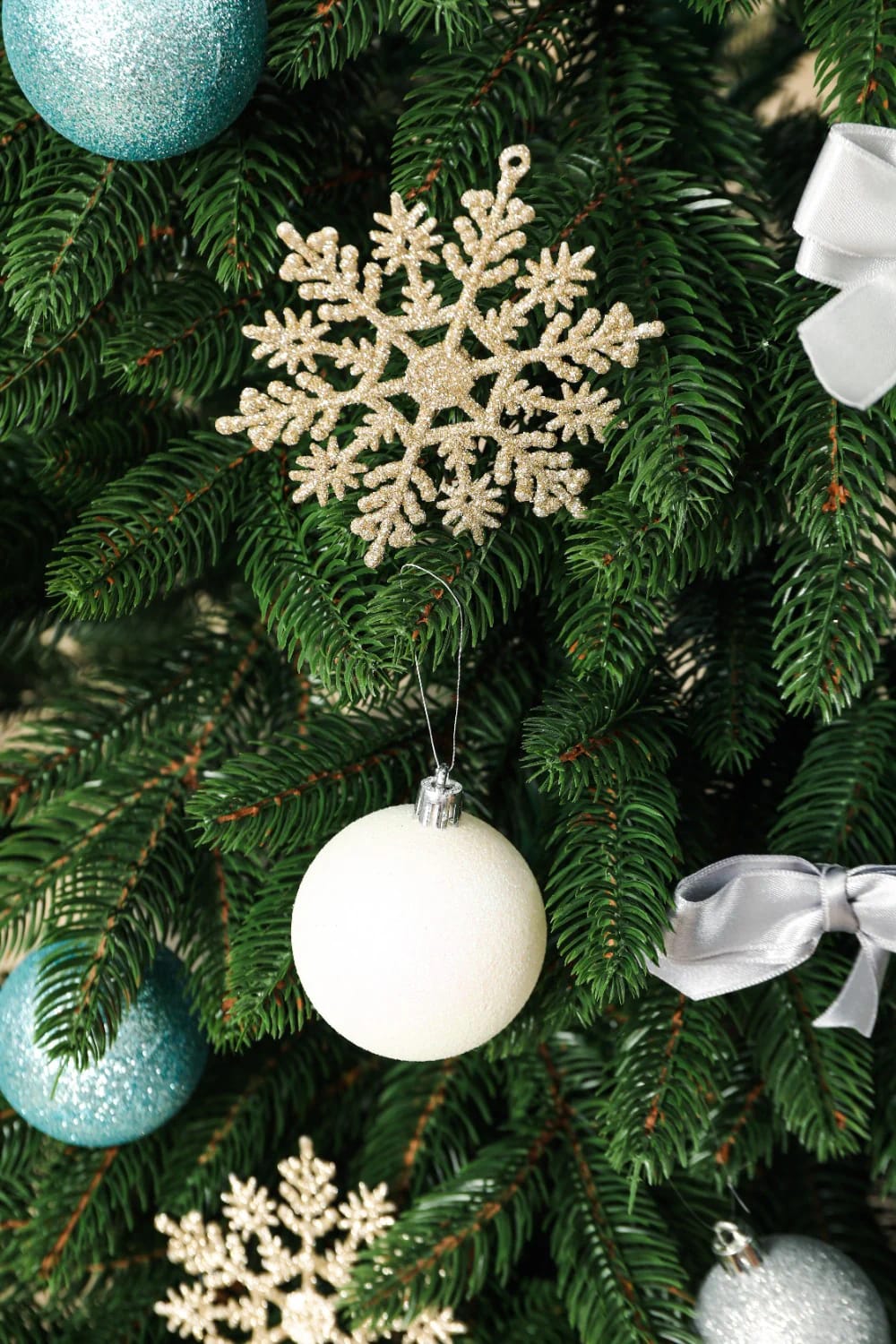
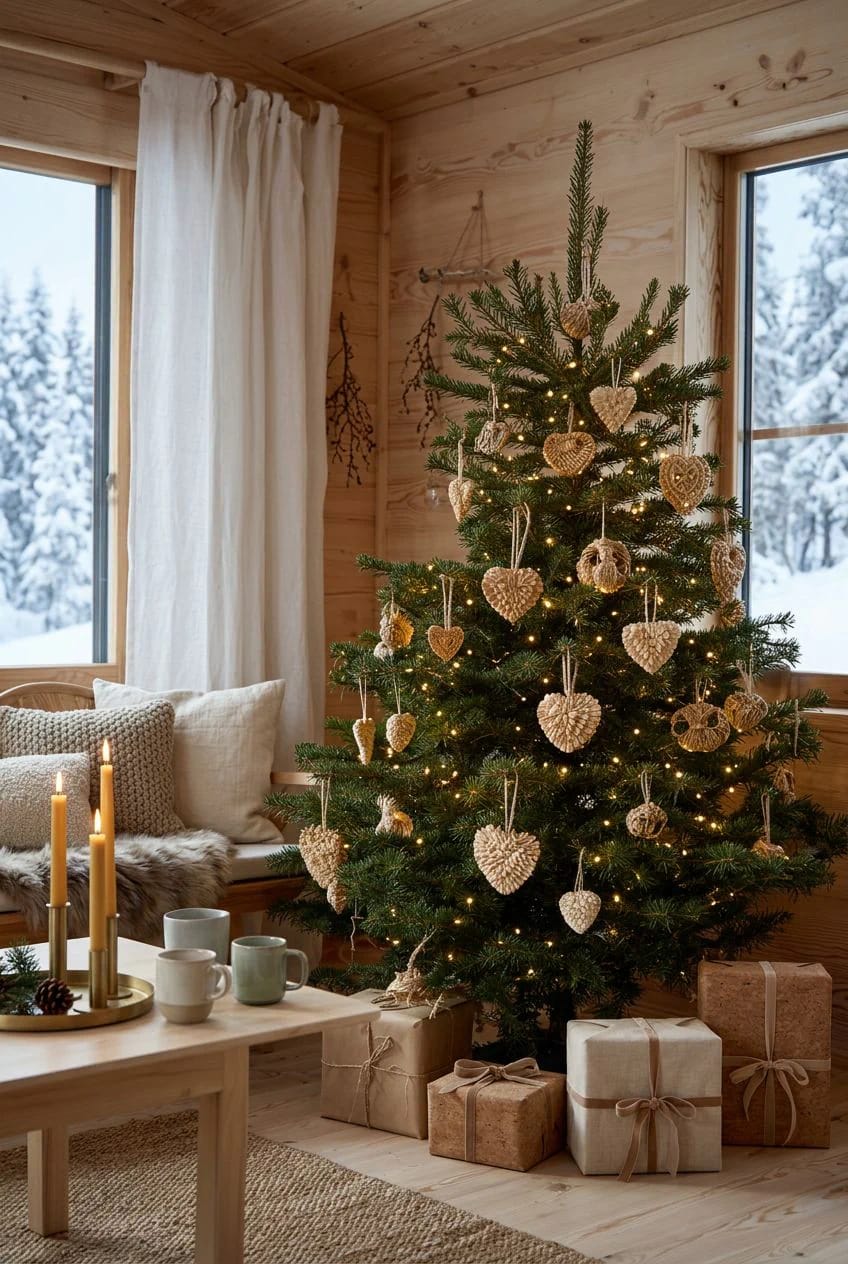
The economics help. A 20-piece natural straw set typically runs somewhere around $15 to $30, roughly what two hand-finished single ornaments cost from a design shop, and the massed set is the version that reads Nordic.
A pale dowel tree for the room that can't take a real one
Build or buy a flat wooden tree of stacked horizontal dowels in birch or ash, 90 to 120 centimetres tall, and stand it in a hallway, a bedroom corner, or a flat with no floor space for a spruce. The form is a stack of graduated rungs on a central spine, it costs very little in material, and it holds straw stars along the rungs without a single hook in the wall.
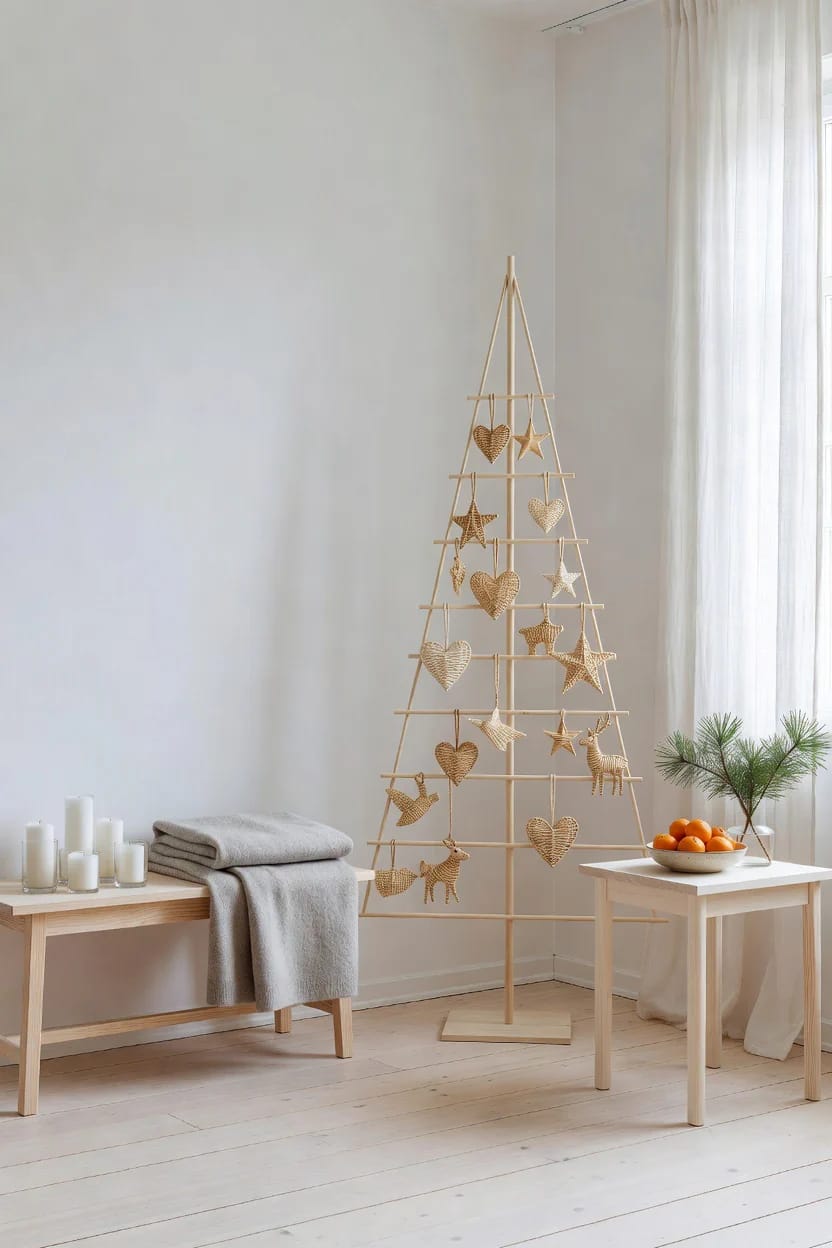
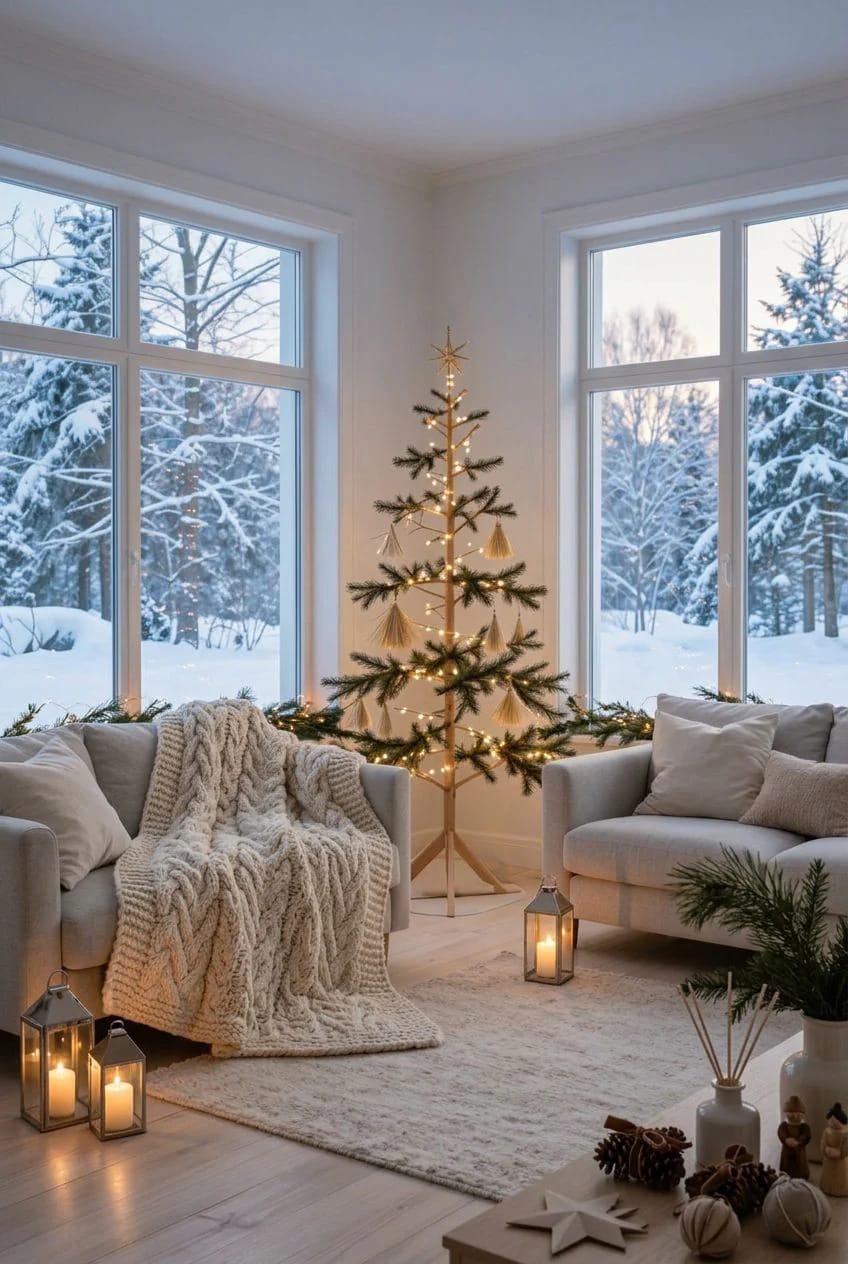
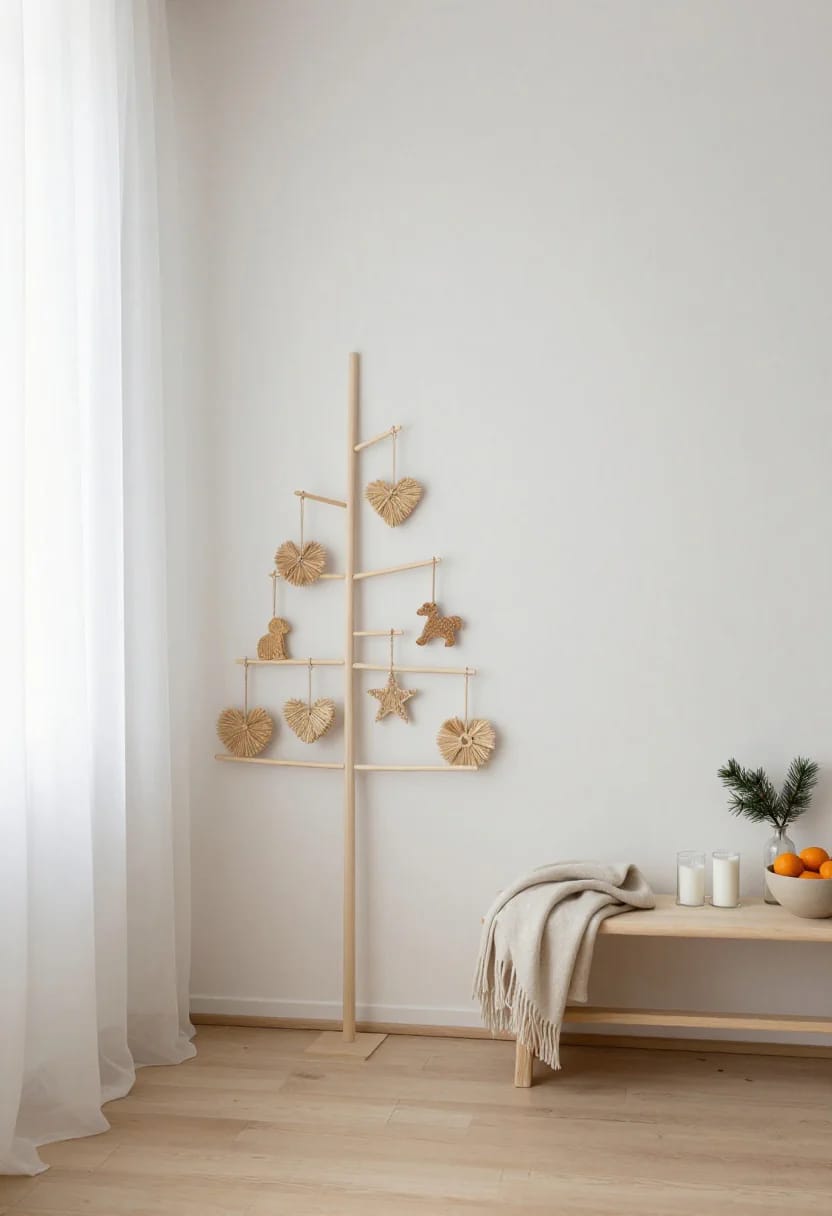
Two rules keep it from looking like flat-pack furniture. Leave the dowel ends unfinished and slightly proud of the spine, and hang no more than five or six ornaments on the whole thing, because the negative space between the rungs is the object. The same logic runs through the wider case for one clear object per room.
Straw hearts on kraft paper, tied on rather than taped
Skip the ribbon and tie a small straw heart or star into the twine on every parcel. Kraft paper in its natural brown, flat cotton twine, one straw object about 6 centimetres across, no tape visible from above. The parcel then matches the tree rather than fighting it, and the straw piece goes onto the recipient's tree afterwards.
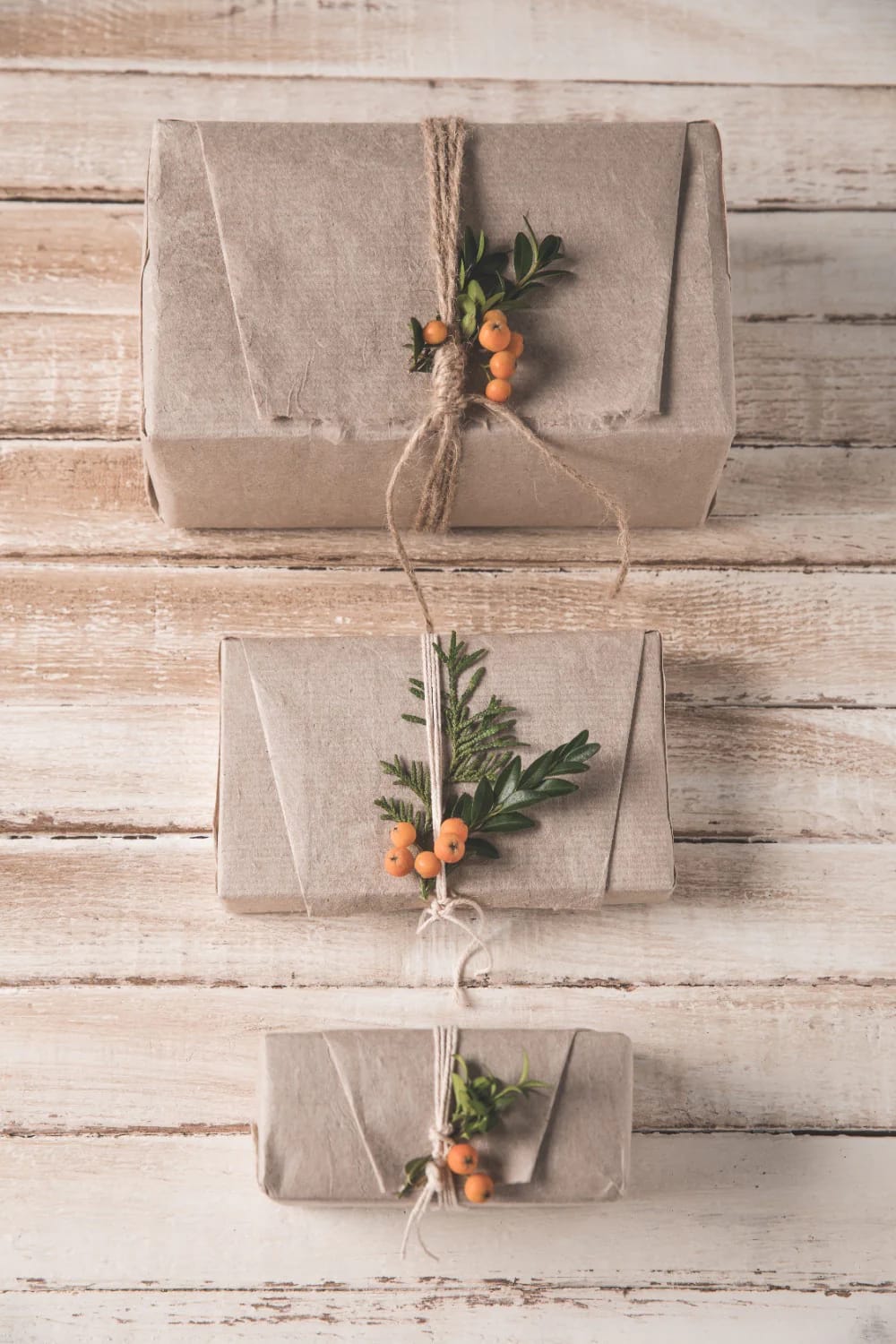
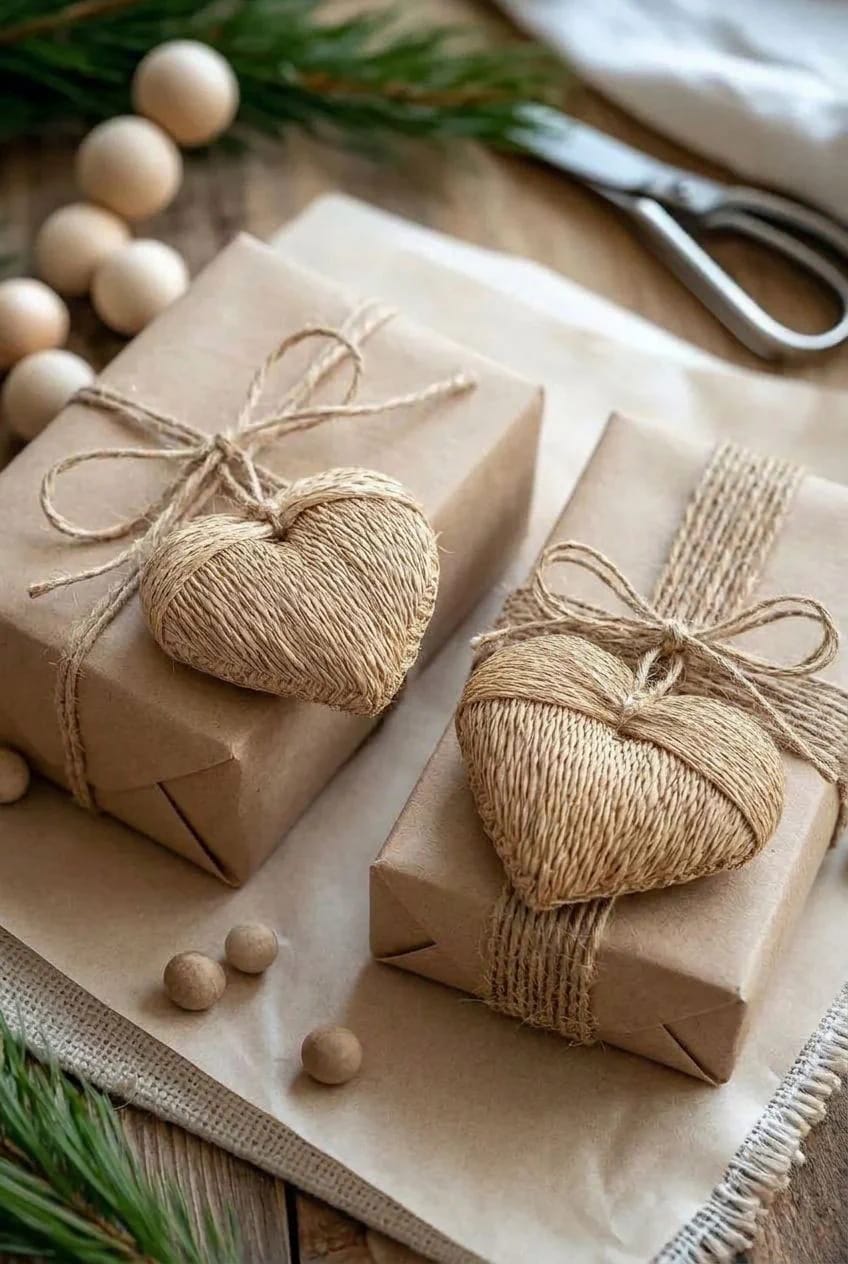
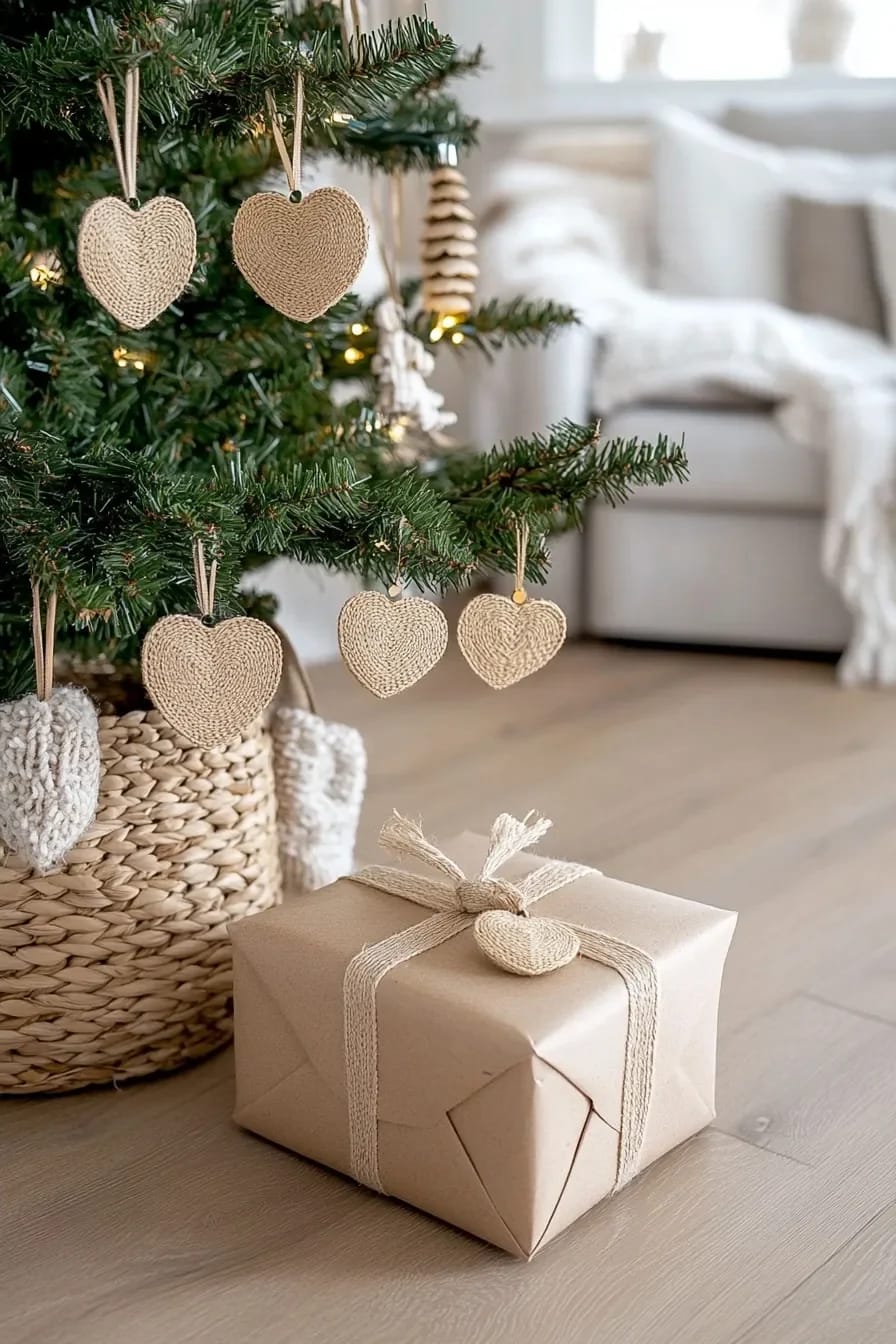
One warning about kraft: the recycled brown paper sold in wide rolls for moving house is thin, and it tears at the corners of anything with an edge. The 70 to 90 gsm kraft sold for wrapping holds a crease and survives the twine being pulled tight.
Warm the light down to 2200K and get it off the ceiling
Pale wood and straw both go grey and flat under cool light, so the light temperature matters more here than in almost any other Christmas palette. Both materials sit in the yellow-tan band and they need a warm source to hold that colour after dark. Overhead light also kills the texture: straw is a fibre object and it only shows its weave under raking light from the side.
Where the candles go
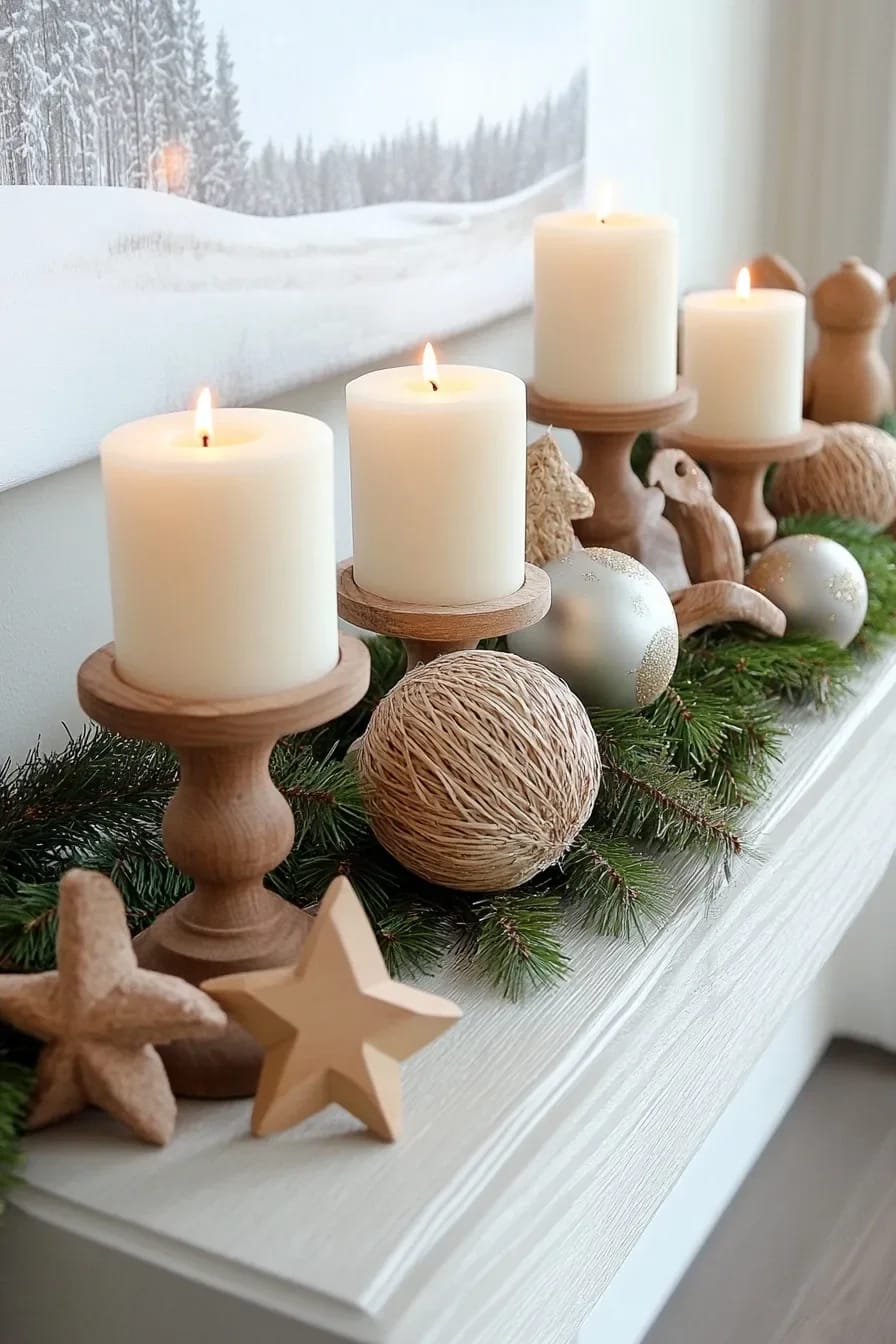
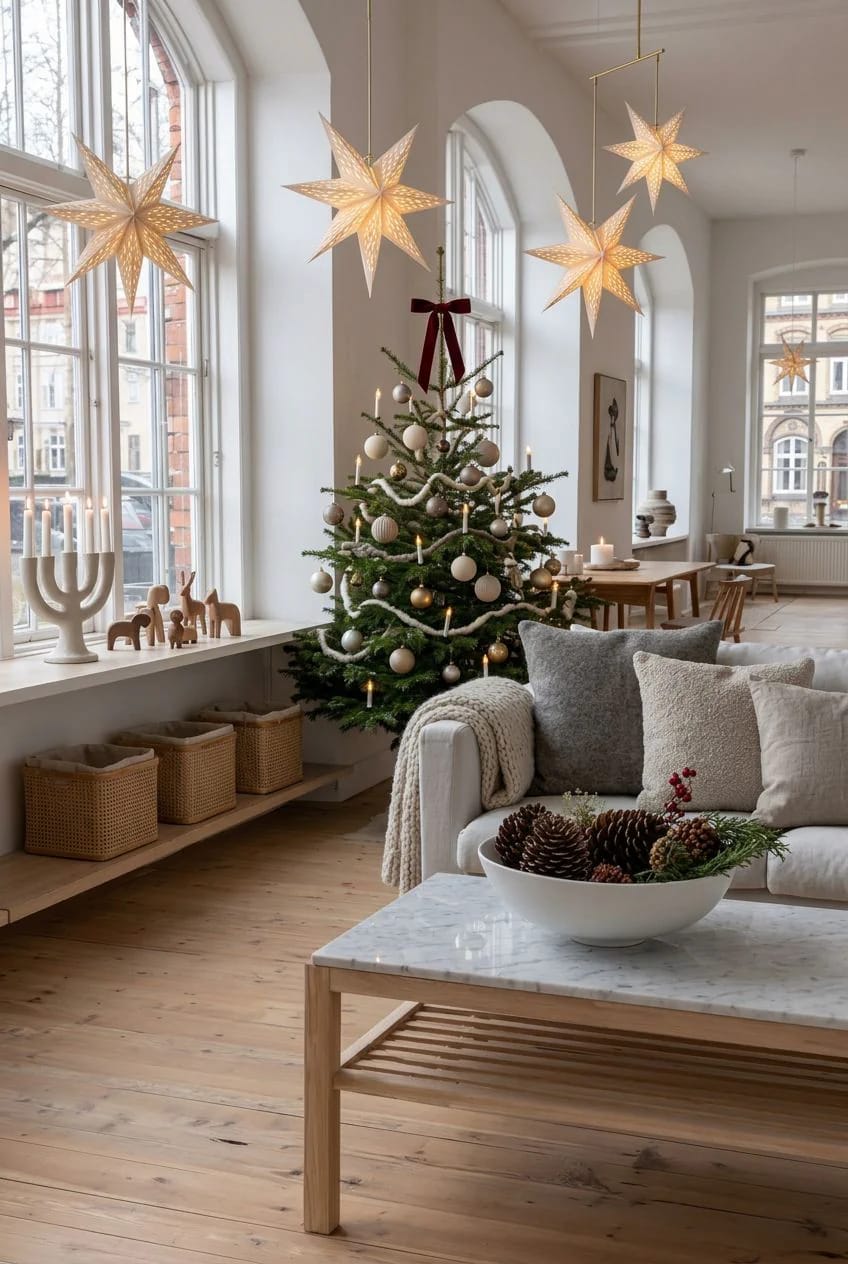
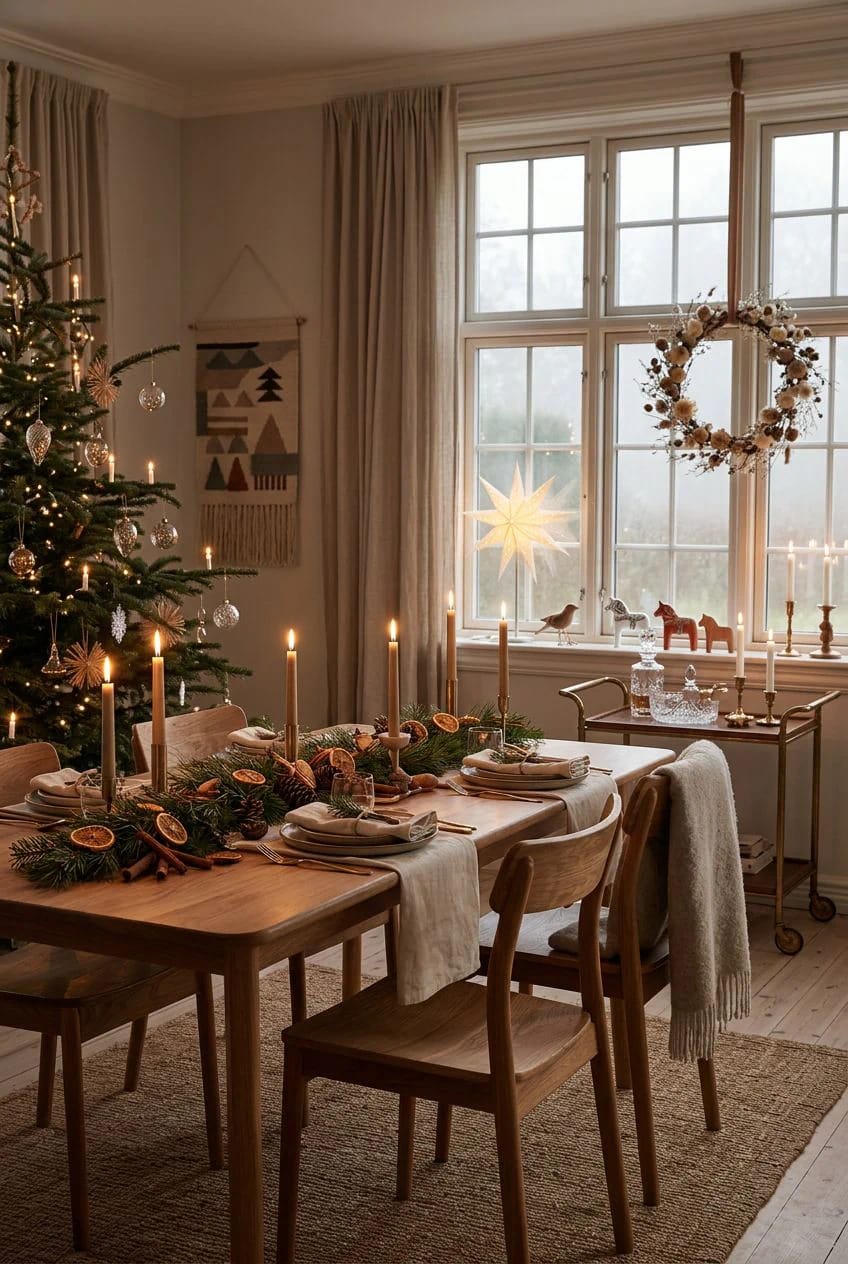
Put the candles on the windowsill under the straw stars, not on the coffee table. The sill puts a warm source behind the hanging pieces at roughly their own height, which lights the straw from the side and casts the star shapes onto the reveal. Three to five candles at mixed heights, in plain glass or pale ceramic. Swedish windows have carried electric advent candelabras for decades for the same reason, and if open flame near a textile-hung window worries you (reasonably), the electric arch does the identical job.
The bulb spec that matters
Buy 2200K bulbs for the lamps in the room, not the standard 2700K warm white. The difference sounds academic and is obvious in a dark room: 2700K reads as domestic lighting, 2200K reads as flame. Check that the string lights on the tree match, because a 3000K string next to a 2200K lamp turns the whole scheme slightly green in photographs.
 Cozy Hygge Christmas Living Room Ideas, Built Around Light and Texture Twelve moves ordered by how much they change the room after dark.
The julneg: a wheat sheaf outside the window for the birds
Tie a sheaf of unthreshed wheat or oats to a post outside the window and you have the oldest piece of straw decoration in the Nordic calendar, the julneg, which farms across Sweden and Norway have been putting out for birds at Christmas for centuries. It costs a few euros, it moves in the wind, and it brings blue tits and finches to the one window you have just decorated on the inside.
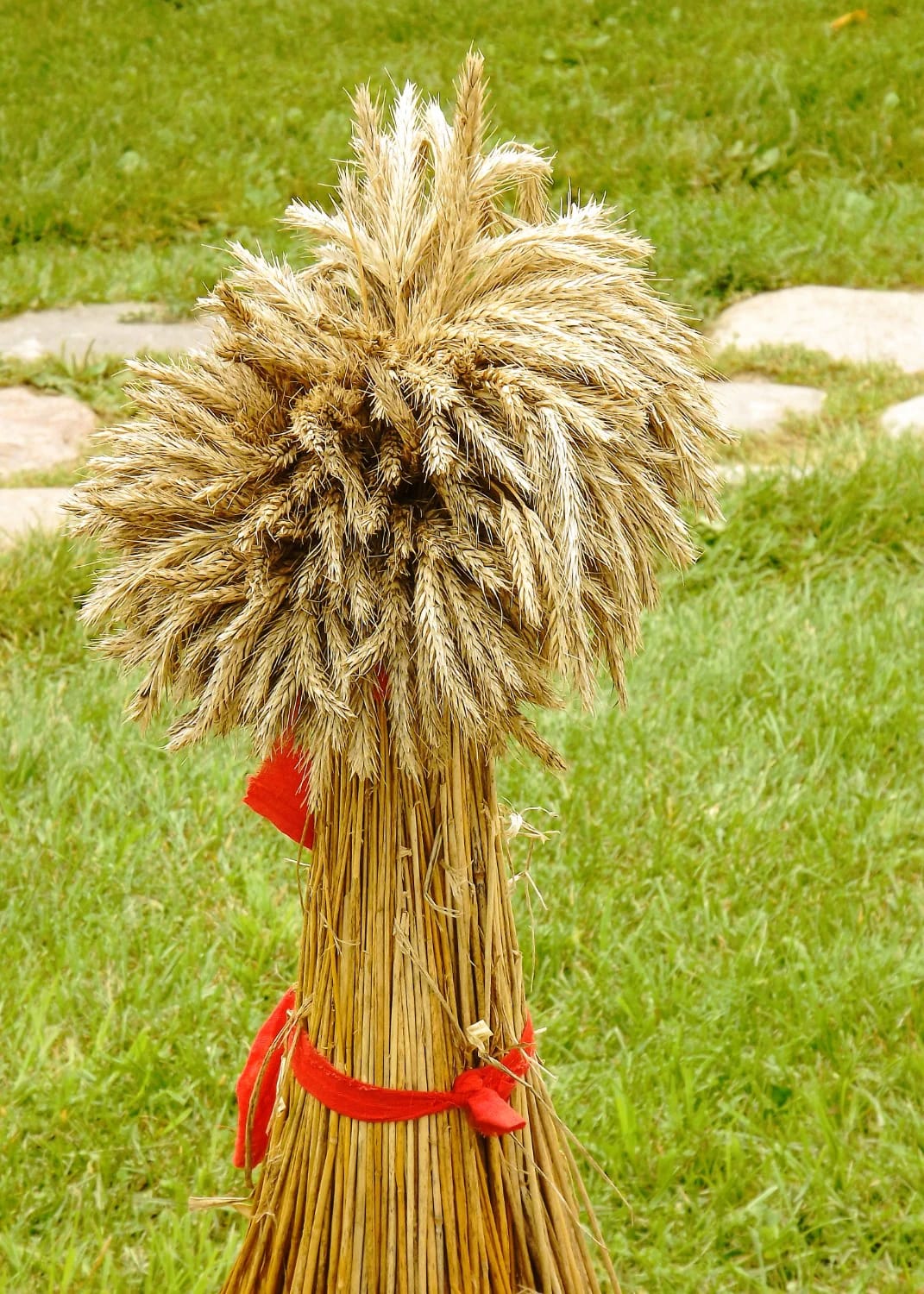
Fix it high enough that cats cannot reach it and close enough that you can actually watch it, which usually means a post two to three metres from the glass rather than at the end of the garden. It will be stripped bare by the second week of January, at which point the post stands empty and the season is genuinely over, and there is a case for leaving the sheaf up until the birds finish rather than taking the rest of the decorations down around it. If the outside of the house interests you as much as the inside, the restrained approach to outdoor Christmas decoration covers what else is worth putting out there.
Related Posts
- 21 Scandinavian Christmas Decorations Ideas To Bring Nordic Charm at Home
- Rustic Christmas Decor with Raw Wood and Dark Greenery That Doesn’t Read Like a Craft Store
- Minimalist Outdoor Christmas Decorations for a Modern Home
- Guide to Minimalist Scandinavian Home Decor (2026 Edition)
- 10 Whimsical Christmas Tree Decorating Ideas That Actually Read as Playful, Not Cluttered
- Farmhouse Front Porch Christmas Decor Ideas That Read Warm, Not Staged