
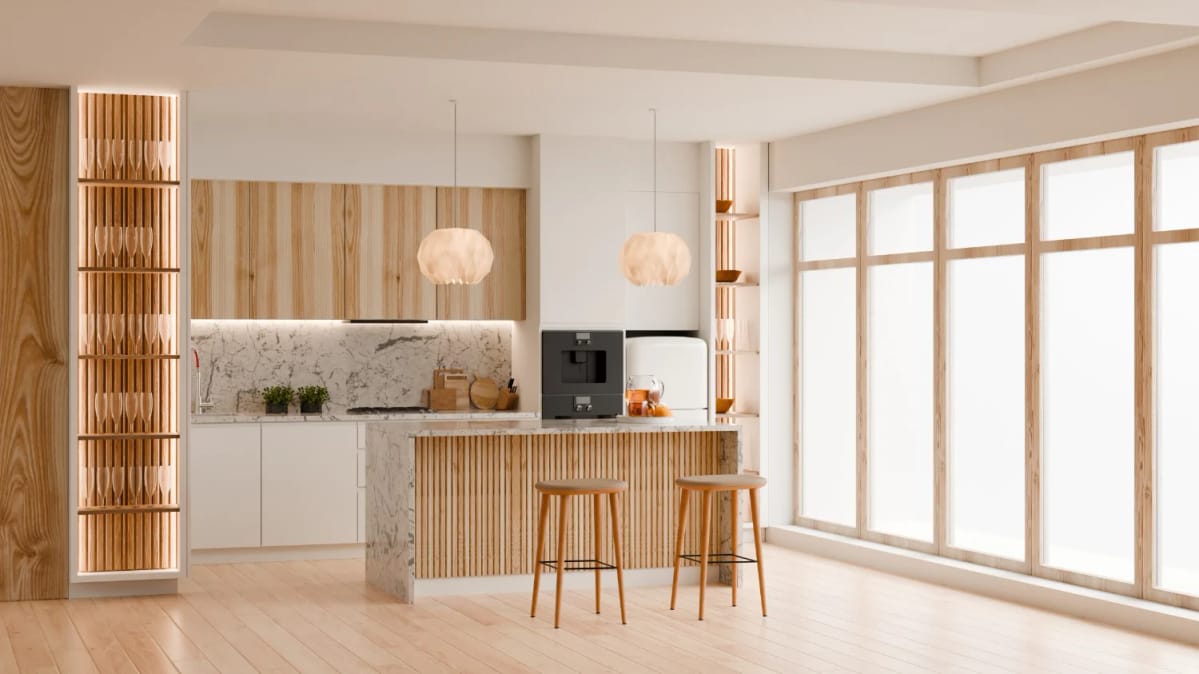
Japandi kitchens photograph beautifully because they are photographed empty. The whole vocabulary of the style — pale oak, unbroken cabinet fronts, one honed stone slab, a paper lantern — is a collection of surfaces that record every fingerprint, every citrus splash, every crumb that lands in a groove. That is a perfectly good trade to make, but only if you make it knowingly, surface by surface. The twelve decisions below are ordered roughly by how hard they are to undo, and each one names the version that fails.
Two things this list is not. It is not a Scandinavian kitchen with a bonsai on the counter; the Japanese half of Japandi lives in joinery, proportion and restraint, not in decor objects. And it is not a budget style. Handleless cabinetry alone runs roughly 10 to 15 percent above the same kitchen with pulls, and that is before anyone says the word travertine.

1. Rift-sawn white oak, not blond ash
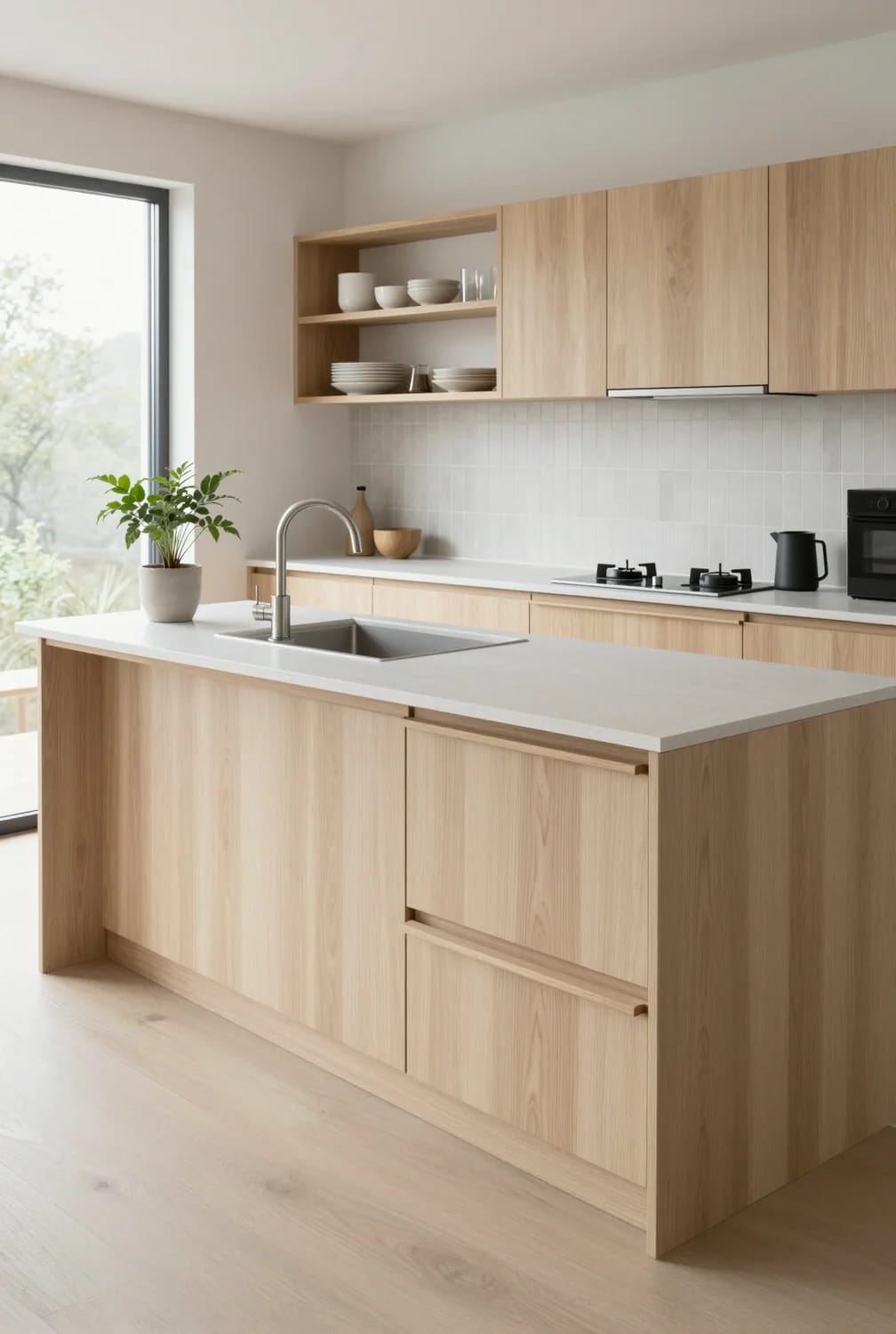
The cut of the timber decides this look, not the species. Rift-sawn white oak is milled so the growth rings sit at roughly 30 to 60 degrees to the face, which produces a straight, tight, almost featureless grain with none of the ray fleck you get from quarter-sawing and none of the cathedral arches you get from plain sawing. Those arches are the reason a plain-sawn oak kitchen reads farmhouse no matter how flat you make the doors.
Blond ash and pale birch are the other trap, and Pinterest sells them hard. They read Scandinavian flat-pack; Japandi’s oak is browner and warmer, closer to the tone of a well-used chopping board than to a Billy bookcase. If you want to understand where the restraint half of the style comes from, the Nordic side of it is worth reading up on properly, and our walkthrough of what minimalist Scandinavian rooms actually get right covers the parts Japandi borrows.
Finish is the last call, and it is a real fork. Hardwax oil keeps the surface open and matte, and it can be spot-repaired with a rag; it also needs re-oiling on the fronts you touch, roughly once a year on the ones by the hob. A factory lacquer will not need that, but it puts a faint film between your hand and the grain, and once you have noticed that film you cannot un-notice it.
2. Routed finger pulls, not push-to-open
Specify a J-pull profile or a Gola rail on everything you open with a full hand, and keep push-to-open for upper doors only. Push-to-open latches (Blum Tip-On is the common one) mean you press the cabinet front itself; the front collects the grease, and on a dark matte door it collects it visibly. Kitchen suppliers say the same thing from different directions: the mechanism needs periodic adjustment, and it behaves worst on exactly the drawers you use most, because a loaded 30kg drawer resists, and the instinct when something resists is to pull, not push.
There is a smaller, funnier failure too. Pronorm’s UK sales manager told Homebuilding & Renovating that people lean against push-to-open drawers and pop them open by accident, which is exactly the sort of thing you only learn after the joinery is in. Handleless is not the cheap option either: the routing on a J-pull costs about what the handles would have cost, but a Tip-On mechanism on every door and drawer is a line item, and a continuous aluminium rail is the most expensive version of all. If you are still weighing door styles rather than opening systems, start with the broader run of cabinet front options and come back to the hardware question.
3. Build the Japandi palette on ivory, one wood, one dark note
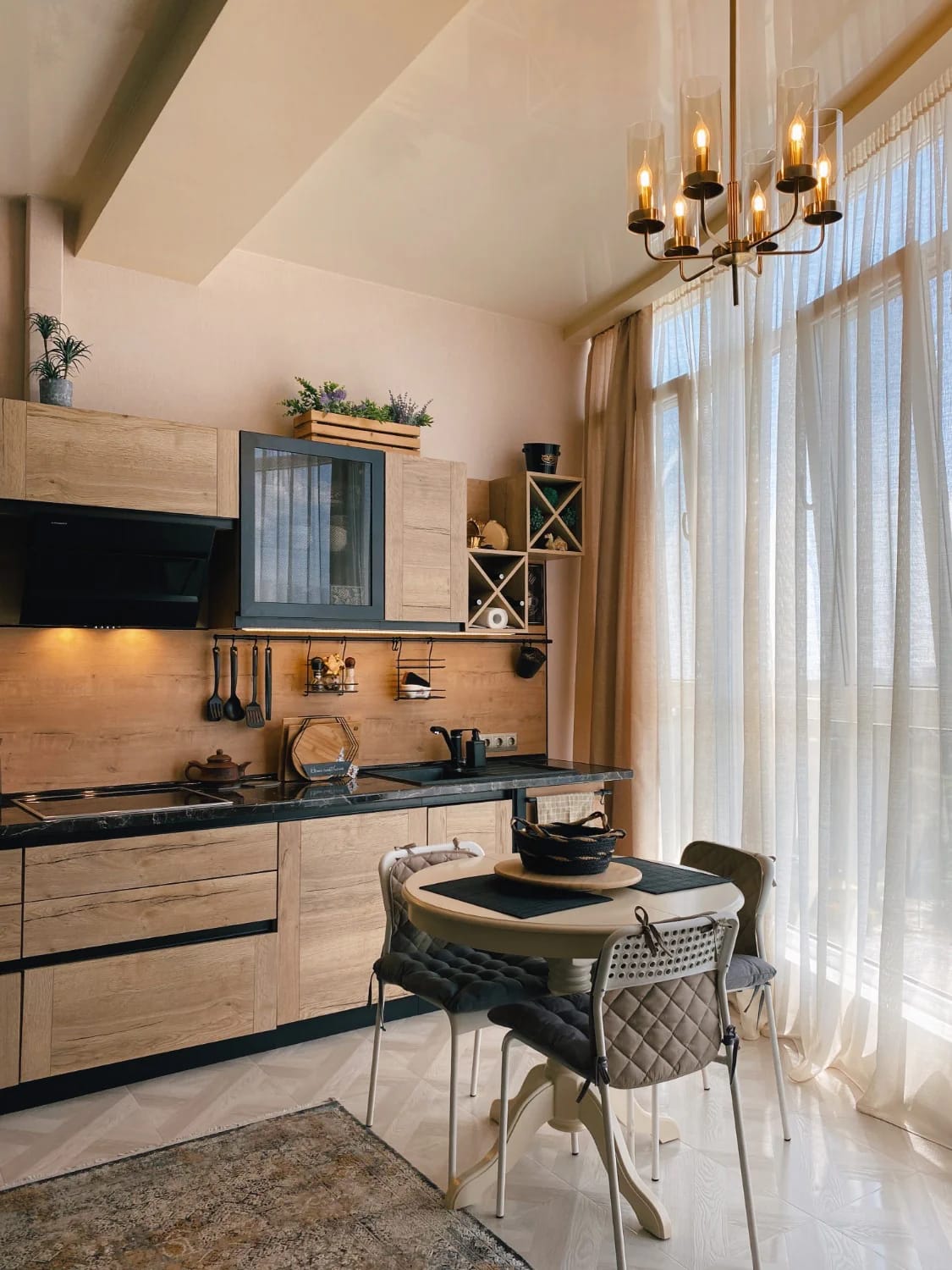
Get the proportions right and the colours almost pick themselves. A warm ivory or stone beige carries the large quiet surfaces; the oak takes the second share; one dark note, charcoal or a deep brown, takes under a tenth of what you can see, and it should land on something small and structural rather than on a feature wall. Sage is the only chroma the style tolerates comfortably, and even then it belongs on a low run, not the uppers.
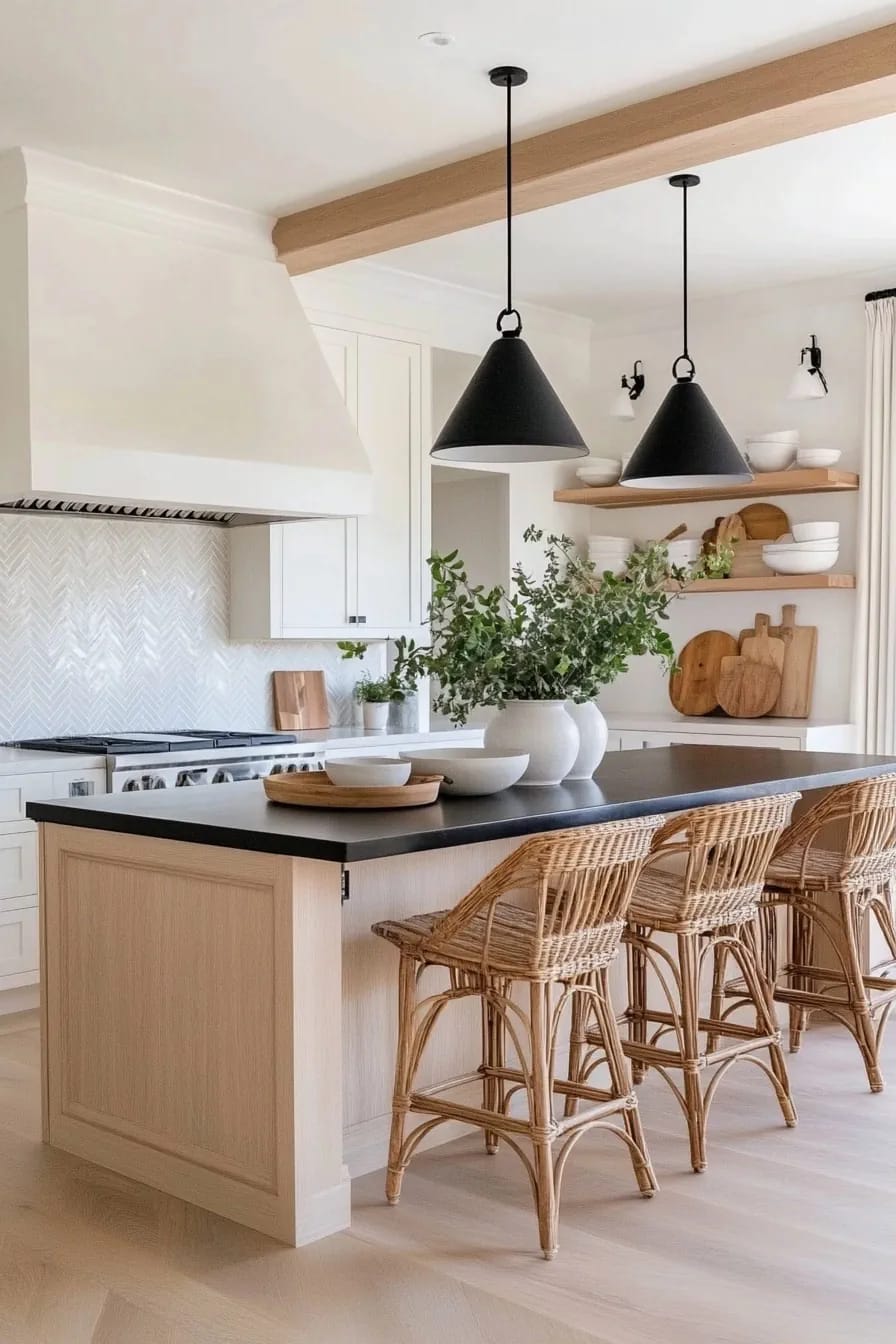
The failure is cool grey. Grey neutrals drop the temperature of the whole room and pull the oak orange by contrast, which is how a Japandi kitchen ends up looking like a 2016 Scandinavian one that has been left out in the rain. Check the light reflectance value before you commit, because that single number decides whether a beige reads as a soft field or as a builder’s magnolia, a point we go into properly in our guide to beige kitchens that don’t read builder-grade.
 15 New Japandi Living Room Ideas You’ll Love How the same restraint plays out when there is no worktop to protect.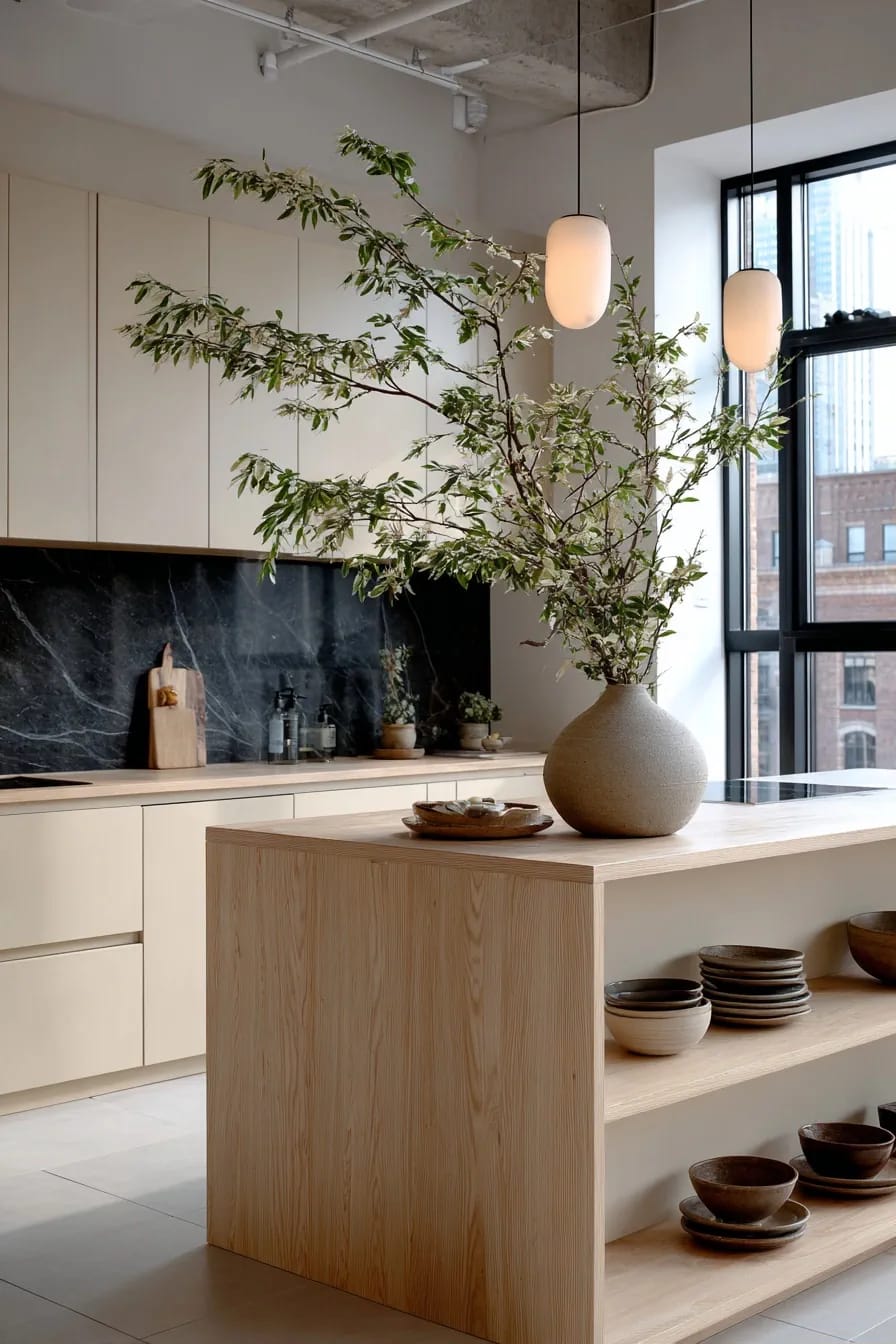
4. Travertine on the island is a commitment, not a countertop choice
If you cook with citrus and tomatoes, travertine will etch. It is mostly calcium carbonate, acid dissolves a trace of it on contact, and the dull mark that results is chemical damage rather than a stain, which means wiping it does nothing. Lemon juice does it, vinegar does it, wine does it, and most supermarket surface sprays do it too.
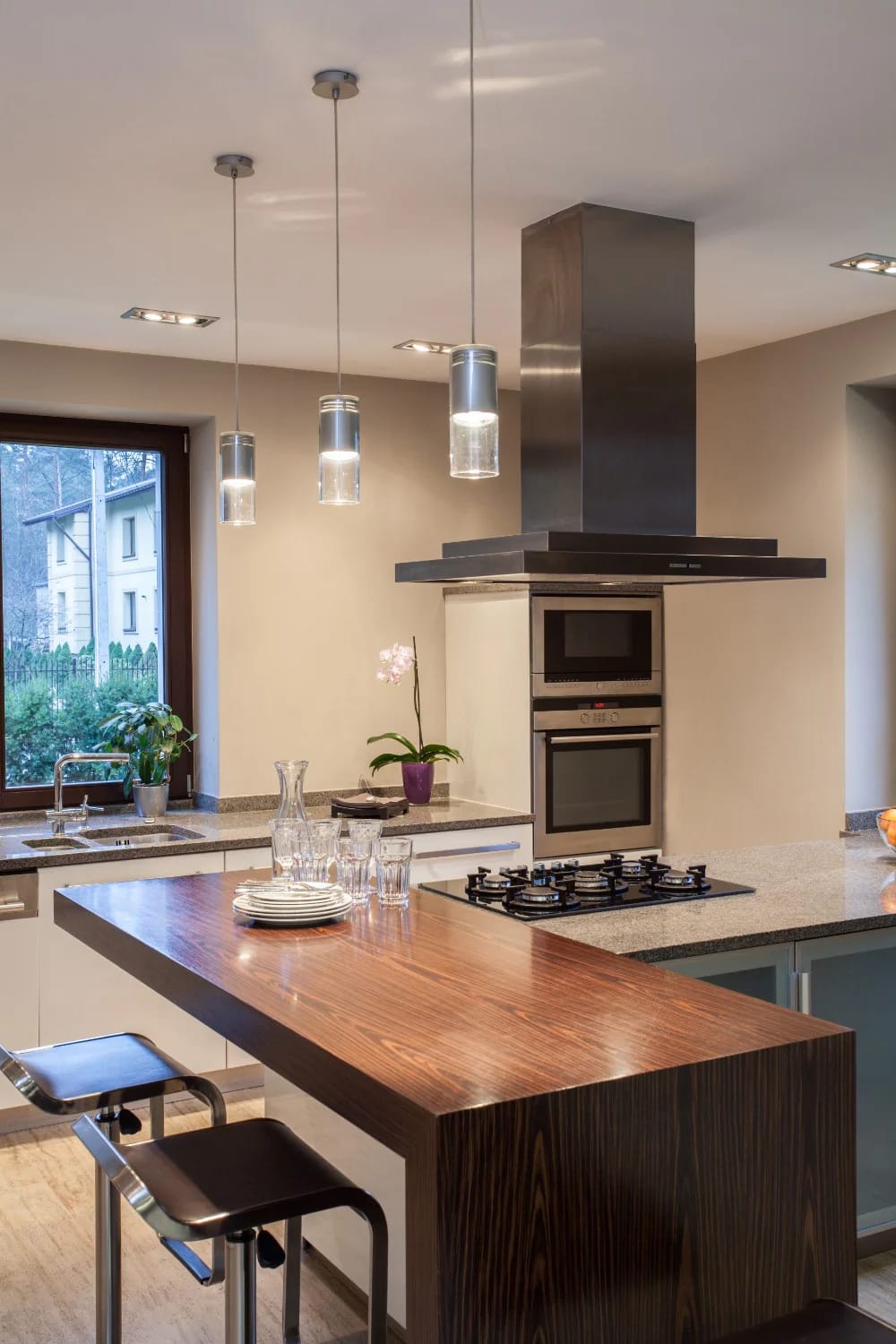
Two things make it survivable. Specify honed and filled rather than polished, because a matte surface hides an etch mark almost completely while a polished one turns it into a dull patch you can see from the doorway. And accept the sealing schedule: travertine is the most porous stone on the countertop shelf, it depletes sealer faster than denser stones, and every supplier who is honest about it says reseal every one to two years. Budget roughly $45 to $100 per square foot installed, honed running at the lower end.
The double-tiered travertine island in almost every top-ranked Japandi image is a photograph of a kitchen where nobody makes a vinaigrette. If you do, put the travertine somewhere it will not be attacked, a backsplash or a bar counter, and put a warm-toned quartzite on the working run instead; it sits around 7 on the Mohs scale and reads close enough that nobody but you will know. Our rundown of veined quartzite worktops goes through which slabs hold that warm, low-contrast character.
5. One working open shelf, not a wall of styled ones
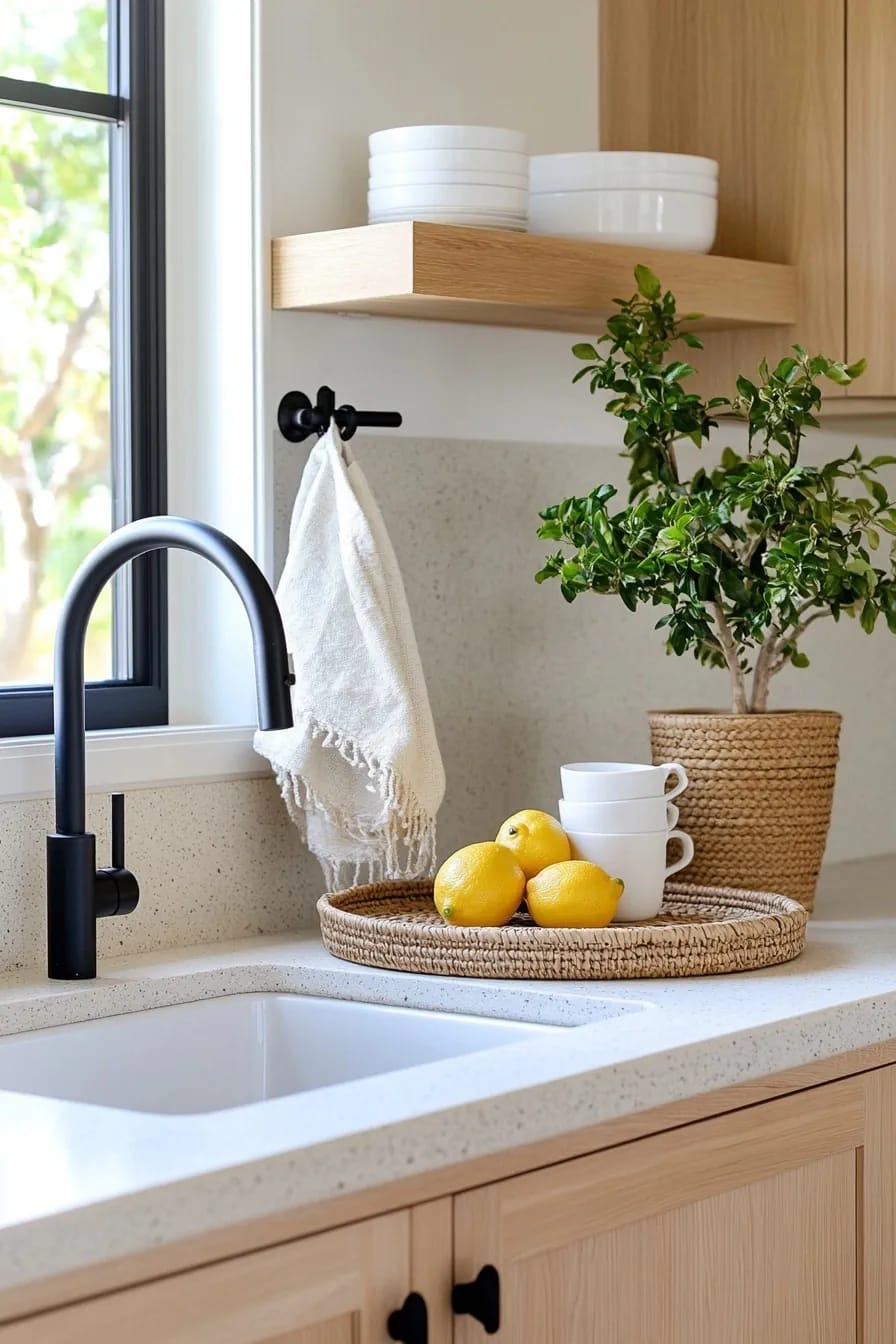
Fit one shelf, at reach height, above the prep run, and put the things you touch every day on it. Open shelving usually fails in this style because the style demands that every object be worth looking at, and almost nobody owns forty beautiful objects; a single working shelf sidesteps the problem by being honestly utilitarian. Solid oak, 40 to 50mm thick so it does not look like a plank, brackets concealed.
Keep it away from the hob. An open shelf within a metre or so of a gas burner collects a fine oil film that turns tacky and grey, and no amount of styling fixes that.
6. Drop a timber ledge off the island instead of putting stools at the stone
A lower solid-timber ledge, cantilevered off the island at table height rather than counter height, is the single best structural move available here. It gives you a warmer surface to sit at, it keeps the stone as a working top rather than a dining surface, and it introduces the second material without resorting to a waterfall end that costs a fortune in slab.
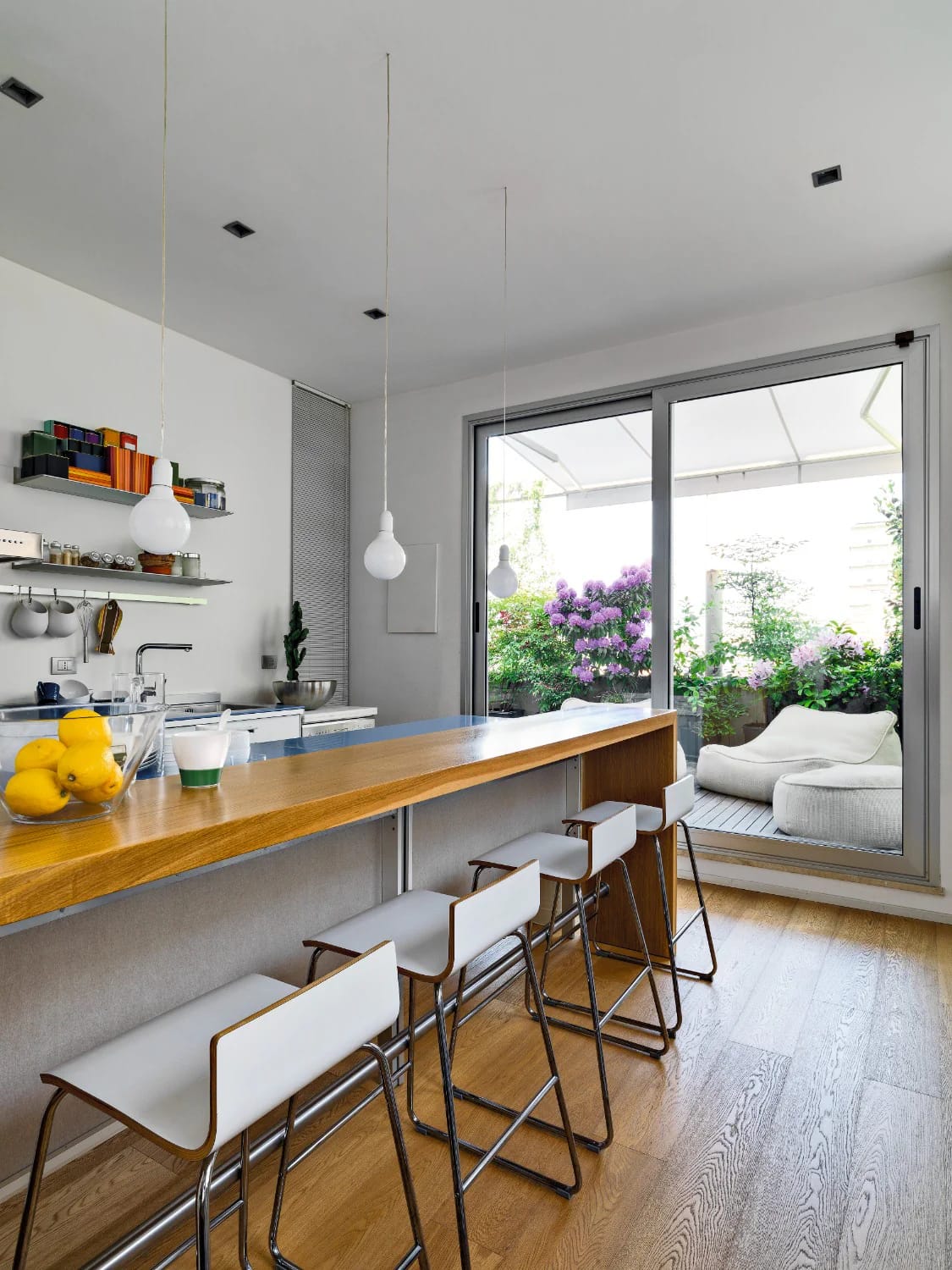
Set the ledge at roughly 74cm against a 90cm counter and use dining chairs, not stools. Islands are a whole argument of their own, and if you have not settled the layout yet, work through the island configurations that actually earn their footprint before you commit to a shape.
7. Hang the paper lantern over the table, never over the hob
Washi paper absorbs airborne grease, and grease yellows it unevenly. Over a dining table, the same lantern does the one thing it does better than any other fixture in the catalogue: a large, low-brightness source at eye level that flatters everything under it and never glares. That is the whole case for it, and it is a strong one.
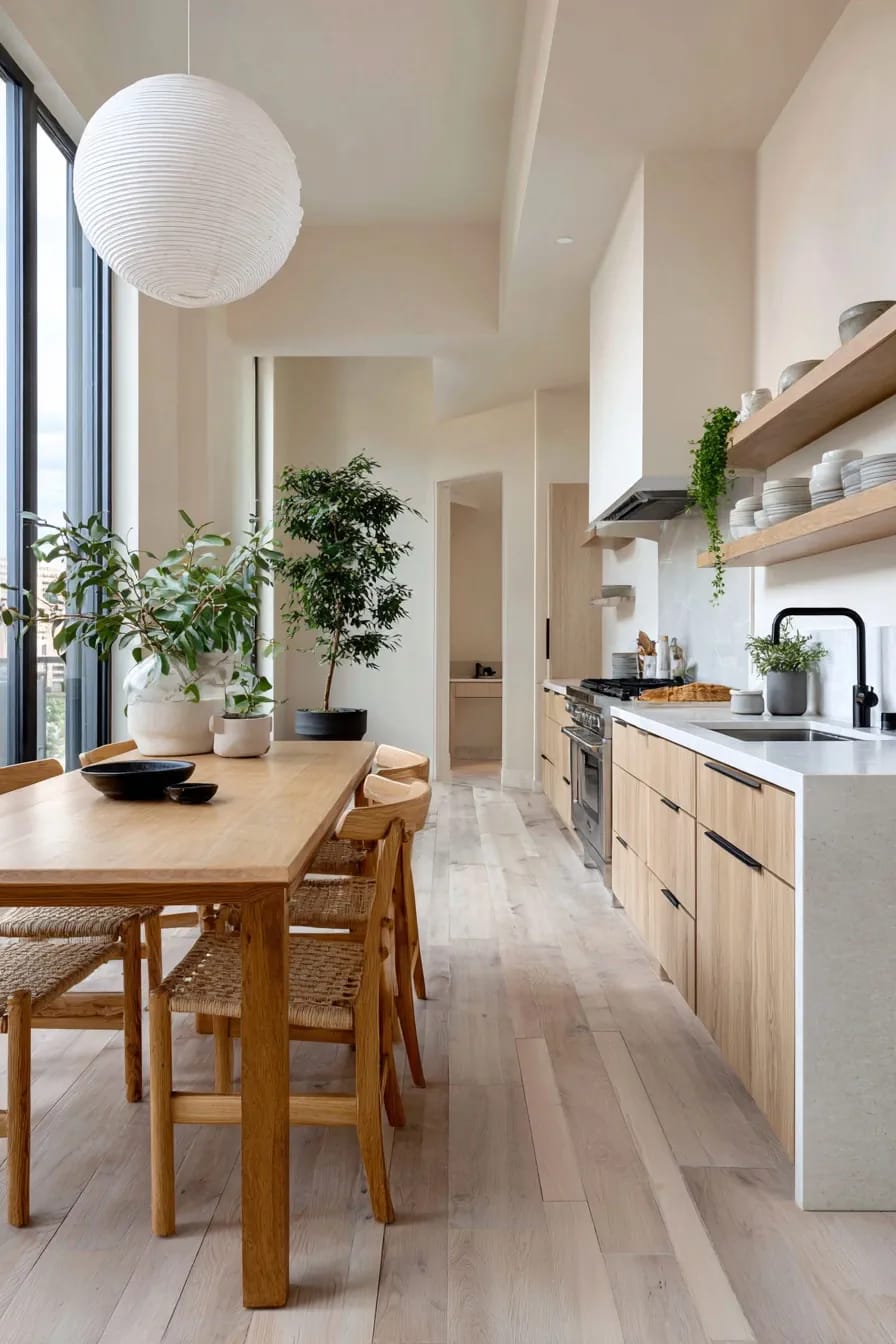
If you want the real thing, an Akari is worth knowing how to identify. They have been handmade by Ozeki in Gifu since 1951, every authentic one carries the red sun-and-moon stamp, and in North America the Noguchi Museum is the only authorised distributor; Vitra handles Europe. Everything else in that shape is a copy, and copies are printed rather than papered, which you can see the moment the bulb is on.
The lantern is not a lighting scheme, though. Around it you want two more layers, and neither is a ceiling grid of downlights:
- Linear LED under the wall cabinets, aimed at the worktop, dimmable, 2700K.
- CRI 90 or above on every lamp in the room. Below that, oak goes muddy and greens read grey, which undoes the palette you just spent a paragraph on.
- One low warm source that stays on when the kitchen is closed for the night.
8. Conceal the appliances you can, and be honest about the rest
Integrate the dishwasher and the fridge behind matching fronts; do not try to integrate the kettle, the grinder and the toaster. Full concealment of the daily appliances means operating a beautiful kitchen through a cupboard door, and within about a month the toaster is living on the island anyway, which is a worse outcome than simply designing a counter where it belongs.
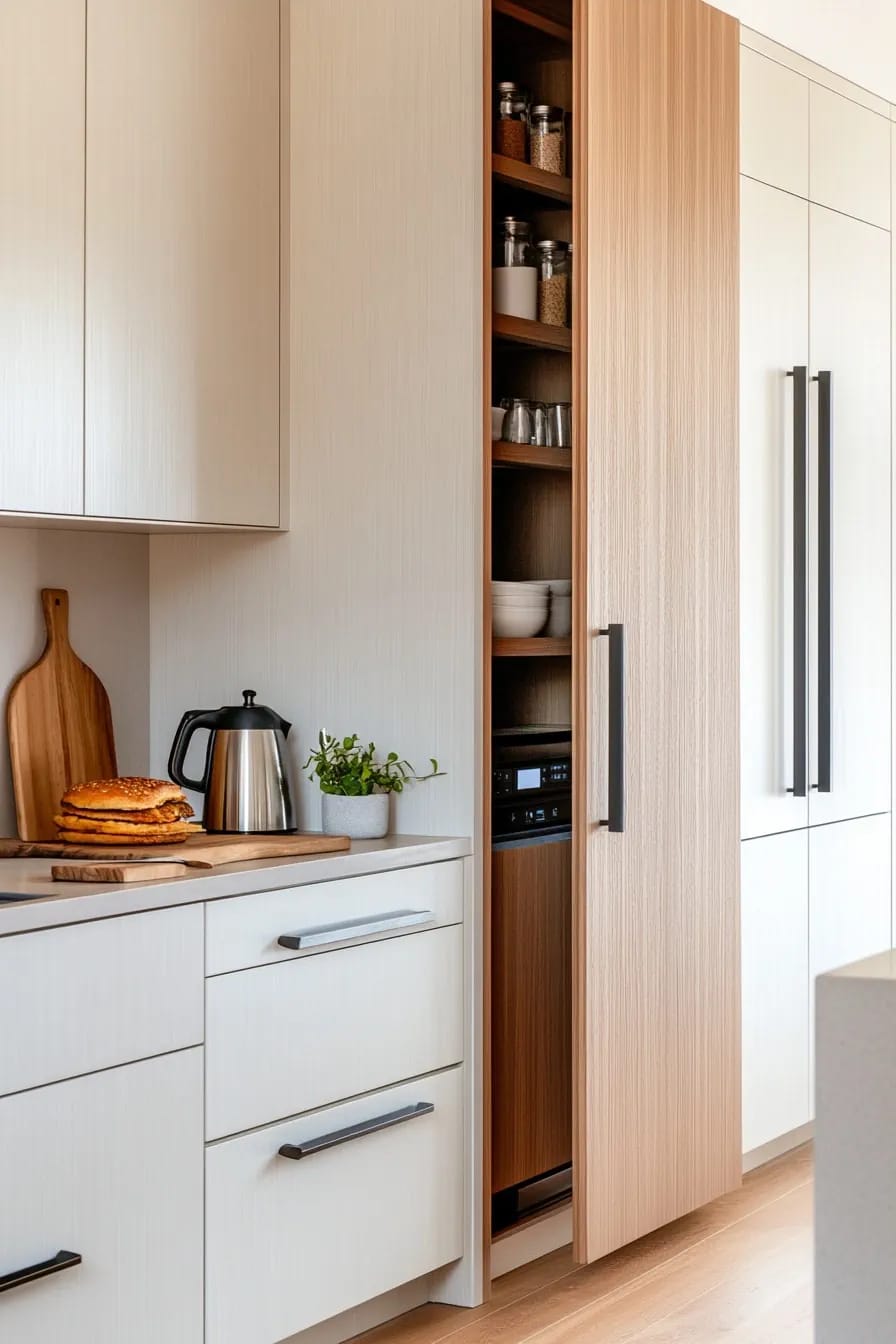
The workable version is a tall larder with a retractable pocket door, a socket inside it, and a shelf you can pull the kettle out onto. It costs more than a run of drawers and it is the piece of the kitchen you will use most.
9. In a small kitchen, Japandi is one wall and a bench
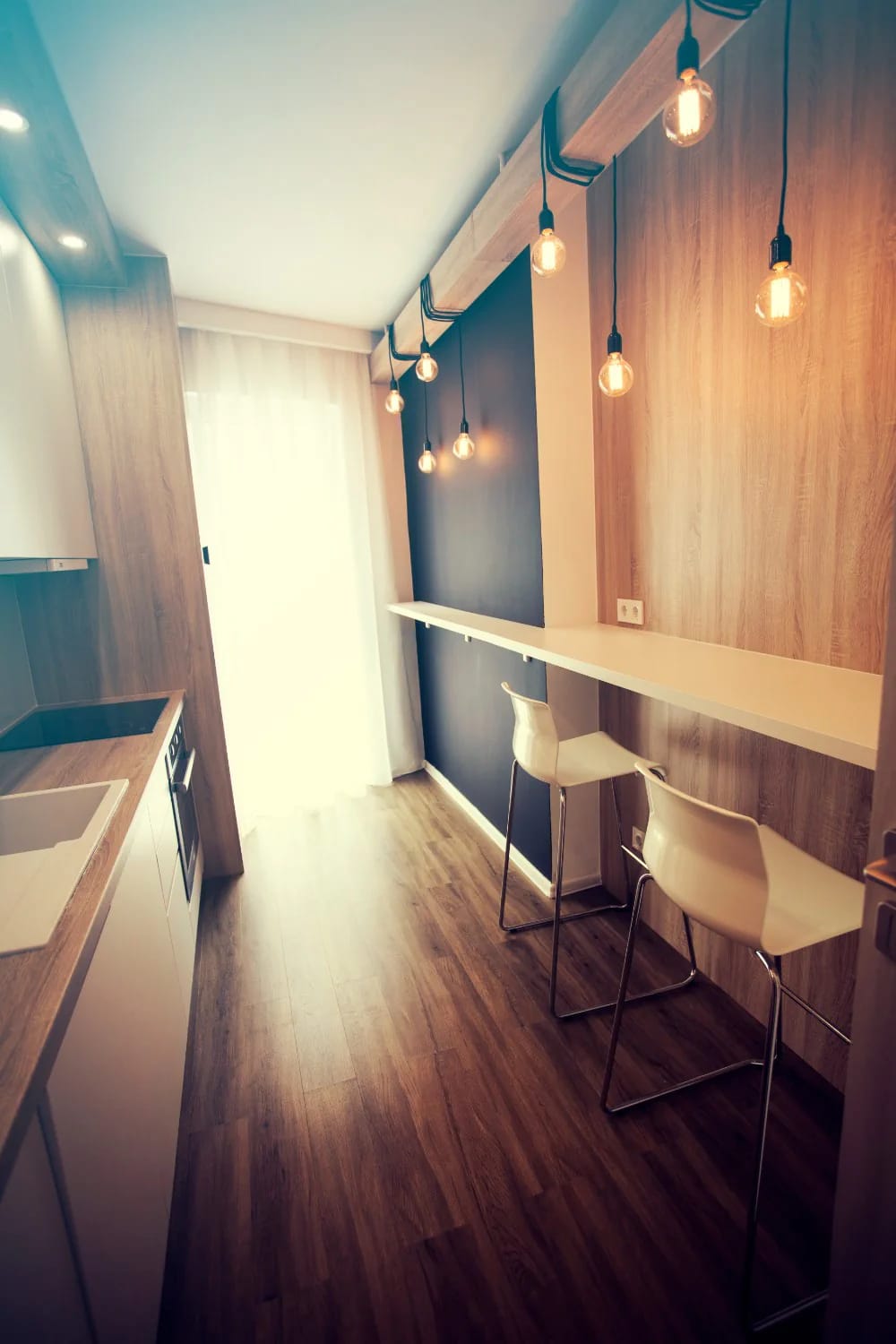
Below about ten square metres, cut the island. It is the single item people keep in a room that cannot hold it, and the compromise version, a 60cm-deep block you edge around, wrecks the calm the style depends on. Run a single wall of cabinets, take them to the ceiling so the eye stops at a line rather than at a dusty gap, and put a narrow oak bench under the window instead of a table.
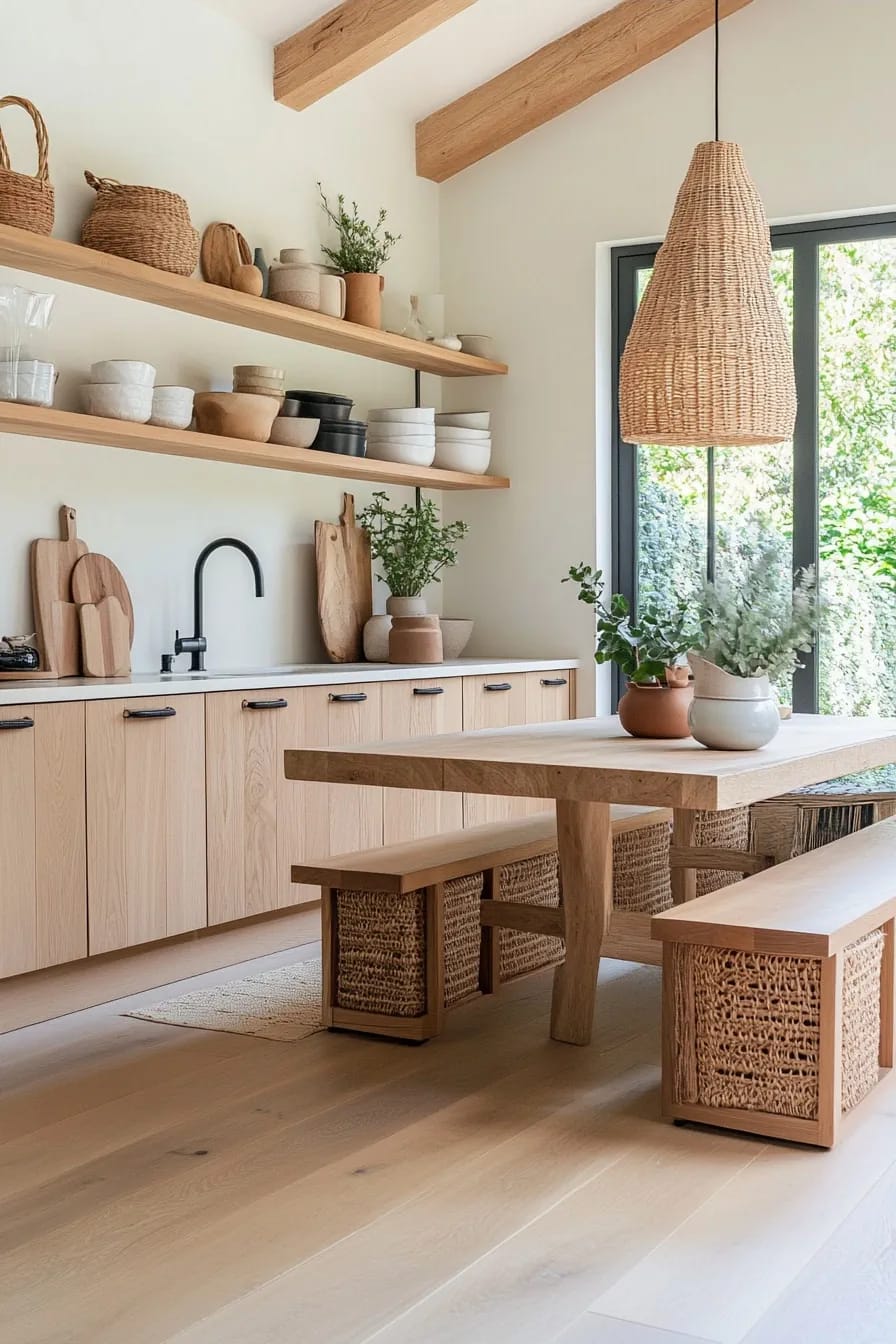
Keep the fronts light in a small room and let the one dark note go on the floor or a single stool. This is also where the budget maths quietly turns in your favour: a one-wall run of good rift-sawn oak costs less than a mediocre L-shape plus an island.
 39 Clever Small Kitchen Ideas: Maximize Your Space with Stylish and Functional Designs Storage and layout fixes for kitchens where the footprint is the whole problem.
10. The charcoal Japandi kitchen needs more light, not less
A dark Japandi kitchen is a lighting project disguised as a colour choice. Charcoal fronts swallow whatever daylight the room has, and matte black is the finish that shows fingerprints most acutely of all, which is precisely why push-to-open belongs nowhere near it.
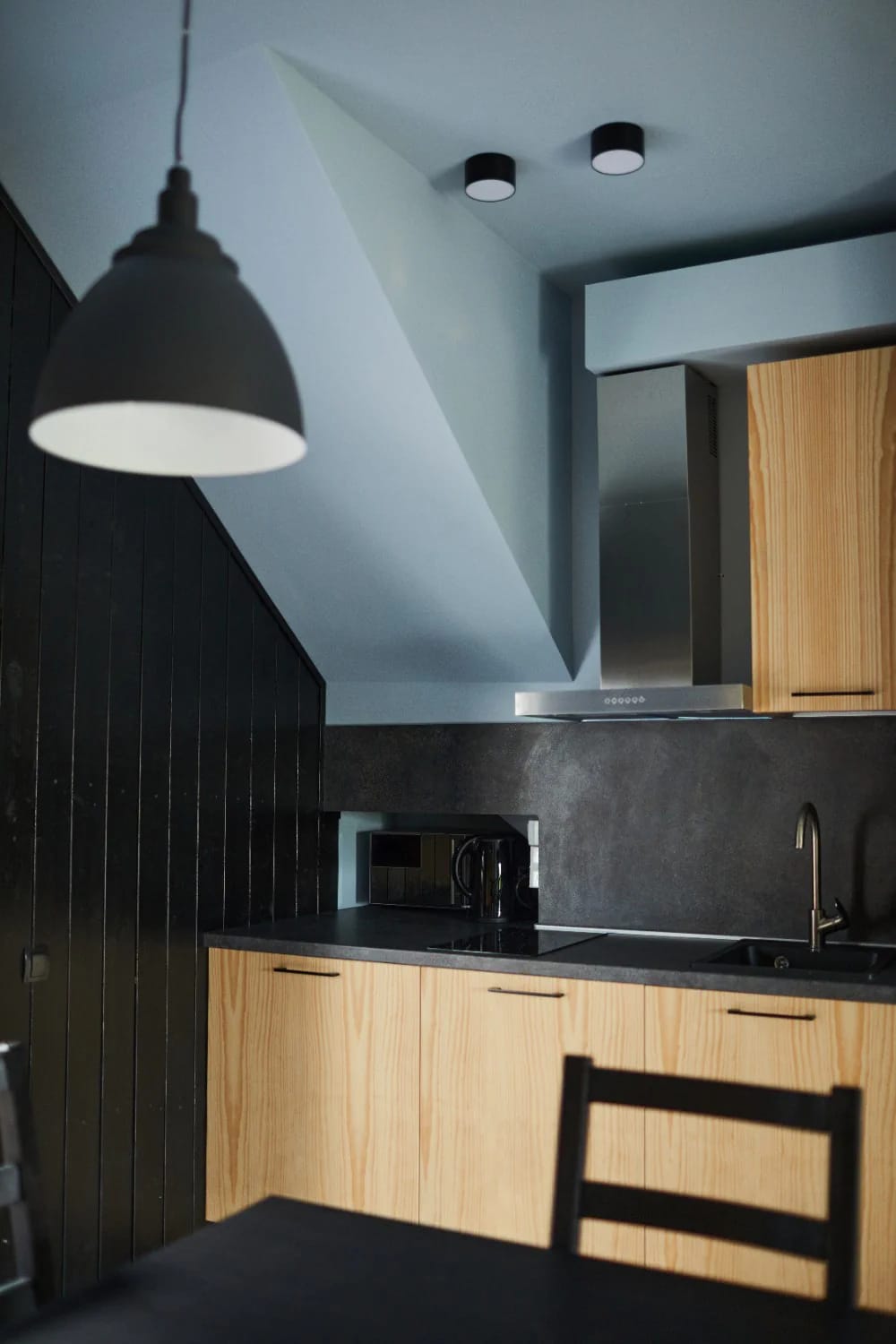
The version that works keeps the charcoal on the base run only, gives oak at least a third of the visible surface, holds the worktop pale, and adds a light layer the pale kitchen would not have needed. Ask for a low-sheen finish rather than a dead flat one; dead flat is the most beautiful and the least forgiving surface in the showroom.
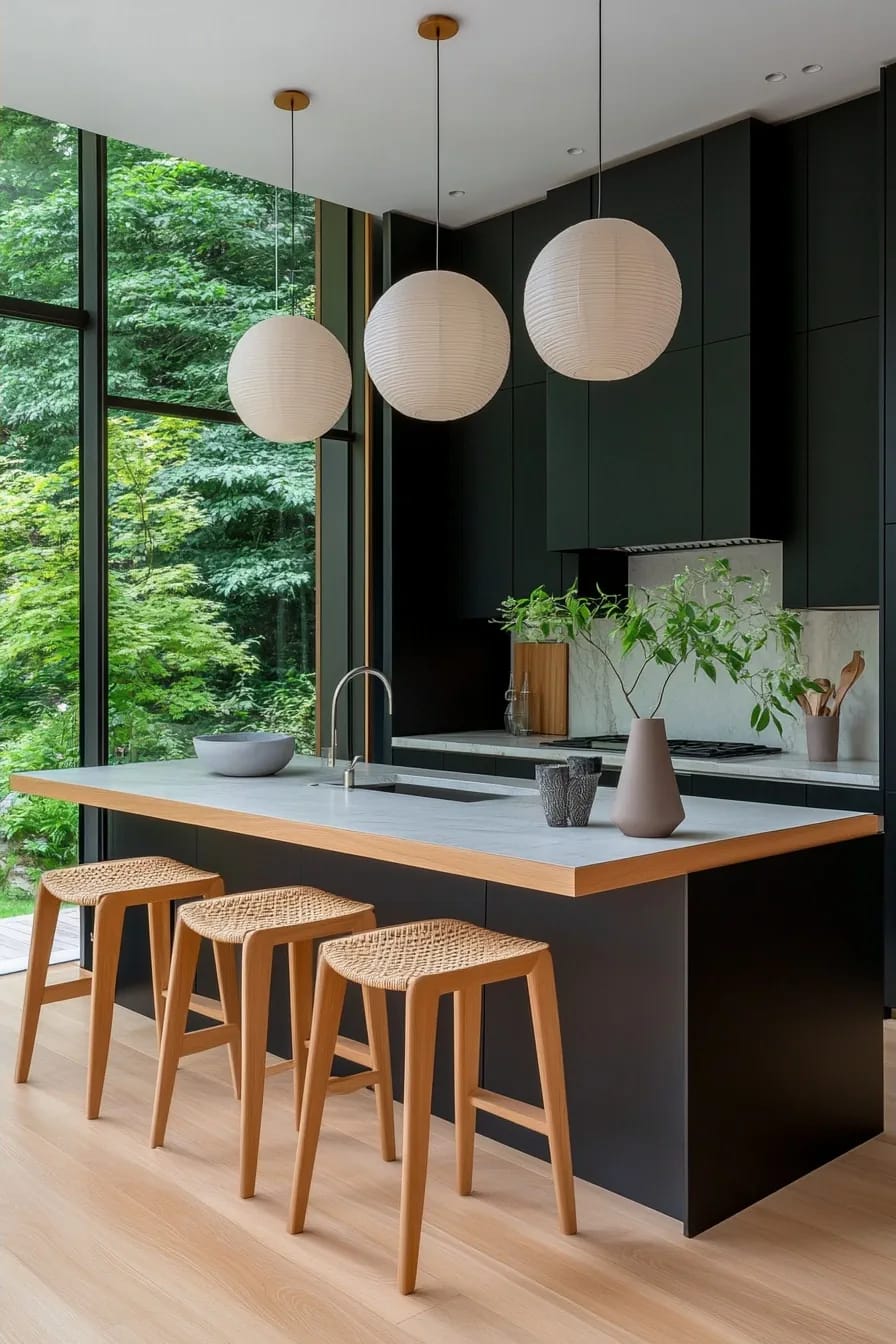
11. Wabi-sabi is a texture budget, not a broken bowl on a shelf
Choose three materials that visibly change with use, and stop there. Unlacquered brass tapware darkens to a warm brown around the handle where hands close on it and stays bright along the spout where water runs, so the object records how you use it. Hand-troweled lime plaster on the one wall the cabinetry does not cover does something similar with light, shifting tone across the day in a way paint cannot. Linen, not cotton, on anything that hangs.
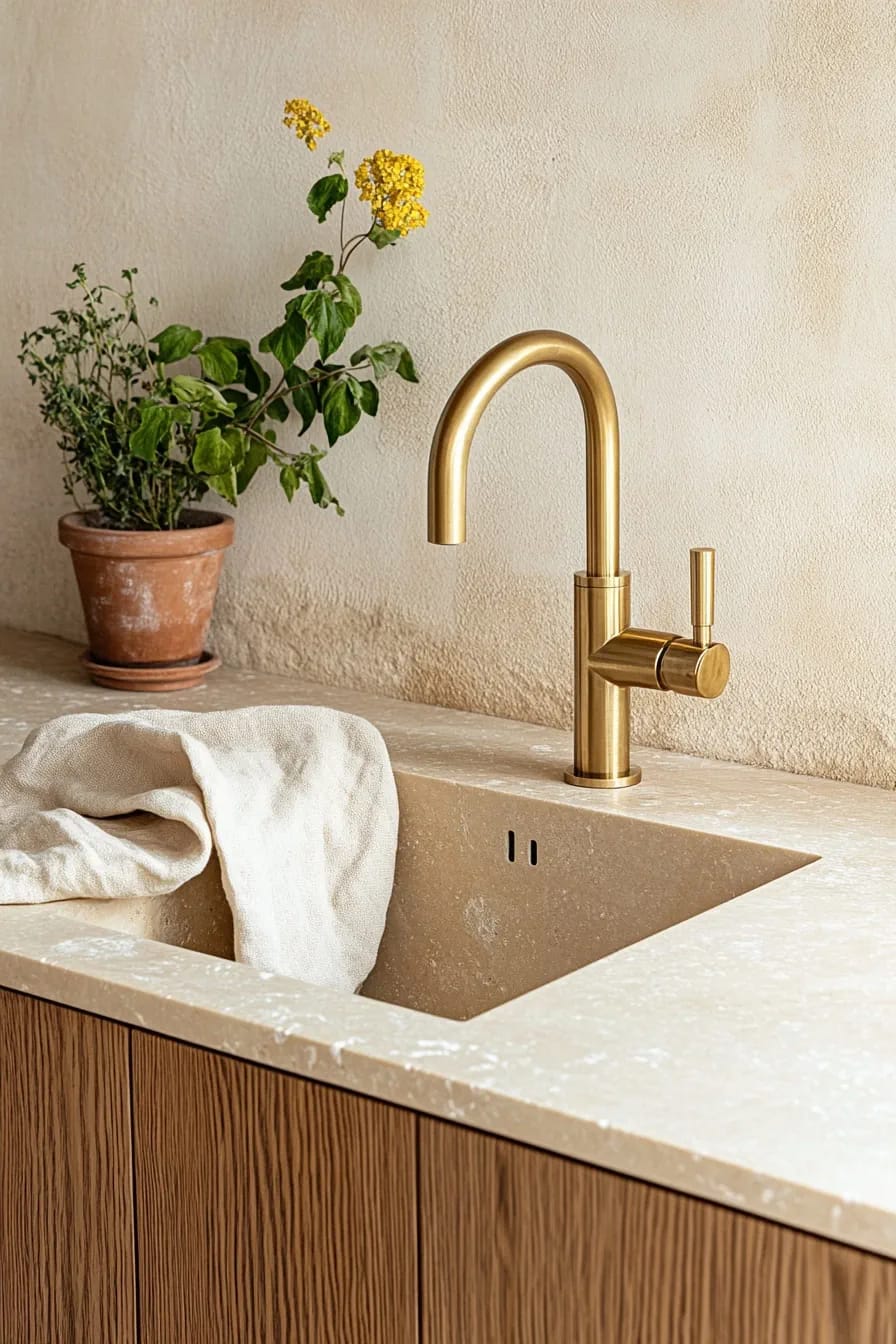
What this is not is a curated arrangement of imperfect objects. The kintsugi bowl placed on the open shelf is decor cosplay, and it is the thing that makes a Japandi kitchen read as a mood board rather than a room. Materials that age are the point; props that pretend to have aged are not. Our look at earthy kitchens built on real materials covers the plaster-and-stone end of this in more detail.
12. Wide-plank engineered oak on the floor, and ask for the wear layer
Engineered, not solid, and rift or quarter cut if the budget reaches. Kitchens take steam, dishwasher seepage and spills that sit for an hour before anyone notices, and an engineered board's cross-laminated core resists the cupping that ruins a wide solid plank; a 200mm solid board in a kitchen is a warranty claim waiting to happen. The cut matters here for the same reason it mattered on the cabinets, since a cathedral-grained floor under straight-grained doors is a mismatch you will see every time you walk in.
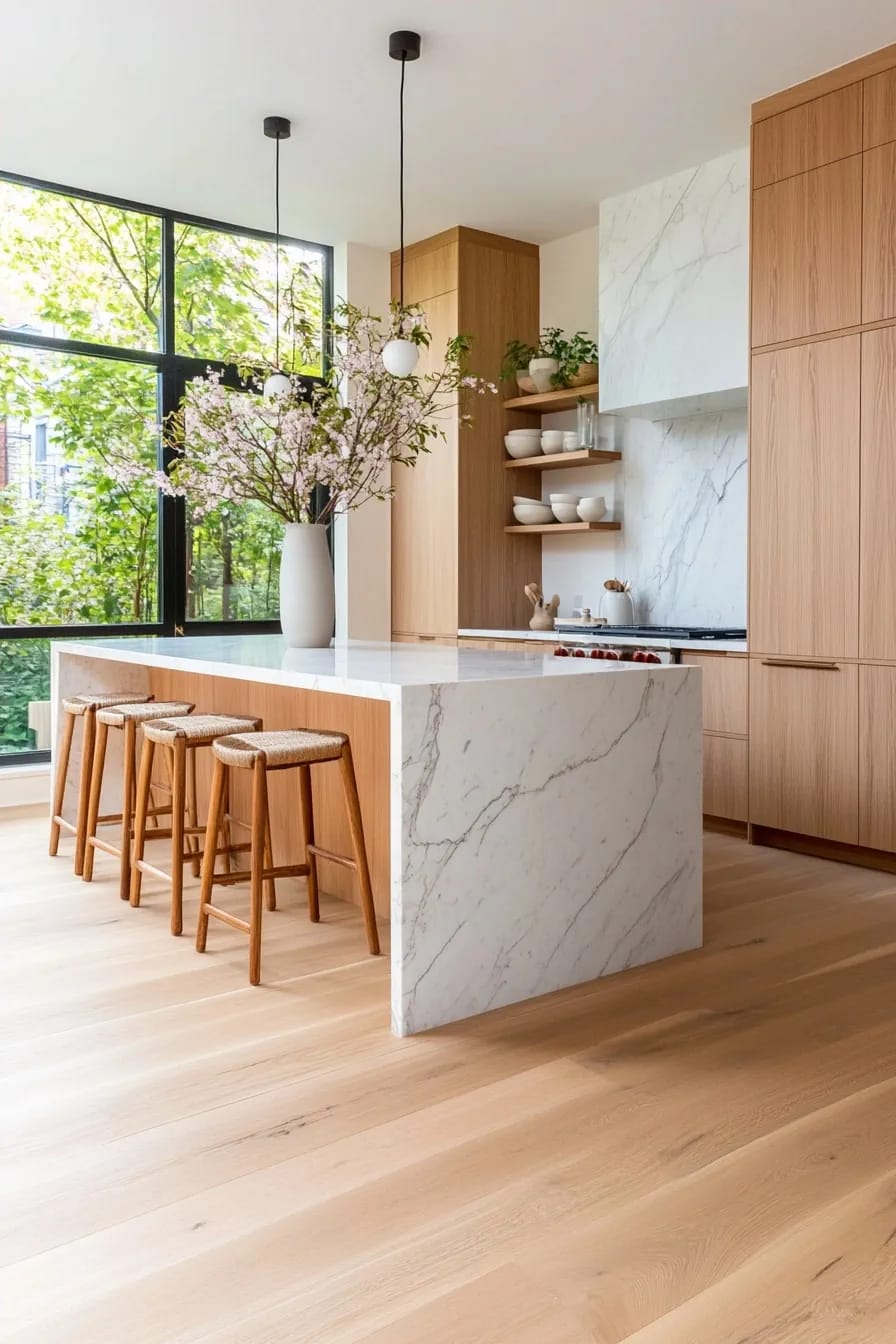
Then ask the one question the showroom would rather you did not: how thick is the wear layer. A sawn top layer of 4 to 6mm can be sanded back several times over the floor’s life; a 1 to 2mm veneer, which is what most of the cheap wide-plank engineered boards carry, cannot be sanded at all, and once it is through you are buying a floor again. If the number is not on the spec sheet, the number is bad. And if the budget will not stretch to real oak at that thickness, a good wide-plank vinyl is a more honest answer than a thin veneer, which is a case we have made at length about wide-plank driftwood LVP and where it belongs. Lay the boards running toward the main window, not across it, so the joints disappear into the light instead of striping it.
Related Posts
- 15 New Japandi Living Room Ideas You’ll Love
- 27 Stunning Boho Kitchen Designs That Will Inspire You
- 15 Organic Modern Kitchen Inspiration You’ll Love
- 14 Mexican Style Kitchens You’ll Want to Copy
- 20 Farmhouse Kitchen Island Designs to Inspire You
- Modern Kitchen Ideas That Age Well (and the One Already Dating)