

Most faux gingerbread village tutorials open by telling you to cut house shapes out of cardboard, which is the slowest possible route to a display that warps. The stronger first move is to buy somebody else’s ceramic Christmas village secondhand, for a few dollars a house, and paint over it. Everything below assumes you want the village still looking right on January 2nd, not just on the day you photograph it.
"Lasts all season" is a material spec, not a mood. Six weeks of dry forced-air heat pulls moisture out of cardboard and paper; a mantel above a working firebox runs warm enough to soften hot glue; and anything edible on the display becomes an ant problem or a sticky problem by week three.
Do the structural decisions first (what the houses are made of, what the icing is, where the thing physically sits), then the pretty ones. Reversing that order is how people end up re-gluing gumdrops in the middle of December.
Thrifted Ceramic Village Houses Are the Fastest Route to a Faux Gingerbread Village
Buy the houses rather than build them. Ceramic and resin Christmas village pieces arrive at thrift stores in volume every autumn, usually for two to eight dollars each, and they already have the one thing a homemade house cannot fake cheaply: crisp cast detail on the window frames, shingles, and door surrounds. Paint reads that detail as piped icing the moment you go over it in brown.
What to look for in the thrift store bin
Take the ugly ones. Deep relief matters more than the paint job, the brand, or whether the roof is chipped; a lurid 1990s cottage with heavy moulded shutters converts better than a tasteful matte one with a flat facade. Check that the base has a bulb hole or a cord notch, because that hole is how you light it later without drilling ceramic.
The paint order that stops it looking like a painted ornament
Spray a full coat of warm mid-brown first, get it into the eaves, then let it cure overnight rather than the twenty minutes the can promises. The white goes on second and only on the edges: roof ridges, window outlines, door frames, the scalloped line under the eaves. Dimensional paint from a squeeze bottle gives you a bead with actual height, which flat craft paint never will, and one bottle of Tulip Puff Fabric Paint in puffy white, 4 fl oz will trim a village of six or seven houses.
Build the Village on Molasses Brown, Icing White, and Exactly One Candy Color
Three values, one accent, and the whole shelf holds together. The brown wants to sit on the warm side of mid-tone, closer to molasses than to chocolate, because a dark brown reads as burnt wood under lamplight and photographs as a black blob. The white needs to be genuinely white rather than cream, since cream against warm brown reads as staining.

Pick one candy accent and hold the line: soft pink, or peppermint red, or pistachio green. Two accents is a toy shop. The restraint is what separates a village that looks styled from one that looks like a clearance aisle, and it costs nothing to obey.
 Gingerbread Christmas Kitchen Decor Ideas for a Kitchen You Still Cook In How to run molasses brown and icing white across a whole working kitchen without it turning into themed merchandise.
One Plywood Gingerbread House, Big Enough to Anchor the Whole Display
A single oversized house does more for the display than six small ones, and quarter-inch plywood is what makes it possible at floor scale. Cut it, glue it, ice it with joint compound, seal it, and you own a piece that comes back every year without a rebuild.
Keep the silhouette to five cuts
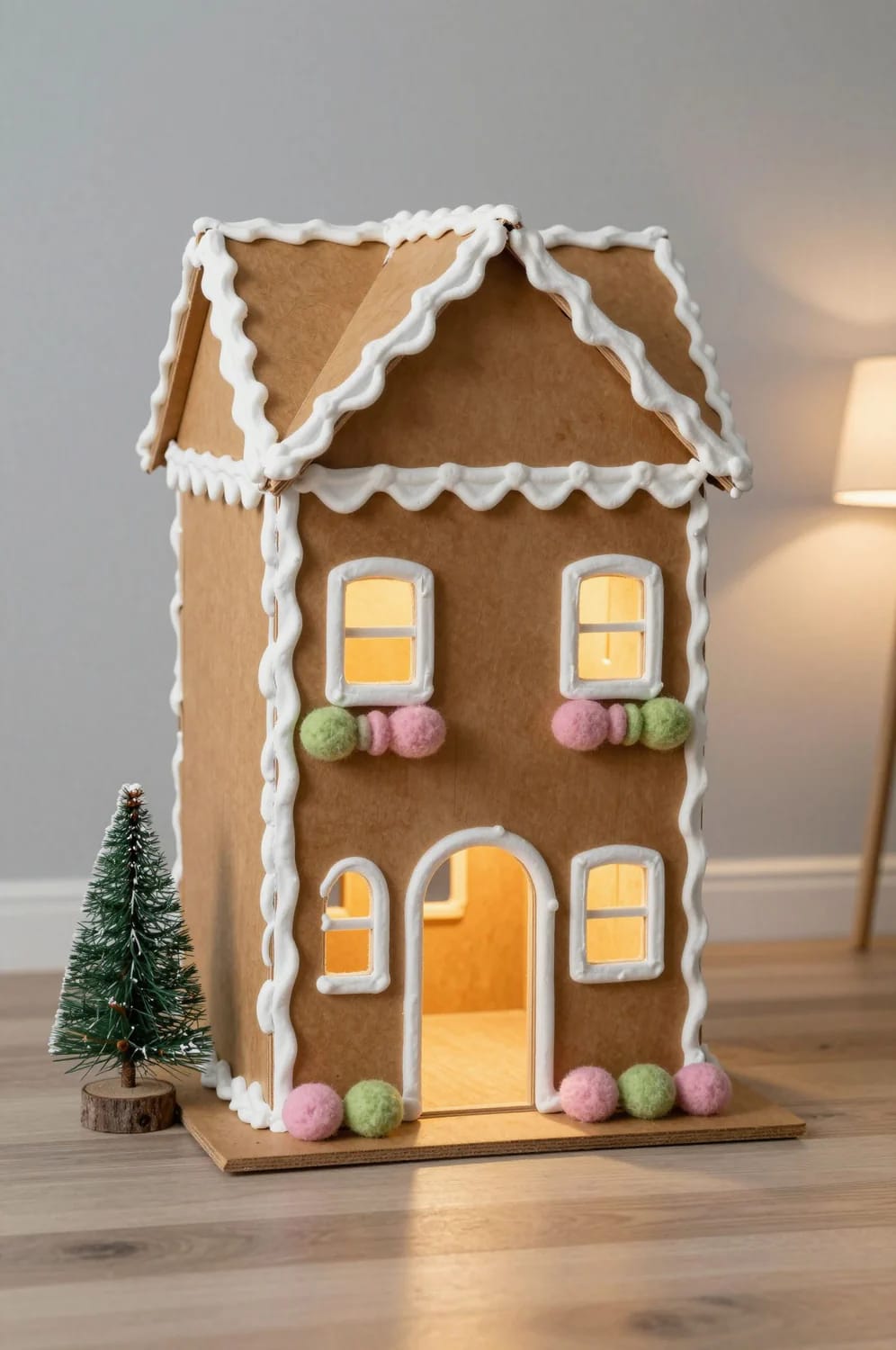

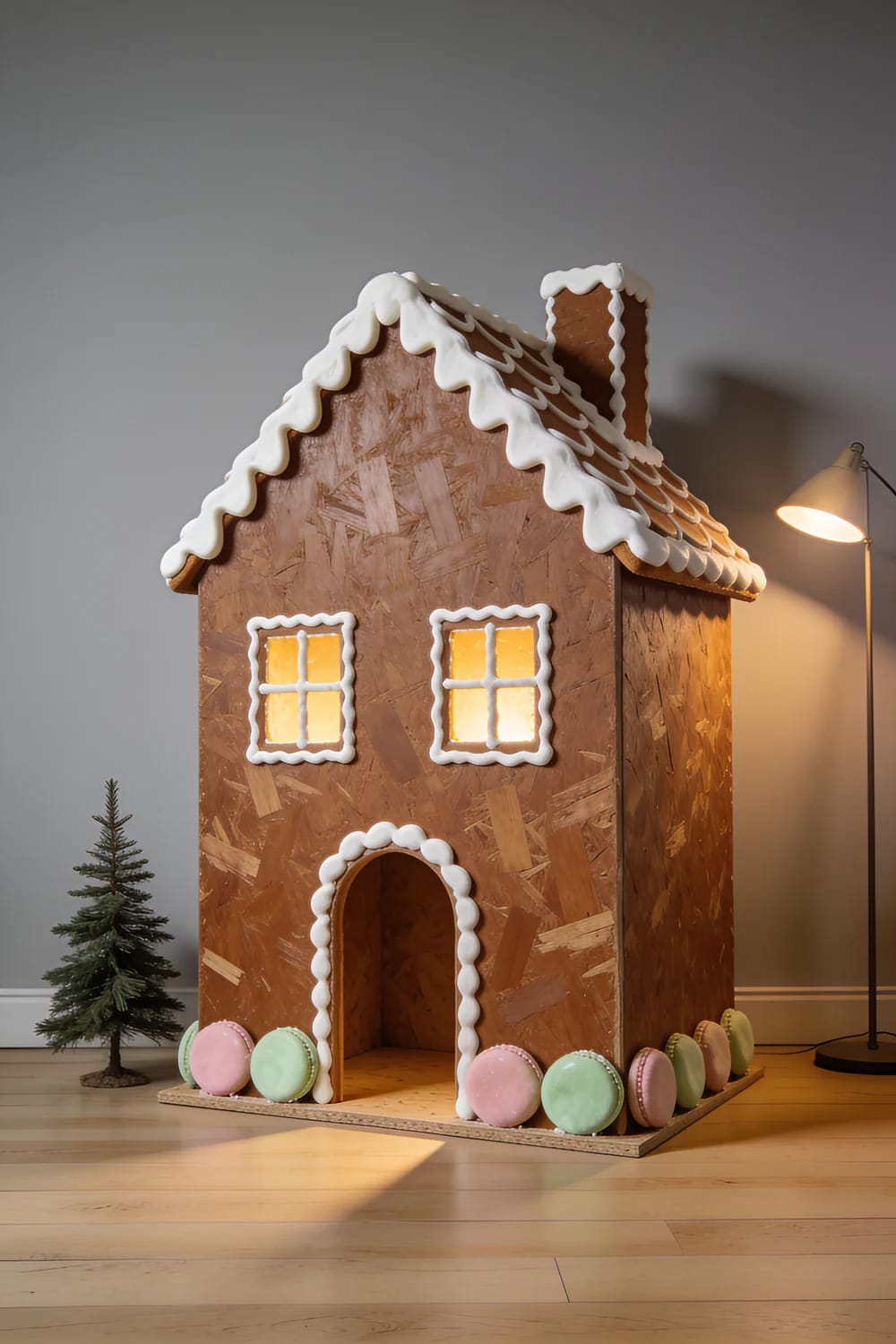
Front, back, two sides, two roof panels. Skip the chimney; skip the porch; skip the bay window. Every extra shape adds a joint that has to survive being carried to the attic, and the reason big plywood houses look convincing has nothing to do with detail on the body and everything to do with the icing line against a clean roof edge.
Joint compound is the icing, and it needs a rigid backing
Premixed lightweight joint compound, piped from a heavy zip bag with the corner cut, gives you the exact snowy shoulder that puffy paint gives you at small scale. It shrinks slightly as it dries and it will hairline-crack on anything that flexes, so it belongs on plywood or MDF and nowhere near cardboard. Pipe it in short runs of eight to ten inches and let each one grab before you move on.
Seal it or it powders
Dried compound is chalky and it transfers onto hands, sleeves, and the wall behind it. Two light passes of Krylon clear matte finishing spray, 11 oz lock it down without adding sheen; the can covers roughly twenty square feet and is dry to handle in about fifteen minutes, so the whole job is an afternoon.
Use Fake Candy on a Faux Gingerbread Village, Never Real Candy
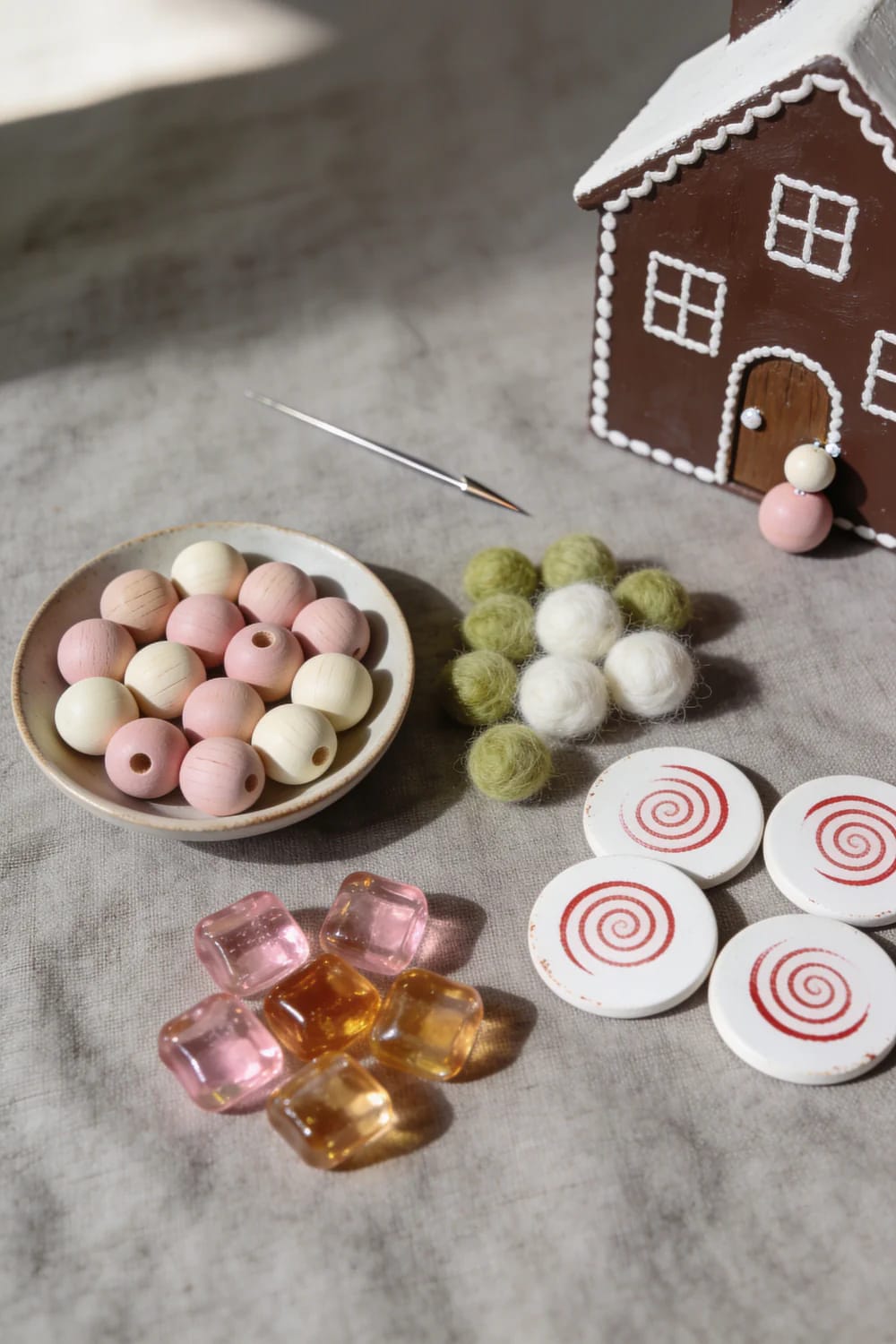
Real gumdrops go tacky, real peppermints absorb humidity and weep, and anything sugar-based on an open shelf is an invitation to ants by the third week. Wooden beads, dense wool felt balls, and resin cabochons read as candy from three feet away, which is the only distance anyone looks from, and they survive being boxed up.
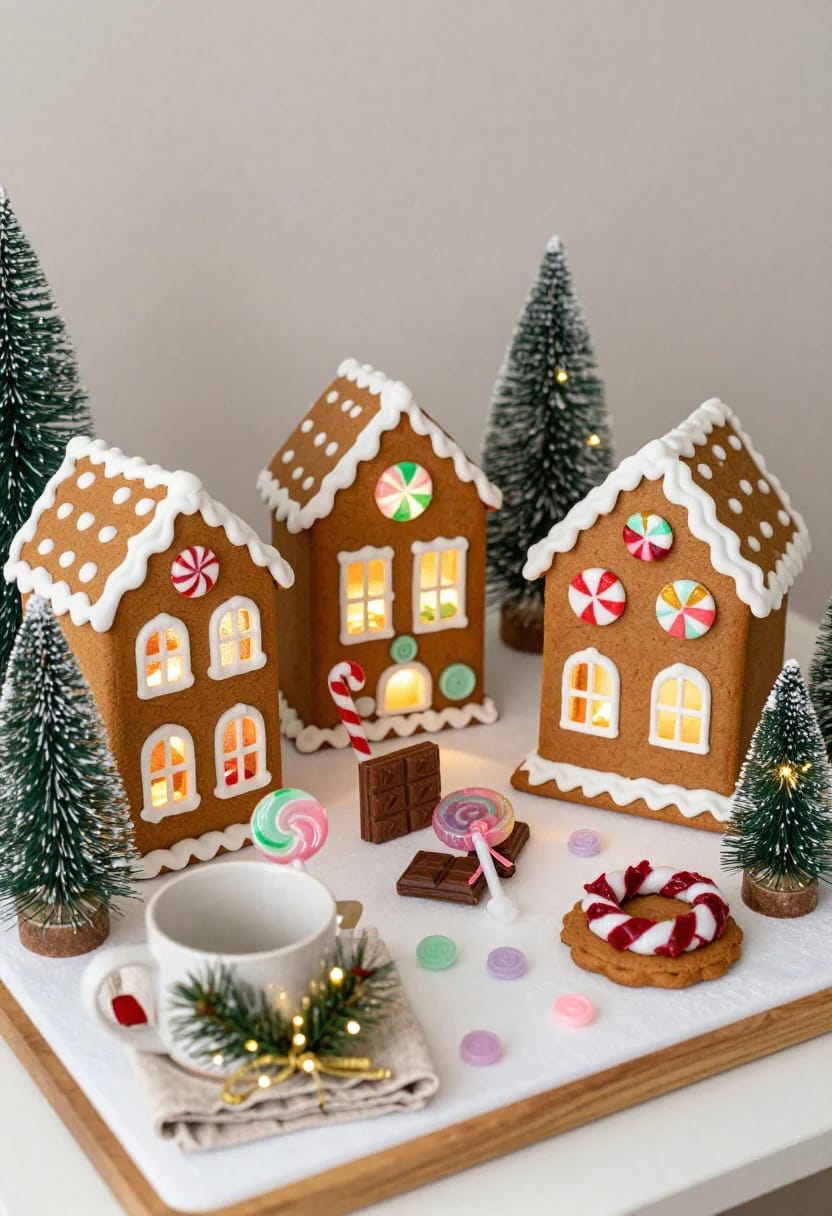
Hand-painted discs are the one worth the extra ten minutes: a white wooden circle with a red spiral, painted freehand so the stripes wobble, looks more like a real peppermint than the moulded plastic version does. Scale is where these go wrong. Candy on a six-inch house should be the size of a lentil, not a marble, and the deliberately oversized candy-bright approach that works for a Whoville setup is the opposite instinct to the one you want here.
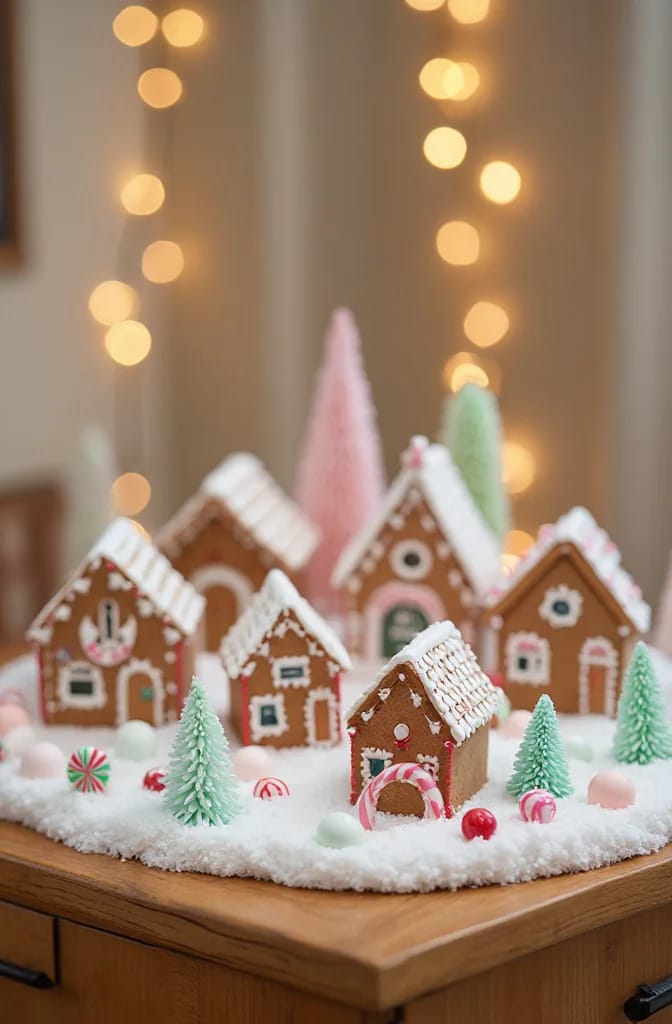
Light Each House From Inside, on a Timer, in Warm White Only
Interior light is what makes a faux gingerbread village read as a village rather than a group of objects. Cool white kills it instantly; the brown goes grey and the white icing goes blue, and the whole thing looks like a dentist's window.

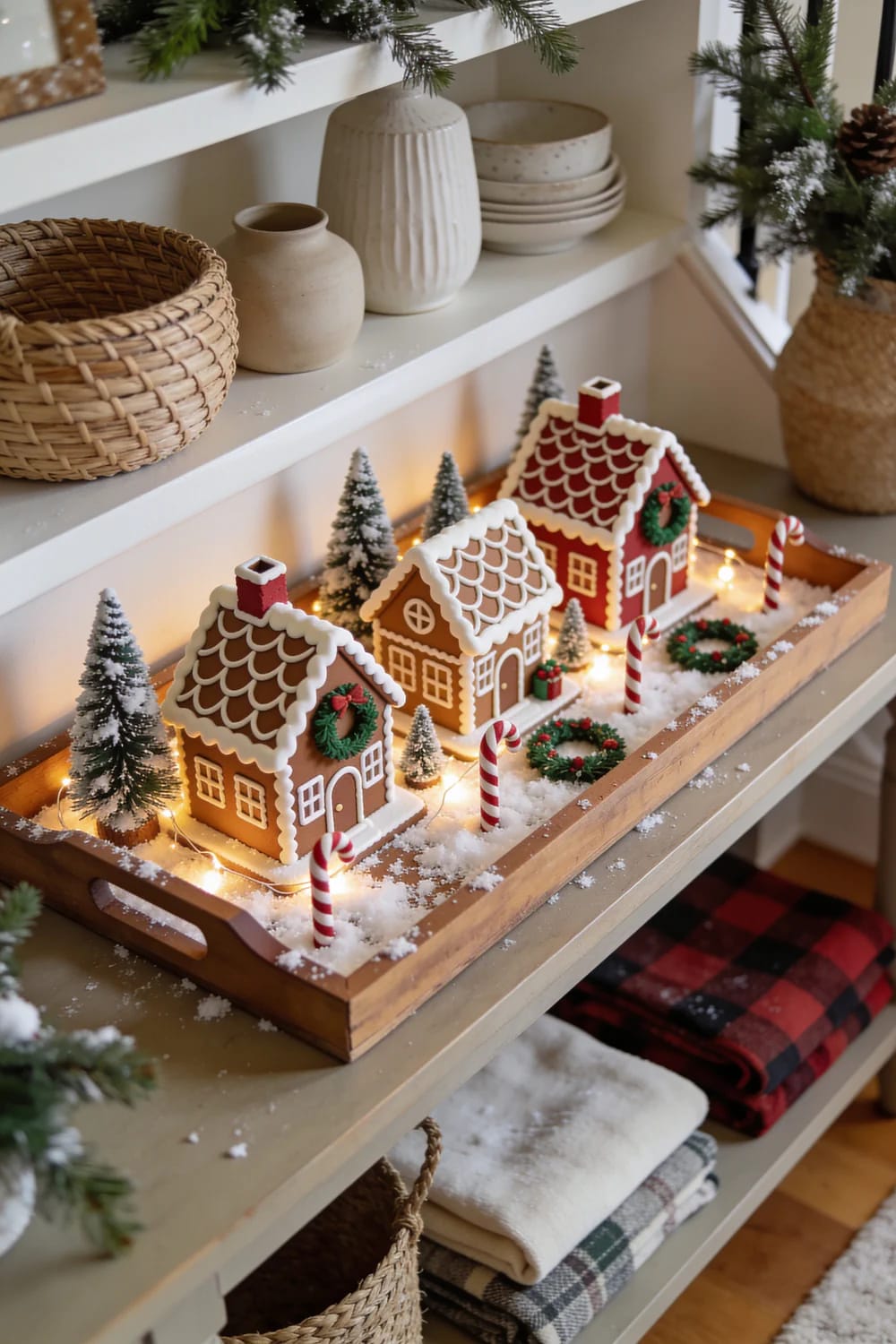
One short battery string per house beats one long string threaded through all of them, because a single strand snaking between houses shows as visible wire and forces every house to sit within the length of the run. A multipack of short strands solves it: innotree 10 ft battery fairy lights with built-in timer, 6-pack, warm white gives you six independent houses, each on the same six-hours-on, eighteen-hours-off cycle, so the village turns itself on at dusk for the whole six weeks and you never think about it again. If the indoor display is going to run alongside anything outside, it is worth putting the whole house on one lighting schedule rather than letting each zone do its own thing.
Cardboard Gingerbread Houses Only Survive If You Seal the Shell

Cardboard is the cheapest way to a village and the fastest way to a warped one, because raw board absorbs moisture from the air and releases it unevenly. Prime both faces before you cut, not after, and the panels stay flat. Glue the seams with tacky glue rather than a hot glue gun; hot glue softens in warm rooms and the joint creeps open over six weeks.

Corrugated shipping board is the wrong material and cereal-box chipboard is the right one. Chipboard takes a scored fold cleanly, holds a crisp corner, and does not show a wavy edge at the roofline. Anyone already comfortable with a glue gun and a scrap bin will find this the easiest project of the set, sitting in the same territory as the rest of the no-sew Christmas decorations that hold up in a storage tote.
One House Should Be Obviously Larger Than the Rest
Equal-sized houses in a row read as a shelf of products. Set one house at least twice the height of the others, put it slightly off-centre, and let everything else descend from there in two or three steps.

The descending line is what your eye reads as depth, and it is the single change that makes a five-house grouping look composed rather than lined up for inspection. Uneven gaps help too: cluster two houses close, then leave a hand’s width before the next. Editing down beats adding on here, which is the same argument behind a modern mantel that is deliberate rather than simply empty.

A Faux Snow Base Ties the Village Together and Hides the Wiring
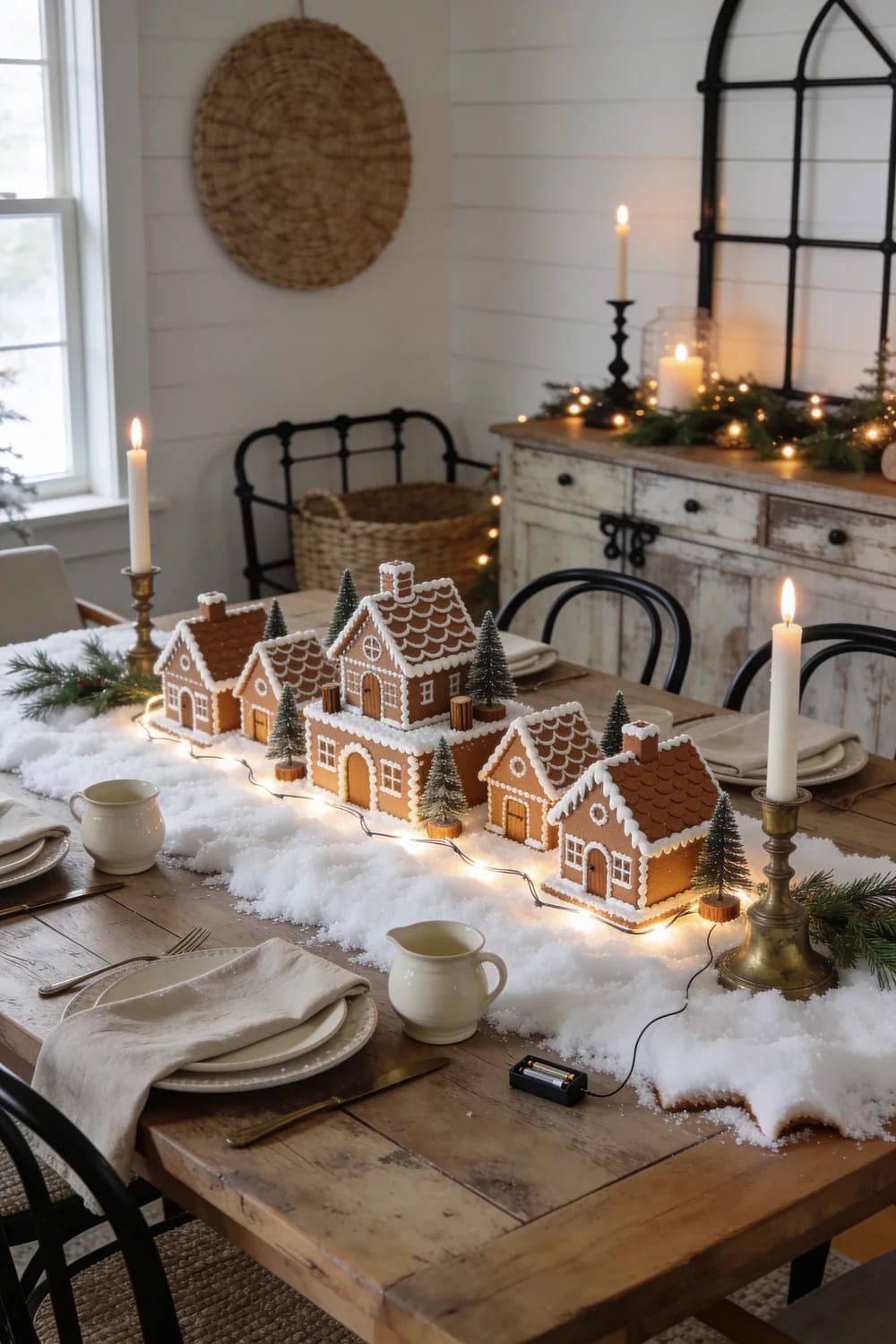
Loose fake snow migrates onto the floor and never fully comes back up. A fabric snow blanket does not: a roll like the PREXTEX artificial snow roll at 94 by 31 inches gives about twenty square feet of coverage at roughly three quarters of an inch thick, which is deep enough to bury a battery pack and a wire run underneath while still holding houses upright. Cut it a little oversized and tuck the edges under rather than trimming them flush, because a visible straight cut is what gives the whole thing away.
Build up small drifts against the base of each house with offcuts. Without that, every house sits on the snow rather than in it.

 DIY Christmas Window Decorations With Faux Snow and Stencils That Don’t Read as Storefront The spray distance that decides whether window snow looks like frost or like a chalky white lump.
A Porch-Scale Gingerbread Facade Takes the Village Outdoors
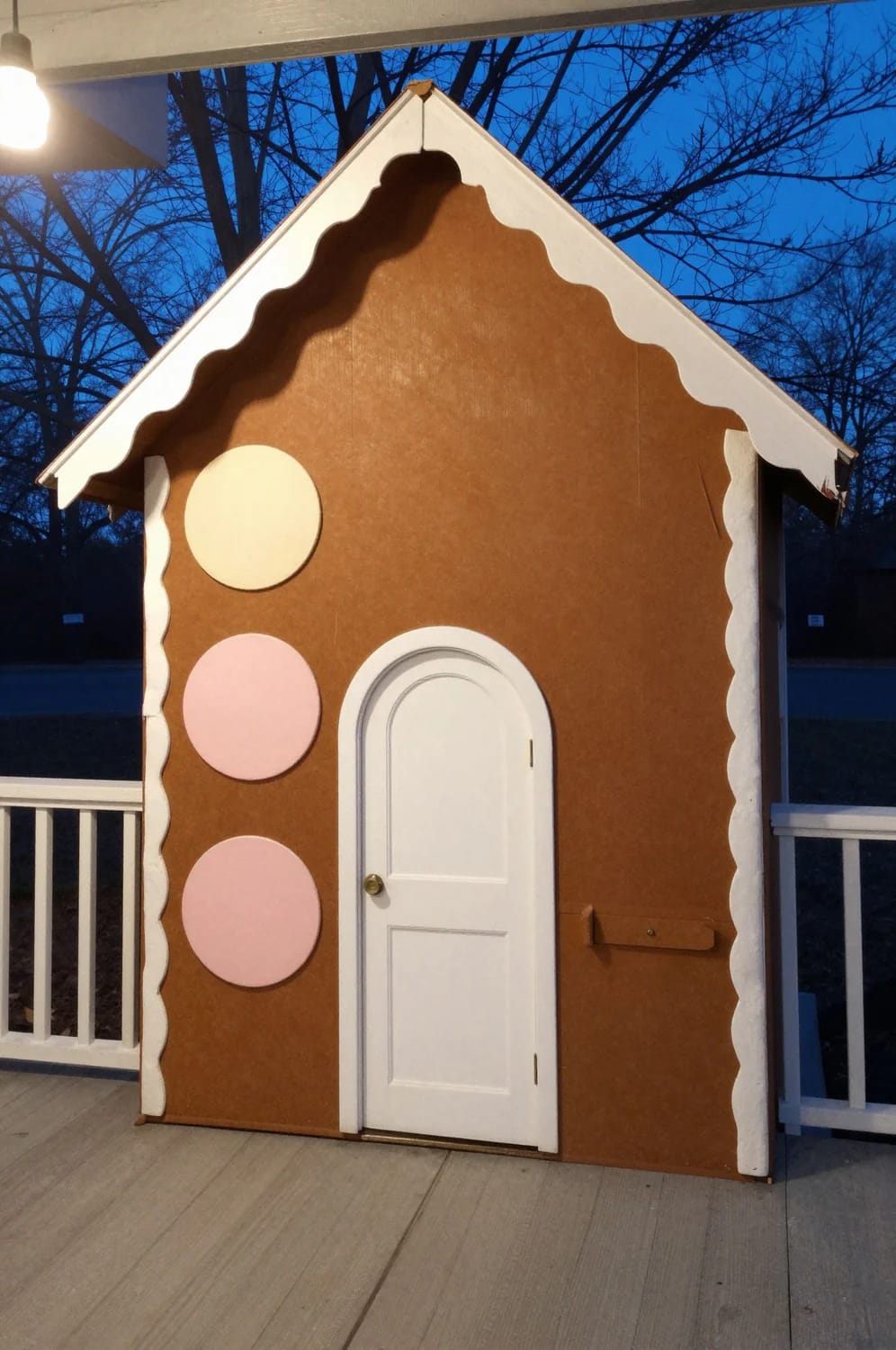
Outdoors, build a facade rather than a house: one flat panel with a braced back takes wind, stores flat, and reads exactly the same from the street. Exterior plywood and exterior paint, and the piping becomes exterior-grade caulk rather than joint compound, which turns to mush in the first rain. This is the same logic as the oversized painted posts people use as faux porch candles: simple shape, weatherproof material, scale doing the work.

Where the Gingerbread Village Lives Decides Whether It Survives December
Placement is a durability question before it is a styling one, and most people get it wrong on the first day. Heat, traffic, and edge exposure are what actually shorten a display's life.
The mantel is the worst place for it, and everyone puts it there
A mantel above a firebox you actually use runs warm, and warm is the enemy of hot glue joints, battery packs, and any adhesive holding beads on. It is also narrow, which forces the whole village into a single line and undoes the descending-scale composition entirely. Personally I would rather see one large house on the mantel and the village elsewhere, and if the mantel is where the display has to go, the physics of building a mantel that holds up all season matter more here than the styling does.
A console, a stair landing, or a tray with a lip
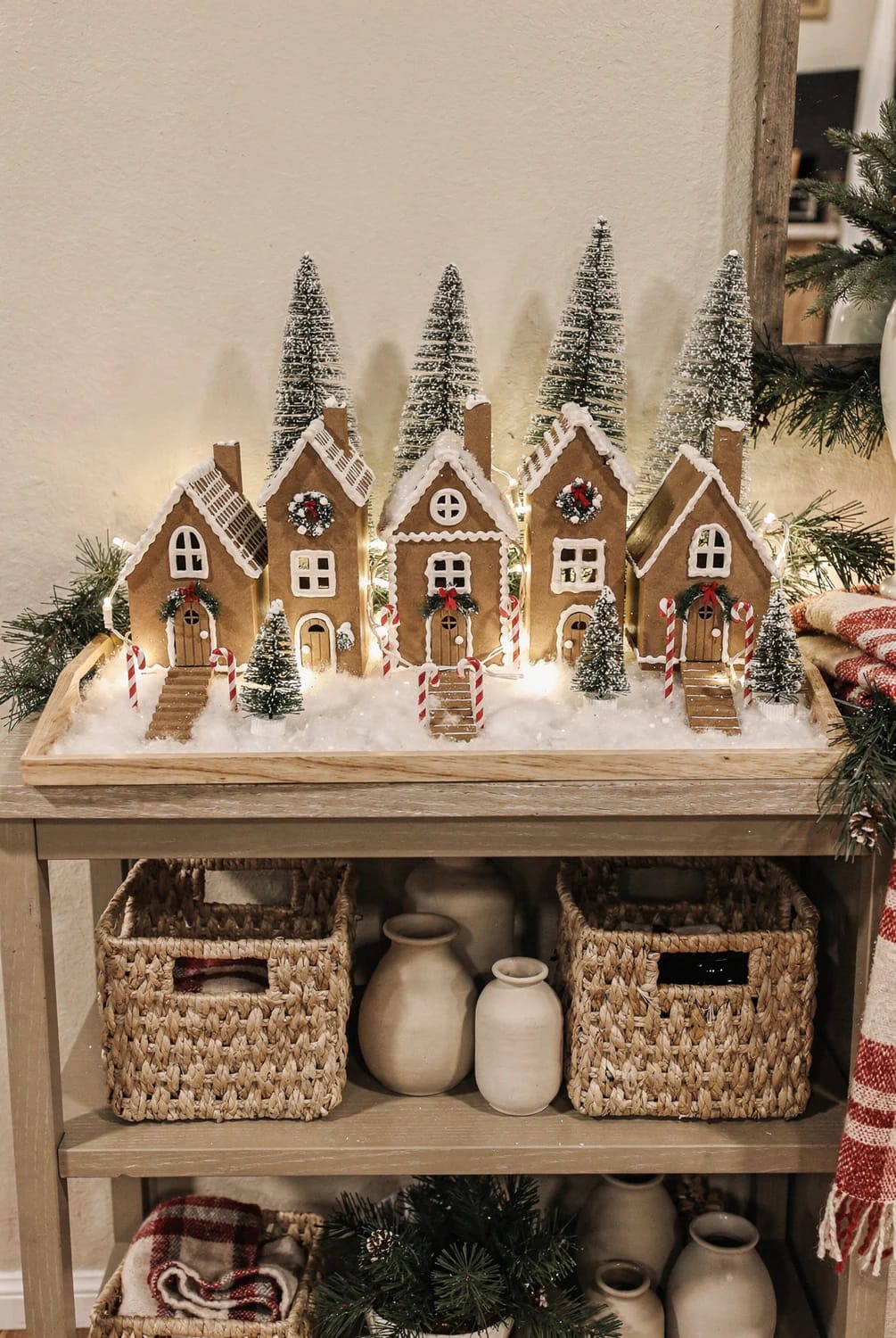
A console table at least twelve inches deep is the best home for a village, because depth is what lets houses sit at different distances from the front edge. Second best is a stair landing or a wide window ledge, both of which people walk past rather than reach across. In a small apartment, a shallow wooden tray with a raised lip does the same job in about eighteen inches: the lip stops the snow blanket creeping, contains the battery packs, and means the whole village lifts off the table in one movement when you need the surface back for something else.
Related Posts
- Christmas Mantel Decorating Ideas That Actually Hold Up All Season
- 12 DIY Outdoor Christmas Decorations on a Budget That Survive a Real Winter
- Farmhouse Christmas Kitchen Decor Ideas That Survive an Actual December
- Outdoor Christmas Light Display Ideas for the Whole House
- Farmhouse Christmas Mantel Decorating Ideas That Skip the Store-Bought Look
- DIY Christmas Window Decorations With Faux Snow and Stencils That Don’t Read as Storefront