
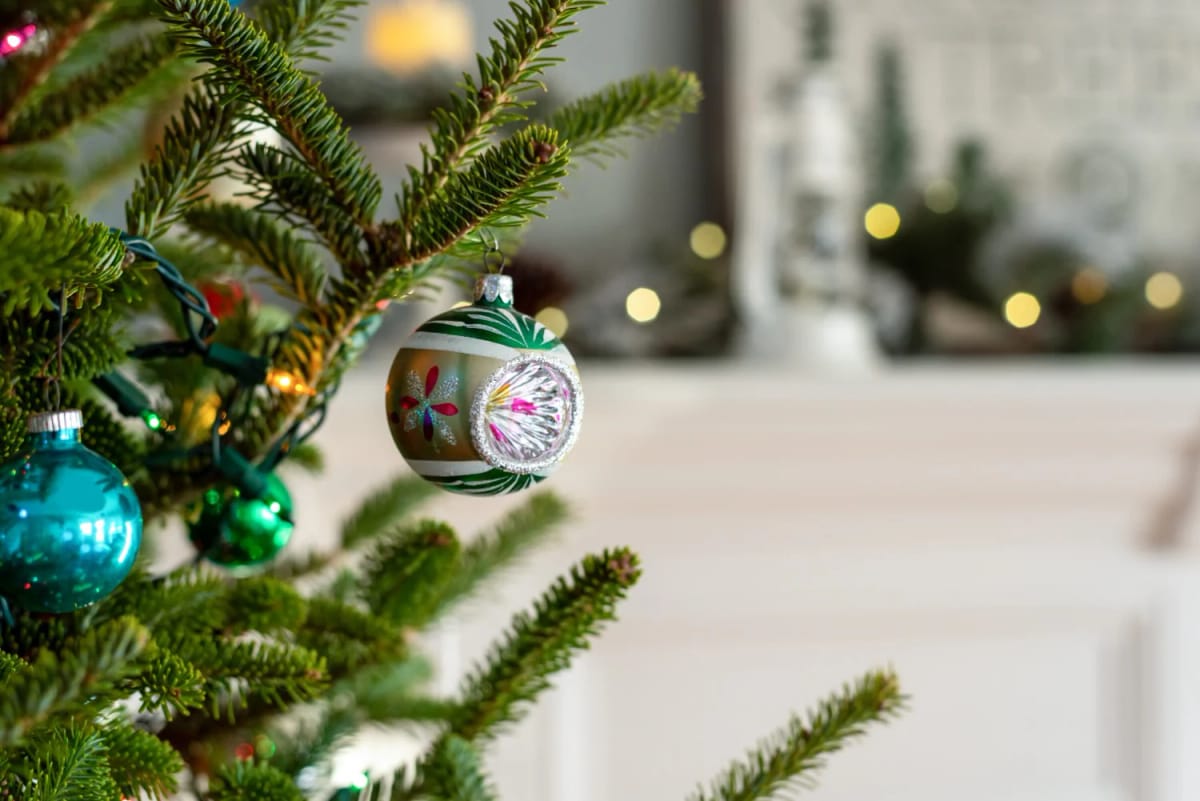
What makes a box of 1950s Shiny Brites look like junk on a modern tree is almost never the ornaments. It is the light. Those ornaments were built around a deep concave indent whose only job was to catch a hot incandescent bulb sitting inches away and throw it back at the room, and a modern warm-white LED string does not throw that kind of light. Hang sixty dollars of mercury-glass reflectors on an LED tree and you get sixty dollars of dull gray balls.
The two materials in this article are also not the same thing, though they get sold under one heading. Mercury glass is a silvering technique, double-walled glass with a reflective solution sealed between the layers, and it goes back to Bohemia in the 1820s. Shiny Brite is an American brand founded by Max Eckardt in 1937 that used a thinner version of the same silvering inside machine-blown balls from Corning. Both want different treatment, and seven placements below are where each one actually earns its shelf.

1. Light the indents before you hang anything else

Decide the lighting first, because it determines which ornaments are worth hanging at all. The indented ones (collectors call them reflector rounds) are the ornaments most people buy the collection for, and they do nothing at all unless a point source sits close enough to be caught in the concave.
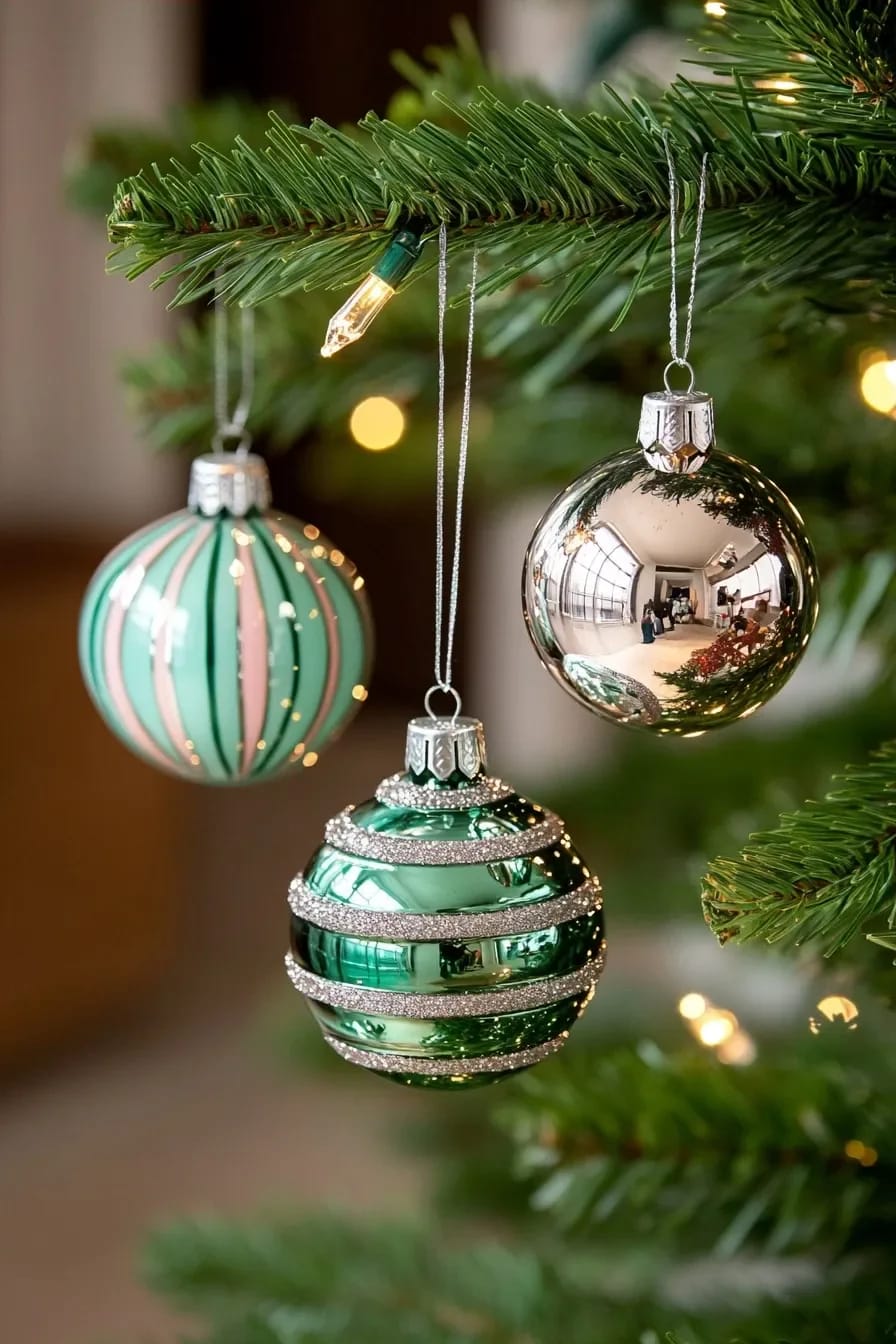
Put the bulb behind the branch
Wrap the string deep, against the trunk and the inner third of each branch, then hang the reflectors on the outer third facing the room. The mistake is running lights along the outside where the ornaments are, which lights the front of the glass instead of filling the indent. Warm-white LEDs in a C7 or C9 shape work if you accept that they are flatter than the originals; a 2200K to 2400K filament bulb reads much closer to what these were designed against.
About the color wheel
The rotating color wheel is authentic and I would still skip it on a green tree. It was made for aluminum trees, which have no color of their own and take projected light cleanly; on green needles the red and blue phases go muddy and the tree spends a third of every cycle looking like a fish tank. On an aluminum tree, use one and skip strings entirely, since running electric lights on metal branches was the whole reason the color wheel existed.
 Retro 1950s Christmas Decorations That Look Collected, Not Costumed Where the aluminum tree came from, and how to build the room around one without tipping into theme-party territory.
2. Two colors and a lot of silver beat the full Shiny Brite rainbow

Pick two colors from whatever you own, keep every silver piece, and put the rest back in the box. A vintage assortment arrived as a mixed dozen because that is how Woolworth's sold it, not because twelve colors on one tree was ever the intent, and the full spread is what makes a collection read as a clearance bin rather than something assembled over years.
Let the finishes disagree instead of the colors
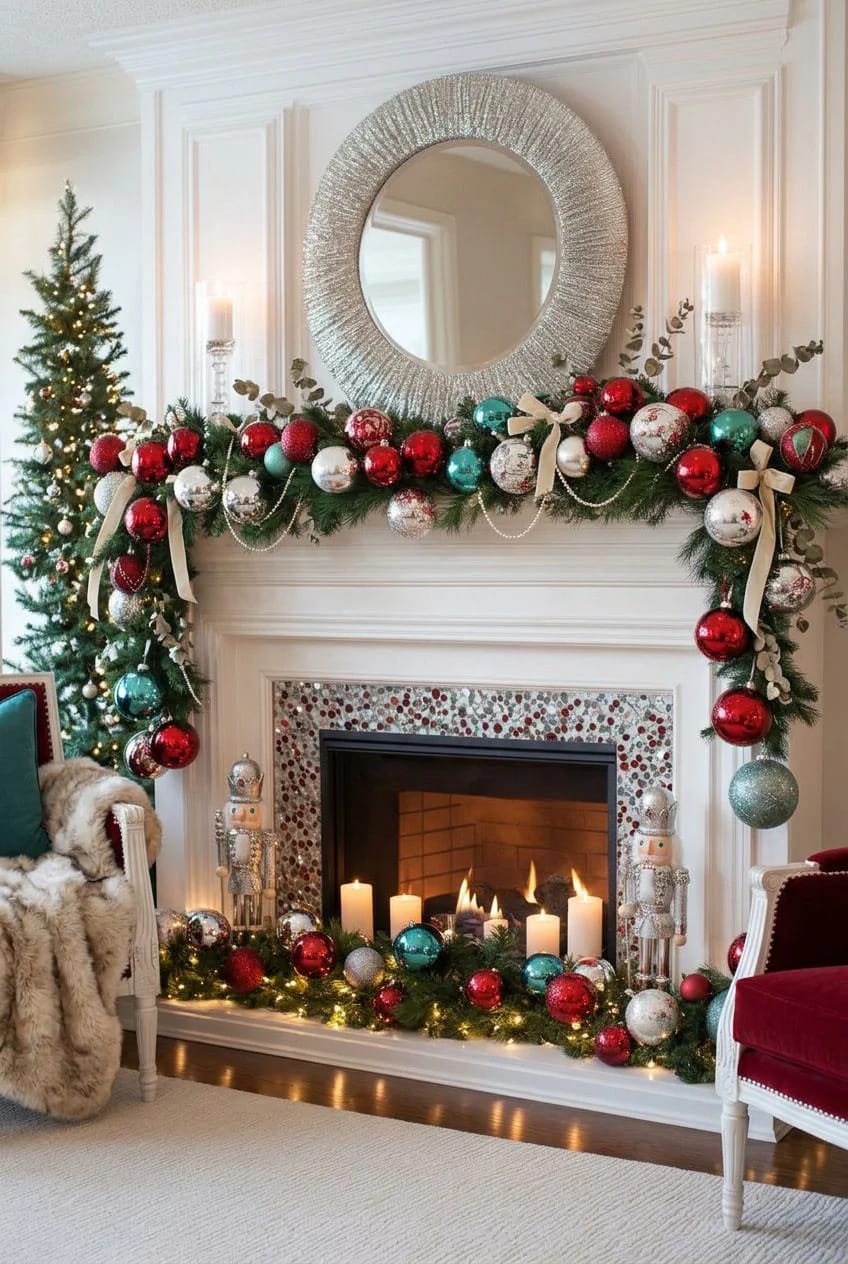
Within your two colors, mix as many surfaces as you can find: mirror-silvered, unsilvered translucent, mica-frosted, stenciled, and the flat matte pastels from the late 1960s. This is the opposite of the usual advice about buying a matched set, and it is also why a tree of uniformly glossy glass goes flat under lights no matter how expensive the glass was. Surface variation is what keeps light doing different things at different depths of the tree.
Red and silver is the safe pair. Pink and mint, which sounds like a 1957 bathroom, is the one I would actually reach for; the pastels were made in enormous quantity, they are still cheap, and they photograph better than the saturated reds under warm light.
3. Keep the mercury glass off the tree and put it where the candles are

Real silvered glass belongs on a horizontal surface lit by flame, not hanging in a tree. The mottling and the gray patches where the coating has degraded are the entire visual appeal, and they need a light source close enough and low enough to rake across the surface. Overhead light kills it; a tree buries it.
What a label saying mercury glass is actually promising
Mercury is a misnomer, and has been for nearly two centuries. Mercury was used briefly in the earliest Bohemian silvering around the 1820s, then abandoned as too expensive, and everything since has been a silver nitrate solution poured between the walls of a double-blown vessel and sealed. Edward Varnish and Frederick Hale Thomson patented the English version in 1849. The label survived because it sounds like an ingredient list.
Wall construction: hold the piece to a light and look at the rim or the opening. Antique silvered glass is double-walled, so you can see two distinct edges of glass with the silvering trapped between them. Most current production is single-walled with the metallic finish sprayed on the outside or inside, then distressed.
The seal: an antique vessel has a plugged hole where the solution went in, usually under the base. English pieces got a metal disc capped with a glass wafer; elsewhere it might be a cork under wax, or paper that has long since gone. A flat, solid, seamless bottom means modern.
Weight and pattern: British and American nineteenth-century pieces used lead-bearing flint glass and feel heavy for their size. The tarnish blooms on a real piece sit behind the surface and cannot be rubbed off; sprayed distressing sits on top and will show a wipe pattern under raking light.
Mantel arrangement, in order
Group by height in odd numbers, tallest at one third from an end rather than centered, and let two pieces touch. Then put the candles behind the glass rather than in front of it so the flame appears as a reflection inside every curved surface instead of as a row of flames. A single flat length of cedar under the whole group stops the objects from looking like they are floating, which is the same layering logic behind a mantel that survives the whole season without being restyled.
 23 Christmas Table Centerpiece Ideas for a Magical Holiday Setting Twenty-three arrangements to steal, including a silver platter of mercury glass votives that copies directly.
4. A bowl of loose Shiny Brites reads better than a whole branch of them
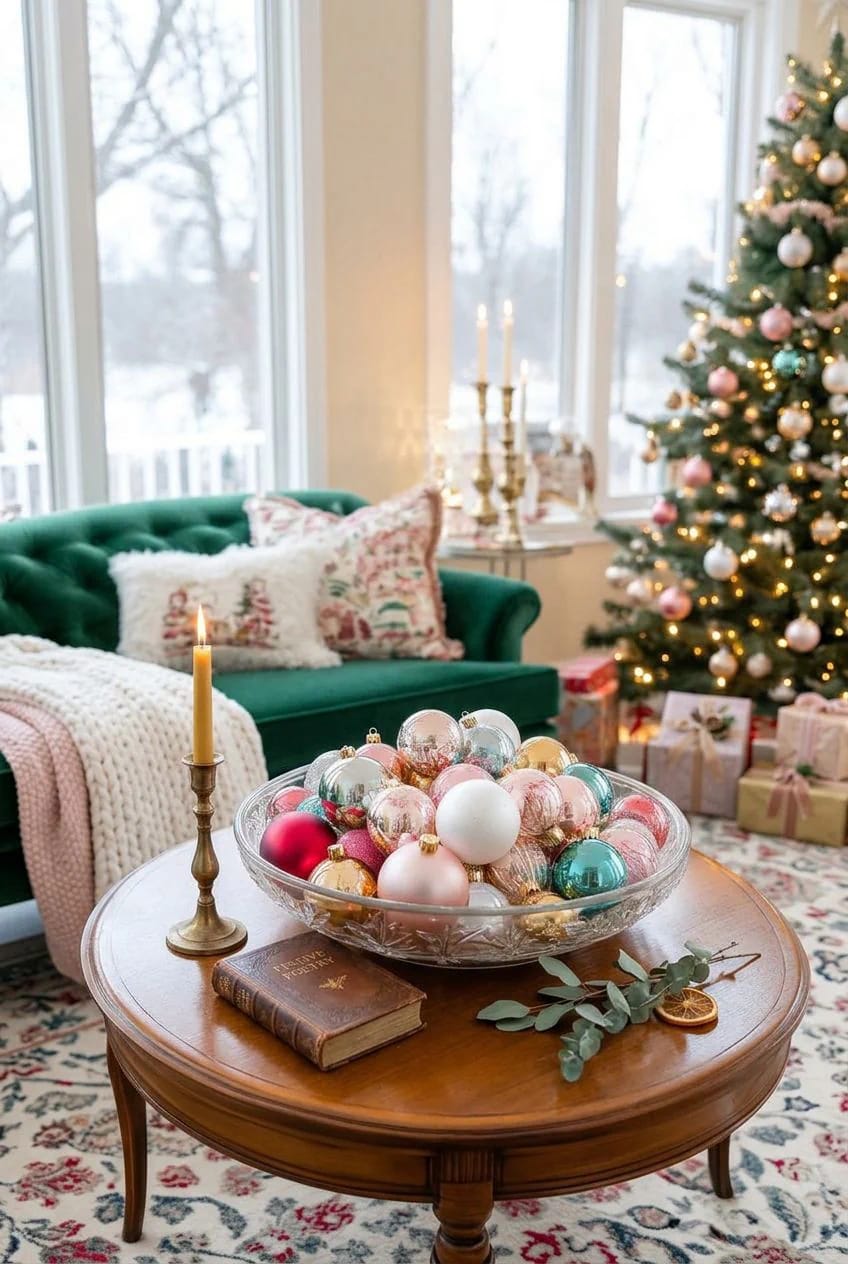
Mass them in a vessel and the collection finally reads as a collection. On a tree the ornaments are separated by six inches of dark needle and each one has to carry itself; in a glass compote or an old apothecary jar they sit against each other, the silvering in one bounces into the next, and thirty ordinary balls suddenly look like a hoard. This is also the only display that works in a house too small or too full of cats for a second tree.
Fill it past the halfway line
Underfilling is the failure. A footed glass compote wants roughly twenty-five to thirty small balls, piled above the rim rather than sitting politely below it, and a tall apothecary jar wants enough to reach two thirds up the glass. Pull the wire hooks out first; they catch on each other, and the metal will scratch the lacquer. A three-tier cake stand is the other good vessel here, one color per tier, because the tiers do the sorting your eye would otherwise have to do.
The exterior decoration on mid-century glass ornaments is water-based paint over lacquer, and it will lift on contact. People rinse a dusty box in warm soapy water and watch the pink stripes come off in the sink. Use a dry soft cosmetic brush or a cotton cloth, nothing damp, and skip mica and flocking entirely since the brush pulls it off. The gray cloudy rings that look like grime are usually oxidized silvering on the inside of the glass, so no amount of exterior cleaning will touch them. Store dry and temperature-stable, which means not the basement and not the attic.
5. The unsilvered wartime ornaments belong at eye level

If you own the clear pastel-striped ornaments with cardboard caps, they go at eye level with light behind them, not buried at the back of the tree. These are the wartime pieces, and they are the only ornaments in the collection that work as backlit objects rather than reflectors, because there is no silver inside to stop the light.
Spotting one in a bin
The War Production Board declared silver nitrate nonessential, so from about 1942 Shiny Brite and its competitors shipped clear or tinted glass with thin painted stripes instead of a mirrored interior. Some carry a sprig of tinsel inside, added to fake the sparkle the silvering used to provide, until the tinsel ran out too. By around 1943 metal caps were gone, replaced with cardboard or waxed paper and a loop of yarn or string. The paper-cap ornaments are the scarce ones. Check the cap first, then hold the glass to a window: a wartime piece transmits light, a postwar piece bounces it.
What they go for
Complete war-era boxes with intact paper caps are the headline lot and have cleared several hundred dollars in sold listings; mid-1950s boxes with mica-glittered indents and stencils trade in the fifty to one hundred twenty range; common late-1960s boxes sit at roughly twenty to fifty. Singles are far cheaper than any of that, so if you want the wartime look without the box premium, buy loose. Condition drops all of it fast, and the honest read on how much fading and wear to leave alone matters more here than on anything else you own, because a repainted wartime ornament is worth nothing to anyone.
6. Wire the chipped ones into a garland instead of paying for perfect boxes
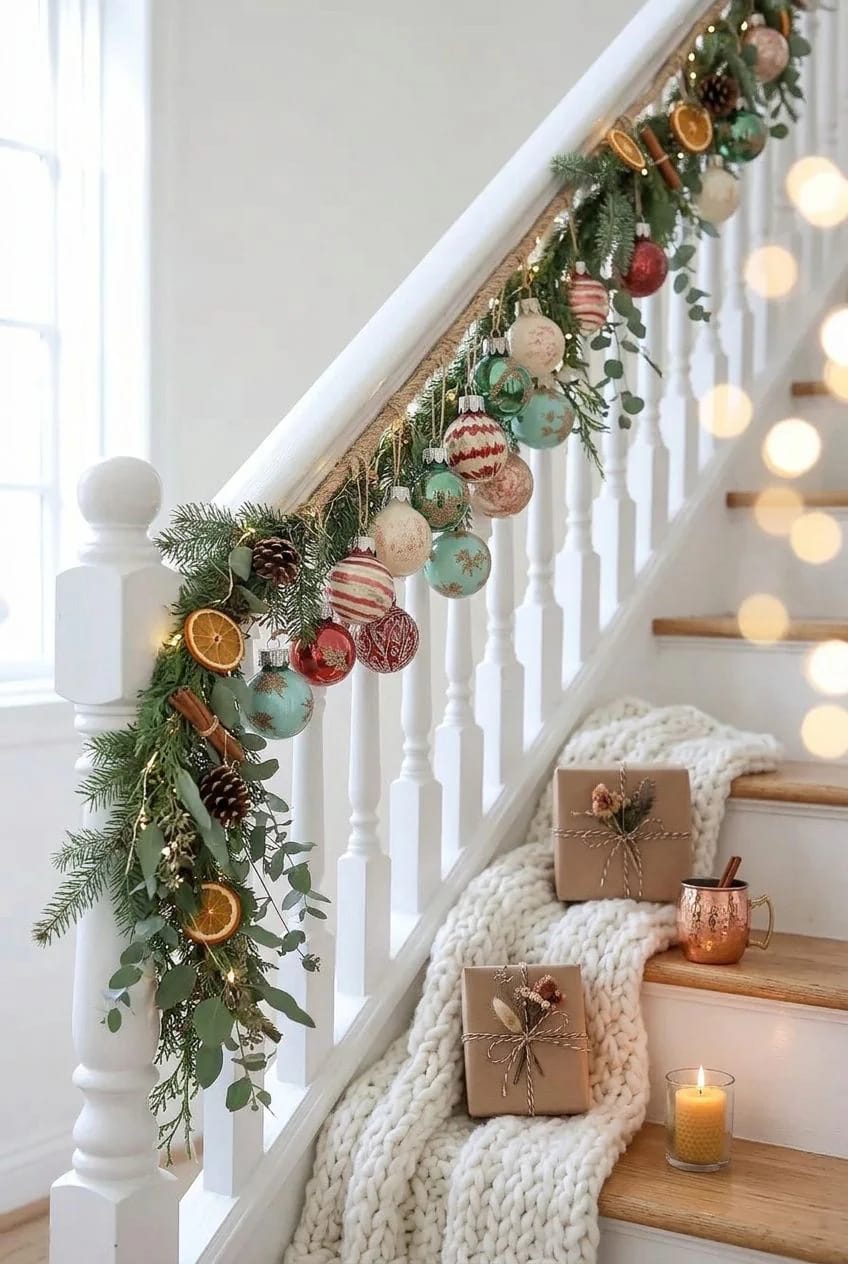
Buy the damaged lot. Every dealer has a box of capless, chipped, paint-worn ornaments nobody wants, usually ten to twenty-five dollars for thirty or forty pieces, and strung as a garland the flaws stop registering entirely. Thread 24-gauge brass wire through the glass neck where the cap used to sit, twist it closed, and lash the loop to jute twine.
Cluster in threes with a few inches of bare twine between clusters rather than spacing them evenly, which is the same density trick behind wiring your own clusters instead of draping a bought length. A stair rail takes about twelve feet for a standard flight. Keep it off doorways, since glass at head height with children in the house ends one way.
7. Give the heavy mercury glass kugels a tabletop feather tree

Kugels are too heavy for a modern artificial branch. The German ones made roughly between 1840 and 1914 were lined with zinc or lead rather than a thin silver wash, which is why they need that wide brass cap sitting flush against the glass, and why a wire branch will droop and dump one on the floor. A goose-feather tree or a stiff-branched tabletop tree holds them at the angle they were designed for, and at eighteen inches tall the tree puts six good pieces at seated eye level instead of scattering them through six feet of fir.

It also solves storage, since the whole display comes down into one box. Worth noting if you are building the wider room around this: the tabletop tree is the piece that connects a vintage-ornament collection to the mid-century version of the same room, where the small tree on a side table was standard rather than a compromise.
What to buy first if you are starting this year
Start with one complete late-1960s box at twenty to fifty dollars rather than a single rare piece, because a dozen matched ornaments in a compote gives you a display on day one and a rare wartime single gives you an object in a drawer. Then buy the damaged lot for the garland, since it costs almost nothing and teaches you what the different silvering and stencil types actually look like in hand. The paper-cap wartime ornaments can wait until you can recognize one across a table, and you will, eventually, by the cap.
Related Posts
- Vintage and Victorian Christmas Decorating: 11 Ideas for a Faded, Heirloom Holiday
- Retro 1950s Christmas Decorations That Look Collected, Not Costumed
- 7 Modern Christmas Mantel Decor Ideas That Don’t Look Like a Craft Store
- 27 Unique Christmas Tree Ornaments for a Magical Holiday
- Elegant Christmas Tree Ideas with Gold and Glass Ornaments
- 25 Traditional Christmas Decor Ideas with a Nostalgic Vintage Touch